Last Updated: September 18, 2026
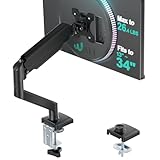
- Top Pick: ErGear Single Monitor Arm, Fully Adjustable Monitor Mount for 13–34 Inch Screens, Fast Install Computer Monitor Stand with Tool-Free VESA Mount, Cable Management, Holds 19.8 lbs
- Best Value: HUANUO FlowLift™ Pro Monitor Arm for 13–32" Screens, MechaSpring Monitor Mount, Fully-Adjustable Monitor Stand with Tilt/Swivel/Rotation, Tool-Free VESA Mount, C-Clamp/Grommet Base, Max Load 19.8 lbs
- Premium Choice: HUANUO FlowLift™ Single Monitor Mount, 13 to 32 Inch Monitor Arm, Adjustable Monitor Stand, Vesa Mount with Clamp and Grommet Base – Fits 4.4 to 19.8lbs LCD Computer Monitors
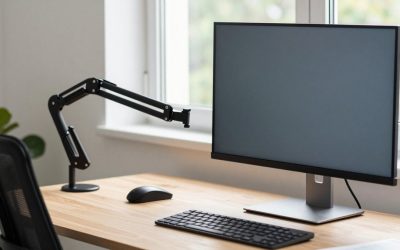
Monitor arms can make a desk feel larger, cleaner, and far more comfortable—but only when the arm actually matches the monitor, desk, and way you work. The most common mistake is buying by screen size alone. A 32-inch monitor might weigh 14 pounds without its stand, or more than 20 pounds if it has a heavy ultrawide panel, built-in speakers, or a curved screen. Another frequent error is overlooking desk construction: a capable arm can still wobble, dent a hollow-core desktop, or fail to fit a thick edge with an under-desk support bar.
When deciding what to look for in monitor arms in 2026, focus on compatibility before features. Smooth height adjustment and cable management are useful, but they do not compensate for an arm with the wrong weight range, insufficient reach, or a weak mounting surface.
As an Amazon Associate we earn from qualifying purchases at no extra cost to you.


📄 In This Review
Decide These 3 Things First
- Weigh your monitor without its factory stand. Check the manufacturer’s listed weight, then compare it with the arm’s supported range. For example, an arm rated for 4.4 to 19.8 pounds is not a good match for a 20-pound display, even if the advertised screen-size range says it fits.
- Measure your desk and workspace. Note desktop thickness, the depth of the desk, and how far you need the screen to move. Most clamp mounts fit desks roughly 0.4 to 3.1 inches thick, but some thick solid-wood tops and desks with reinforced edges need a larger clamp opening.
- Choose the motion you will actually use. A basic arm may provide tilt and swivel, while a full-motion gas-spring model adds easier vertical lift, extension, and screen rotation. If your monitor stays in one position all day, a simpler arm can be the better value.
Screen Size, Weight, and VESA Compatibility
See also: How to Clean a Monitor Arm (2026): Step-by-Step • How to Tighten a Loose Monitor Arm (2026): Step-by-Step
Screen size is a starting point, not the deciding specification. Most single monitor arms accommodate displays from 13 to 32 inches, while some extended-capacity models support screens up to 34 inches. The more meaningful figure is the payload range. Common single-arm capacities include 4.4 to 19.8 pounds, 6.6 to 22 pounds, and up to about 26.4 pounds for sturdier models.
Stay within both ends of the stated range. A monitor that is too heavy may slowly drift downward or sag at full extension. One that is too light for a gas-spring arm can rise on its own and be difficult to position. Curved and ultrawide monitors deserve extra attention because their weight sits farther forward, adding leverage that can make an arm feel less stable.
Also confirm VESA mounting holes. The standard patterns are 75 x 75 mm and 100 x 100 mm. Most mainstream office monitors use one of these. If your display has recessed holes, you may need the supplied spacers and longer screws. Never force a screw that is too long; it can damage the monitor’s internal components.
Material and Finish
Look for arms made primarily from steel, aluminum alloy, or a combination of both. Steel is especially useful in the base, clamp, and high-stress joints because it resists flexing. Aluminum keeps the moving arm lighter while still offering good rigidity when properly engineered. Plastic cable covers and adjustment caps are normal; plastic structural joints are less desirable on arms intended for heavier monitors.
A powder-coated or painted metal finish is typical and should resist ordinary scratches and fingerprints. More important than the color is the contact padding. A clamp should have rubber or silicone pads on both the upper and lower contact points to reduce scratches and prevent the mount from shifting on a smooth desktop.
For a monitor weighing 15 pounds or more, prioritize a metal clamp body and a substantial base plate. Thin stamped-metal hardware can work for a lightweight 22-inch monitor, but it is less reassuring for a large 32-inch display positioned away from the wall.
Construction and Mounting Style
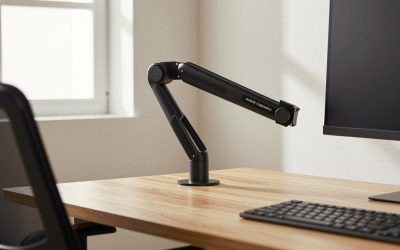
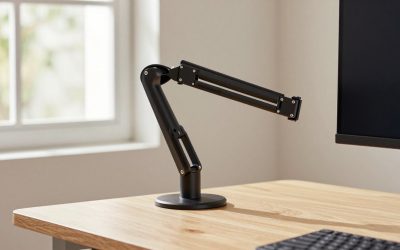
There are two common ways to secure a monitor arm: a C-clamp or a grommet mount. A C-clamp grips the rear edge of the desk and is usually the easiest option. It needs a clear desk edge and enough space below the desktop for the clamp plate and tightening knob. A grommet mount passes through an existing cable hole or a drilled hole, providing a particularly secure installation for desks that cannot accommodate an edge clamp.
Many arms include both mounting methods. A grommet hole generally needs to be about 0.4 to 2.4 inches in diameter, depending on the hardware. Check the manual before drilling anything. If the desk has a hollow core, glass top, loose veneer, or a fragile particleboard edge, add a reinforcement plate or choose a freestanding monitor stand instead.
Pay attention to the arm’s reach and height range. A useful single monitor arm often provides 16 to 20 inches of horizontal extension and 10 to 16 inches of vertical travel. More extension is helpful on deep desks, but it also puts more force on the clamp. For a desk only 20 inches deep, an arm with 17 inches of reach may be more than enough.
Comfort and Adjustment Performance
A monitor arm should help place the top third of the screen around eye level while you sit naturally. For most desk setups, that means the monitor needs to move several inches above the desktop rather than simply tilt. Height adjustment is particularly valuable if more than one person uses the workstation or if you alternate between sitting and standing.
Look for these movement ranges:
- Tilt: at least -30 to +30 degrees for reducing glare and improving viewing angle.
- Swivel: 90 degrees or more to each side for sharing a screen or changing desk position.
- Rotation: 180 to 360 degrees for switching between landscape and portrait orientation.
- Lift: 10 inches or more of vertical adjustment for meaningful ergonomic flexibility.
Gas-spring and mechanical-spring arms usually offer the smoothest repositioning. They should hold their place once tension is set correctly. Basic pole-mounted arms can be perfectly stable, but changing height may require loosening a screw and supporting the monitor with one hand. That is acceptable for a fixed office setup; it is less convenient for frequent adjustments.
Cable management matters too. Integrated channels should hold at least a power cord, HDMI or DisplayPort cable, and USB cable without pinching them during movement. Leave a small service loop near the monitor so cables do not pull tight when the arm is fully extended.
Price Tiers and Realistic Expectations
Budget monitor arms: $25 to $45. This range includes many capable single-monitor arms for 13- to 32-inch displays weighing up to about 19.8 pounds. Expect standard VESA compatibility, clamp mounting, basic cable clips, and adjustable tension. Budget models can be an excellent choice for a 24- or 27-inch office monitor, provided the desk is solid and the monitor falls comfortably within the weight range.
Mid-range monitor arms: $50 to $120. Spend here for smoother movement, better clamp hardware, longer reach, higher load limits, and cleaner cable routing. This is often the sweet spot for a 27- to 34-inch monitor, a heavier curved panel, or a desk where you frequently move the screen.
Premium monitor arms: $120 to $300 or more. Premium options tend to offer refined spring mechanisms, more durable joints, higher-quality finishes, longer warranties, and better support for demanding setups. They make the most sense for high-end ultrawides, professional workstations, frequent screen sharing, or users who adjust their monitor throughout the day.
Do not assume a higher price automatically means a higher weight capacity. Compare the stated load range, arm reach, mount type, and warranty before paying more.
Warranty and Parts Support
A monitor arm has moving joints, tension mechanisms, screws, and mounting hardware, so warranty coverage is worth checking. A 1-year warranty is common on entry-level models. Better mid-range and premium arms often offer 3 to 10 years of coverage, sometimes with replacement parts available for clamps, VESA plates, and cable covers.
Read what the warranty covers. Cosmetic wear and installation damage are often excluded, while failures of the gas spring, hinge, or structural components may be covered. Keep the receipt and installation instructions, especially if the manufacturer requires proof that the arm was mounted within its stated desk-thickness and monitor-weight limits.
Delivery and Assembly
Most single monitor arms arrive in a compact box weighing roughly 5 to 12 pounds. Assembly commonly takes 15 to 30 minutes. Tool-free VESA plates can make installation easier, but you will usually still need an Allen key to adjust joint tension or secure the clamp. Many models include the key in the box.
Before ordering, make sure the package includes a C-clamp, grommet hardware if needed, VESA screws, spacers, and cable-management pieces. Have a second person nearby if your monitor weighs more than 18 pounds or has an awkward curved shape. It is safer to attach the VESA plate to the monitor while it lies face-down on a padded surface, then lift it onto the arm.
Spec Checklist
| Spec | Budget | Mid | Premium |
|---|---|---|---|
| Typical price | $25–$45 | $50–$120 | $120–$300+ |
| Common screen support | 13–32 inches | 13–34 inches | Up to 34 inches and specialty ultrawides |
| Typical load range | 4.4–19.8 lb | 6.6–26.4 lb | Varies by design; verify exact monitor weight |
| Horizontal reach | 14–17 inches | 16–22 inches | 18–25+ inches |
| Mounting options | Usually C-clamp | C-clamp and grommet | C-clamp, grommet, and specialized options |
| Warranty expectation | 1–3 years | 3–5 years | 5–10 years |
Red Flags
- A listing emphasizes screen size but does not state a minimum and maximum monitor weight.
- The arm’s maximum capacity exactly matches your monitor’s listed weight; leave a margin when possible.
- No VESA pattern is listed, or the product does not specify included screw sizes and spacers.
- The clamp range is missing, especially if your desktop is thicker than 2 inches or has an under-edge frame.
- The monitor arm has a long reach but no information about desk reinforcement or clamp-pad design.
- Reviews repeatedly mention drifting, sagging, stripped adjustment screws, or a VESA plate that does not lock securely.
- A very low price is paired with vague materials such as “premium metal” rather than steel, aluminum, or alloy construction details.
FAQ
How much weight should a monitor arm support?
Choose an arm whose stated range includes your monitor’s weight without its stand. For a 16-pound monitor, an arm rated for 4.4 to 19.8 pounds is appropriate. Avoid relying on a maximum rating alone, and account for any adapter, webcam, or portable light attached to the monitor.
Can a monitor arm hold a 34-inch monitor?
Yes, if the arm specifically supports 34-inch displays and the monitor falls within its weight and VESA limits. A lightweight 34-inch flat monitor may work on a 19.8-pound arm, while a heavier curved ultrawide may require a model rated for 22 to 26.4 pounds or more.
Will a monitor arm damage my desk?
It can if the desk is weak, hollow, glass, or poorly supported. Use the included pads, follow the specified desktop thickness range, and consider a reinforcement plate for particleboard or thin veneer desks. Do not overtighten the clamp.
Is a gas-spring monitor arm worth it?
It is worth it if you regularly raise, lower, extend, or rotate the monitor. Gas-spring arms make those adjustments easier and faster. For a monitor that stays at one fixed height, a simpler pole-style or manual-adjustment arm can provide stable support for less money.
Ready to decide? Our #1 pick for 2026 is the Typical price.
Live price & availability on Amazon.
Related Reviews & Guides



Quick Picks: Best Webcam Ring Lights and Key Lights for…

4 Best Portable Monitors for Laptop