Last Updated: September 18, 2026
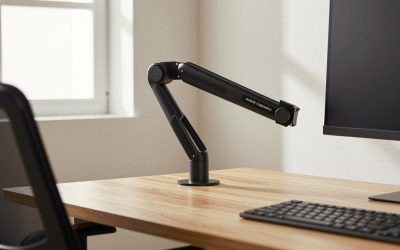
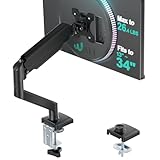
- Top Pick: ErGear Single Monitor Arm, Fully Adjustable Monitor Mount for 13–34 Inch Screens, Fast Install Computer Monitor Stand with Tool-Free VESA Mount, Cable Management, Holds 19.8 lbs
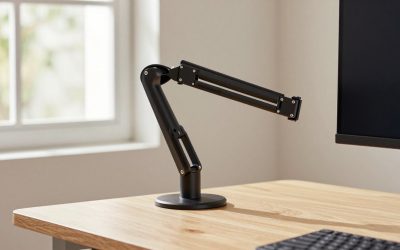
- Best Value: WALI Adjustable Single Monitor Arm for 13-34 inch Screens, up to 26.4 lbs
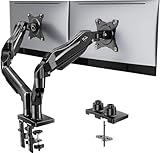
- Premium Choice: HUANUO FlowLift™ Dual Monitor Stand, Fully Adjustable Gaming Monitor Desk Mount for 13–32″ Computer Screens, Full Motion VESA 75×75/100×100 with C-Clamp & Grommet Base, Each Arm Holds 4.4 to 19.8 lbs
📄 In This Review
The Short Answer
If you want a monitor arm that actually fits your screen and desk, match three numbers: screen size, VESA pattern, and weight. For most people, a single arm rated for 13 to 32 inches or 13 to 34 inches, with VESA 75x75mm and 100x100mm support and a weight capacity of 4.4 to 19.8 lbs, will cover a 24-inch to 32-inch monitor. A 27-inch monitor typically weighs 9 to 14 lbs without its factory stand, so an arm rated to at least 17.6 lbs gives you comfortable headroom. For a 34-inch ultrawide, look for arms rated to 19.8 to 26.4 lbs to handle the extra leverage. If your desk is 24 to 30 inches deep, an arm with 18 to 26 inches of horizontal reach will let you push the monitor back for eye comfort or pull it forward for detail work. As monitor designs get lighter in 2026, weight matters more than diagonal inches when choosing.
Standard Sizes
See also: How to Clean a Monitor Arm (2026): Step-by-Step • How to Tighten a Loose Monitor Arm (2026): Step-by-Step
Monitor arms are not sized like clothing. They are sized by the screen diagonal they can hold, the VESA hole pattern they support, how much weight they can hold, and how far they can reach. Use the table below to compare the most common categories you will see when shopping in the US market.
As an Amazon Associate we earn from qualifying purchases at no extra cost to you.


| Arm Type | Screen Size Supported | VESA Patterns | Weight Capacity Per Arm | Typical Arm Reach | Pole Height | Desk Clamp Range |
|---|---|---|---|---|---|---|
| Compact Single Arm | 13 – 27 inches | 75x75mm (3.0 x 3.0 in) / 100x100mm (3.9 x 3.9 in) | 4.4 – 17.6 lbs (2.0 – 8.0 kg) | 16 – 20 inches (40.6 – 50.8 cm) | 13 – 16 inches (33.0 – 40.6 cm) | Fits desks 0.4 – 3.3 inches (1.0 – 8.4 cm) thick |
| Standard Single Arm | 13 – 32 inches | 75x75mm (3.0 x 3.0 in) / 100x100mm (3.9 x 3.9 in) | 4.4 – 19.8 lbs (2.0 – 9.0 kg) | 19 – 26 inches (48.3 – 66.0 cm) | 15 – 18 inches (38.1 – 45.7 cm) | Fits desks 0.4 – 3.5 inches (1.0 – 8.9 cm) thick |
| Heavy-Duty Single Arm | 13 – 34 inches | 75x75mm (3.0 x 3.0 in) / 100x100mm (3.9 x 3.9 in) | Up to 26.4 lbs (12.0 kg) | 22 – 28 inches (55.9 – 71.1 cm) | 16 – 20 inches (40.6 – 50.8 cm) | Fits desks 0.4 – 3.5 inches (1.0 – 8.9 cm) thick |
| Dual Arm – Two Arms on One Pole | 13 – 32 inches per screen | 75x75mm (3.0 x 3.0 in) / 100x100mm (3.9 x 3.9 in) | 4.4 – 19.8 lbs per arm (2.0 – 9.0 kg) | 19 – 25 inches per arm (48.3 – 63.5 cm) | 17 – 20 inches (43.2 – 50.8 cm) | Fits desks 0.4 – 3.5 inches (1.0 – 8.9 cm) thick |
| Large / Ultrawide Arm | 17 – 49 inches (super ultrawide) | 75x75mm / 100x100mm / 200x100mm adapter | Up to 33 lbs (15.0 kg) | 24 – 30 inches (61.0 – 76.2 cm) | 18 – 22 inches (45.7 – 55.9 cm) | Fits desks 0.6 – 3.5 inches (1.5 – 8.9 cm) thick |
Price expectations in this category are consistent. Compact and standard single arms typically cost $25 to $45. Heavy-duty single arms for 34-inch screens run $35 to $65. Dual-arm setups for two 24 to 32-inch monitors generally cost $55 to $90. Arms for 49-inch super ultrawides are specialized and usually start around $90 to $150. Most models include both a C-clamp for the desk edge and a grommet mount for a cable hole, with an opening of 0.4 to 2.4 inches (1.0 to 6.0 cm) for grommet installation.
How to Measure Your Space
Do these five quick measurements before you order. They take less than ten minutes and prevent the most common returns.
- Confirm your VESA pattern. Look at the back of your monitor for four screw holes in a square. Measure the distance between the centers. If it is 75mm (about 3.0 inches) apart, it is 75x75mm. If it is 100mm (about 3.9 inches) apart, it is 100x100mm. Check your manual if no holes are visible, as some monitors need a VESA adapter bracket.
- Weigh your monitor without the stand. Check the spec sheet for weight without stand, or weigh it on a bathroom scale. A 24-inch monitor is usually 7 to 10 lbs (3.2 to 4.5 kg), a 27-inch is 9 to 14 lbs (4.1 to 6.4 kg), and a 32-inch is 13 to 18 lbs (5.9 to 8.2 kg). Your arm must support at least that weight, ideally with 2 to 3 lbs of extra capacity.
- Measure desk thickness and edge clearance. Use a tape measure on the desk edge where you will clamp the arm. Most C-clamps need 0.4 to 3.5 inches (1.0 to 8.9 cm) of thickness and at least 2 to 3 inches of clear space underneath for the bracket. If your desk has a crossbar, drawer, or beveled edge, measure that spot specifically.
- Measure desk depth and viewing distance. Measure from the back edge of the desk to where your eyes sit when you work, usually 20 to 30 inches (50.8 to 76.2 cm). For comfortable viewing, your eyes should be about an arm’s length away, roughly 20 to 26 inches (50.8 to 66.0 cm) from the screen. Choose an arm with enough reach to position the screen in that zone without pulling the base to the edge.
- Check height range and cable slack. Measure from the desktop to your eye level while sitting upright, typically 14 to 18 inches (35.6 to 45.7 cm) above the desk surface. Make sure the arm’s pole and gas spring can lift the center of the screen to that height. Leave 4 to 6 inches (10.2 to 15.2 cm) of slack for power and video cables so they do not pull when you swivel.
By Room or Use Case
Home Office Desk – 24 to 27 Inch Monitor
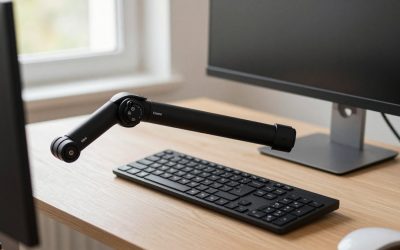
This is the most common setup. A standard single arm for 13 to 32 inches with 75x75mm and 100x100mm VESA and 4.4 to 19.8 lbs capacity is the right fit. Look for tilt of +35 to -35 degrees, swivel of 180 degrees, and rotation of 360 degrees for portrait mode. A reach of 19 to 24 inches (48.3 to 61.0 cm) is ideal for a desk that is 24 inches deep. If your monitor weighs under 15 lbs, you do not need a heavy-duty model.
Gaming Setup – 27 to 34 Inch or Ultrawide
Gamers need stability and range of motion. For a 27-inch or 32-inch flat or curved gaming monitor, choose an arm rated to at least 19.8 lbs, even if your screen is lighter, because the curve adds leverage. For a 34-inch ultrawide, move up to a heavy-duty arm rated to 26.4 lbs with a reach of 22 to 28 inches. Check that the arm allows at least 12 inches (30.5 cm) of height adjustment so you can align the screen with eye level while seated in a lower gaming chair.
Dual Monitors for Work or Streaming – Two 24 to 32 Inch Screens
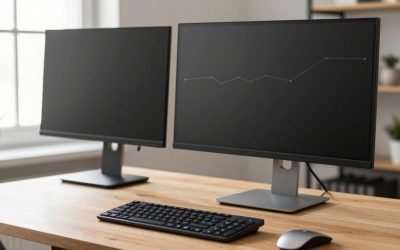
For two screens, you have two options. A dual-arm stand with one pole and two arms saves desk space and costs $55 to $90, with each arm holding 4.4 to 19.8 lbs. This works best if both monitors are the same size and weight. If you mix a 27-inch and a 32-inch, or use an ultrawide plus a standard monitor, two separate single arms give you more flexibility to stagger heights and depths. Allow at least 48 inches (121.9 cm) of desk width for two 27-inch monitors side by side, and 55 to 60 inches (139.7 to 152.4 cm) for two 32-inch monitors.
Small Desk or Apartment – Limited Space
If your desk is less than 20 inches (50.8 cm) deep or has a keyboard tray, a compact arm with a smaller footprint helps. Look for a C-clamp base that is 3 to 4 inches wide and a pole that sits flush against the back edge. An arm with 16 to 20 inches of reach and full folding capability lets you push the monitor flat against the wall when not in use, freeing about 8 to 10 inches of desk depth compared to a factory stand that usually has a 9 to 11 inch deep foot.
Standing Desk or Height-Adjustable Desk
Standing desks move up and down, so the arm must stay stable through the full travel. Choose an arm with a strong C-clamp that tightens with a hand knob or bolt and supports grommet mounting for extra security. Gas-spring arms handle frequent height changes better than mechanical spring arms and keep tension smooth when you switch from sitting at 28 to 30 inches desk height to standing at 40 to 46 inches. Make sure the arm has integrated cable management clips so cables do not snag during height adjustments.
Common Sizing Mistakes
These errors cause most sizing problems and are easy to avoid once you know what to check.
- Buying by diagonal inches alone. Two 27-inch monitors can weigh very different amounts. A budget 27-inch might be 9.5 lbs, while a 27-inch with a USB hub and metal chassis can be 15 lbs. Always prioritize weight capacity over the inch range on the box.
- Ignoring the VESA pattern. Some 32-inch and larger monitors use 100x100mm only, while some 24-inch productivity monitors use 75x75mm only. If your monitor is not VESA compatible out of the box, you will need the adapter that often comes with the arm or a separate bracket for that specific model.
- Forgetting desk construction. Glass desks, desks with a hollow core, and desks with a thick beveled edge do not work well with C-clamps. Glass thicker than 0.4 inches can crack under clamp pressure, and hollow desks can compress. Use a grommet mount with a reinforcement plate or add a desk clamp reinforcement pad if your desktop is less than 0.6 inches thick.
- Choosing an arm that is too short. A short arm on a deep desk forces you to sit too close. If your desk is 30 inches deep and your arm only reaches 16 inches, the screen will sit 10 to 14 inches too far away for a comfortable viewing angle. Measure reach from the clamp point, not from the pole center.
- Not checking tilt and height for curved screens. Curved ultrawides need more tilt adjustment to avoid glare and to keep the center at eye level. Look for at least 35 degrees of tilt up and down and 12 to 14 inches of vertical travel.
FAQ
What VESA size do I need for my monitor?
Most monitors from 13 to 34 inches use either 75x75mm or 100x100mm. You can find it in your monitor’s specifications under mounting or by measuring the four holes on the back. If the vertical and horizontal distances are both about 3.0 inches (75mm), it is 75x75mm. If they are about 3.9 inches (100mm), it is 100x100mm. Almost all single and dual arms listed for 13 to 32 inches include both plates in the box, so you do not need to buy an extra adapter unless your monitor has no VESA holes at all.
Can my desk support a monitor arm?
Most solid wood, MDF, and bamboo desks between 0.6 and 3.5 inches (1.5 to 8.9 cm) thick can support a monitor arm. The key is a flat clamping surface with at least 2 inches of clearance underneath and no lip that prevents the clamp from gripping. For particleboard or IKEA-style honeycomb desks, use the grommet hole with a large washer plate to spread the load, or clamp over the desk frame rather than the hollow span. Avoid clamping to glass without a manufacturer-approved glass adapter.
What size arm do I need for a 32-inch monitor?
For a single 32-inch monitor, choose an arm rated for 13 to 32 inches and 4.4 to 19.8 lbs. Verify that your specific monitor without its stand weighs less than the arm’s maximum. For example, a 32-inch that weighs 16.5 lbs needs an arm rated to at least 19.8 lbs. Make sure the pole is at least 15 to 17 inches tall so the top of the screen can sit at or slightly below eye level, which prevents neck strain.
Do I need a single or dual arm for two monitors?
If you use two monitors of similar size, a dual-arm stand on one base keeps your desk cleaner and usually costs less than two separate arms. Each arm should still be rated for your monitor’s weight and VESA pattern. Choose two separate single arms if your monitors are different sizes, if one is an ultrawide, or if you need one screen in portrait and one in landscape. Two singles also let you position monitors on different sides of a corner desk, where a single pole would be off-center.
Ready to decide? Our #1 pick for 2026 is the Compact Single Arm.
Live price & availability on Amazon.
Related Reviews & Guides



6 Best Monitor Light Bars 2026
Best Ultra Wide Monitors for Multitasking Professionals in 2026: Compared and Ranked