Last Updated: October 18, 2026
If you look tired, washed out, or blurry on video calls, it is rarely your fault. Most built-in laptop cameras are small, fixed-focus sensors tuned to survive bad light, not to flatter you. An external webcam can fix a lot of that, but only if you buy for the right reasons: better exposure, stable focus, and natural color — not just a bigger number on the box.
I have tested cheap and expensive webcams in real home offices — spare bedrooms with one window, desks facing a wall, overhead LEDs that turn everyone yellow. The pattern is consistent: a $70-$120 webcam with good auto-exposure plus a $25 light beats a $200 webcam used alone in a dark room. Looks come from the whole setup, not the sensor alone.
📄 In This Review
What actually makes you look good
Forget 4K as the first filter. For Zoom, Teams, and Meet, you are usually streamed at 720p or 1080p anyway. What reads as “good” on a call is even skin tones, sharp eyes, and no pulsing brightness when you move.
Look for three things. First, autofocus that locks on your face and stays there. Cheap fixed-focus cameras are fine at arm’s length if you never move, but lean back to write and you go soft. Good autofocus keeps glasses, beards, and low contrast faces sharp without hunting every few seconds. Second, auto-exposure and white balance that handle backlight. If you sit with a window behind you, a bad webcam turns you into a silhouette. A better one lifts your face without blowing out the background to pure white. Third, a larger lens and sensible field of view. 65 to 78 degrees looks natural at a desk. Go much wider (90 degrees+) in a small room and you get distortion, more messy background in frame, and you look smaller and farther away.
Microphone and mount matter more than specs suggest. Most webcam mics sound echoey in a hard-floor room. If you take calls all day, plan on earbuds or a USB mic regardless. For mounting, a heavy clip that actually grips a thin laptop lid or a curved monitor is worth more than extra resolution. I have had light webcams slowly tilt down during a 45-minute call. If yours does that, a tiny piece of gaffer tape or a mini tripod fixes it.
Compare your options before you buy
See also: Best Monitor for MacBook Air: Two USB-C 4K Screens and Six Adapter-Dependent Alternatives • Best Monitor for MacBook Pro: Eight Listings Sorted by Cable, Sharpness and Scaling
There are really three tiers that make sense for work, and the cheapest one is fine for a lot of people.
| Option | What you get | Trade-offs / failure modes | Best for |
|---|---|---|---|
| Basic 1080p fixed-focus | Sharper than most built-in laptop cameras, plug-and-play, no software needed | Soft if you move; struggles with backlight; colors can look flat in warm room light | Someone who sits still, has decent front light, wants a cheap upgrade |
| Mid-range 1080p / 2K with autofocus | Reliable face focus, better low-light exposure, wider dynamic range, often has privacy shutter | Needs USB-A or USB-C adapter on newer Macs; auto-focus can hunt in very low light | Daily Zoom / Teams users, home office workers who want to look consistently clear |
| Premium 4K with larger sensor | More detail, better background blur / framing features, better in mixed light | Costs more for benefit most calls compress away; can overheat on long calls; needs good upload bandwidth to matter | Managers on camera all day, coaches, creators who also record clips |
If you sit at a desk with a window or lamp in front of you and you do not move much, save your money. A basic 1080p autofocus webcam for laptop is often enough, especially if you add light (more on that below). Step up to the middle tier if your room is dark, you present to clients, or your current camera keeps hunting for exposure when you shift in your chair.
Only buy 4K if you will actually use what it offers: cropping / auto-framing without going mushy, recording local video for YouTube or courses, or sitting farther from the camera in a larger office. On a live 1080p call, no one can tell the difference between good 1080p and 4K once compression kicks in. I have compared recordings side by side — the lighting setup changed the result ten times more than the resolution.
Lighting does more than the camera
This is the unglamorous truth: a $60 camera with a window in front of you looks better than a $200 camera with a bright window behind you. You do not need studio gear.
Put your face toward your main light source. Desk facing a window is ideal. If you work early or late, put a small LED panel or even a desk lamp with a daylight bulb behind your monitor, aimed at your face, about arm’s length away. Keep overhead-only lighting off if you can — it creates dark eye sockets and shiny foreheads. If you wear glasses, move the light a little higher and to the side to cut the reflection, and turn down screen brightness if you get a blue cast.
Background matters for how “good” you read, too. A busy bookshelf right behind your head forces the camera to expose for the room, not you, and autofocus can get confused. Leave 3-4 feet between you and the wall if possible, and avoid sitting directly under a bright lamp that creates a halo. Software blur helps, but it often chews up hair and glasses edges. A clean, slightly darker background usually looks more professional than heavy blur.
Laptop and Mac notes
On Windows laptops, most modern webcams are plug-and-play with no drivers. Where people get tripped up is USB ports. Many newer thin laptops only have USB-C, so check whether the webcam cable is fixed USB-A and budget for a short adapter. Also check Teams / Zoom camera settings after you plug in — Windows will sometimes default back to the built-in camera after an update.
On Macs, stick to UVC-compliant cameras that explicitly list macOS support. Fancy Windows-only apps for background effects, firmware updates, or AI framing often do not run on Mac, so you may lose those features. That is fine — Zoom and Teams do background blur themselves. If you use a MacBook in clamshell mode with an external monitor, remember the lid camera is blocked or pointed at the desk. That is when an external webcam for Mac with USB-C mounted on the monitor is not optional, it is required.
One common failure mode on both platforms: plugging a 4K camera into an old USB hub or a monitor hub that only passes USB 2.0. You will get stutter, dropped frames, or the camera will silently fall back to 720p. Plug directly into the laptop for testing first, then add the hub back.
How to shop without overpaying
Read reviews for three specific complaints: focus hunting, washed-out skin in low light, and mics that pick up keyboard clatter. Those are the things that make you look — and sound — bad day to day. Ignore sample stills shot in perfect studio light.
Useful features worth paying a little for: a physical privacy shutter, a 1/4-inch tripod thread on the bottom, and on-camera exposure controls if you hate installing software. Features you can usually skip: 60fps at 4K for calls, gesture controls, and heavy beauty filters that make skin look waxy on a work call.
If you also record training videos, look at models with higher bitrate local recording or pair a mid-range camera with good room treatment. A quiet room, a small LED video light for your home office desk, and the camera at eye level — top of the monitor, not looking up your nose from a laptop — will do more for that polished look than another $100 on the sensor.
Finally, set eye level correctly. Stack your laptop or monitor so the lens is even with your eyes. Too low and you get double chin and ceiling fan in frame. Too high and you look small. About an arm’s length away, lens at eye height, light in front — that is 80% of looking good.
FAQ
Will a 4K webcam make me look better on Zoom?
Usually not much. Most calls compress you to 720p or 1080p, so exposure, focus, and lighting matter more. Buy 4K if you record video locally or want auto-framing room to crop.
Why do I look dark when I have a window behind me?
Your camera is exposing for the bright background. Move to face the window, close blinds behind you, or add a lamp in front of you behind the monitor.
Do I need special software on a Mac?
No, in most cases. Choose a camera that works without drivers on macOS. You will control it from Zoom, Teams, or Photo Booth, though some advanced Windows-only features may not be available.
My video freezes or looks laggy — is the camera broken?
Probably not. Try plugging directly into the laptop instead of a hub, lower the resolution to 1080p in the app settings, and close other video-heavy apps. Old hubs and weak Wi-Fi cause most stutter.
Related Reviews & Guides
6 Best Docking Station Lenovo Laptops 2026
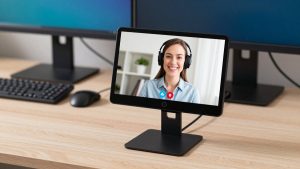
Best Video Conference Camera for Home Office