Last Updated: October 18, 2026
📄 In This Review
What 4K USB actually means for work calls
Most 4K USB cameras sold for home offices are not really about watching you in 4K. Zoom, Teams, and Google Meet compress you to 720p or 1080p anyway, and often lower if your connection dips. The real benefit of a 4K sensor is headroom: the camera can crop in for auto-framing, correct a wide field of view, and downscale to a sharper, cleaner 1080p image with less noise.
That matters in a typical work setup. You sit 2-3 feet from a laptop in mixed window light, with a messy background you want to blur. A good 4K USB camera handles that better than an old 1080p laptop camera, but only if the lens, autofocus, and exposure are tuned for faces, not spec sheets. A bad 4K camera looks worse: soft detail, hunting focus, blown-out windows, and laggy auto-exposure.
For work, think of 4K as image quality insurance, not as a resolution you will actually stream. If your calls are mostly internal check-ins on a laptop, a solid 1080p camera is still fine. Buy 4K when you present to clients, record training videos, teach, or sit in a bright or dark room where a larger sensor and better processing show.
Who should buy one, and who should skip it
See also: Best Monitor for MacBook Air: Two USB-C 4K Screens and Six Adapter-Dependent Alternatives • Best Monitor for MacBook Pro: Eight Listings Sorted by Cable, Sharpness and Scaling
A 4K USB camera suits three people: the remote worker on camera 4+ hours a day, the manager who presents and shares screen while staying on camera, and anyone recording meetings locally for YouTube, courses, or demos. In those cases the sharper downscaled image, better low-light handling, and digital zoom without mush pay off.
Skip it if you are mostly off-camera, take calls from cafes on laptop battery, or use an older laptop with only USB-A 2.0 ports and a weak CPU. 4K processing uses more USB bandwidth and CPU. I have seen older Intel MacBook Airs and budget Windows laptops drop frames or run fans hard with 4K + background blur + noise removal all on at once. If that is you, keep the built-in camera or buy a simple 1080p webcam and spend the money on light and a headset.
Mac users need an extra check. Most modern 4K USB webcams are UVC-compliant and work plug-and-play on macOS with FaceTime, Zoom, and OBS. Advanced features like auto-framing tweaks, background blur strength, or firmware updates often require a Windows-only app. Check that before you buy if you only own a Mac.
What to check before you pay more
Sensor size and lens matter more than the 4K badge. Look for a larger sensor with good low-light ratings and a fixed aperture around f/2.0 to f/2.8. In practice, that gives you cleaner skin tones in a dim home office at 5pm than a tiny-sensor camera that claims 4K but falls apart without studio light.
Autofocus type is the biggest failure mode. Cheap contrast autofocus hunts: your face pulses in and out when you lean forward to type. Better 4K work cameras use fast phase-detection or hybrid autofocus, or they let you lock focus in software. If you sit still at a desk, a fixed-focus model set for 1.5 to 6 feet is actually more reliable and cheaper.
Field of view, microphones, and mount are practical trade-offs. A 65- to 78-degree view suits solo calls and avoids showing your whole room. A 90- to 120-degree view suits small huddle rooms but makes you tiny at a desk. Built-in dual mics are fine for backup, but they pick up keyboard and room echo. For daily work, a dedicated headset or USB mic beats any webcam mic. Also look for a real privacy shutter, a standard tripod thread, a clip that actually grips a thin laptop lid, and a USB-C to USB-C/A cable at least 5 feet long.
The three types worth comparing
There are not dozens of meaningfully different designs. Almost everything falls into three buckets. Pick the bucket first, then worry about brand.
| Type | Best for | Strengths | Weaknesses |
|---|---|---|---|
| Basic fixed-focus 4K webcam | Solo desk workers, laptops | Sharp downscaled 1080p, no focus hunting, low CPU load, usually cheapest | No optical zoom, soft if you move a lot, wide rooms look distant |
| Business autofocus 4K webcam with framing | Presenters, managers, teachers | Fast autofocus, auto-framing and speaker tracking, better mics, Teams/Zoom certifications | More expensive, tracking can feel jumpy, advanced settings often Windows-only |
| Large-sensor creator USB camera | Recording, streaming, demos | Best low light and background blur, interchangeable framing, clean HDMI/USB output | Needs more light to look best, heavier, needs tripod, overkill for just meetings |
If you want simple and dependable, start with a basic fixed-focus 4K USB webcam in the 65- to 75-degree range. If you pace, whiteboard, or move between sitting and standing, the extra cost of auto-framing is justified. Look specifically at a 4K webcam with auto-framing and fast autofocus rather than just the highest megapixel count.
Setup mistakes that ruin 4K quality
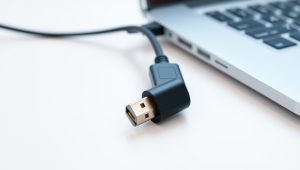
Most disappointing 4K images are setup problems, not defective cameras. First is USB bandwidth. Plug directly into a USB 3.0 or better port on the laptop, not into a cheap unpowered hub shared with a drive and headset. Long passive extension cables over 6 feet cause dropouts at full 4K; if you need distance, use the short supplied cable plus a powered hub or an active extension.
Second is light position. Do not sit with a bright window behind you unless the camera has excellent HDR. Face the window or put a $30 LED panel behind your monitor at face height. 4K sensors show noise quickly in backlit rooms because exposure tries to save both you and the window and fails at both.
Third is software stacking. Running 4K + virtual background + touch-up + studio lighting effects in Teams and also in the camera app doubles processing and softens detail. Pick one layer: either do background blur in the camera software at 1080p output, or do it in Teams and set the camera to plain 4K/1080p with no effects. On Macs especially, outputting 1080p from a 4K camera is smoother and looks nearly identical to 4K on a call.
Heat is another real failure mode. Small 4K webcams get hot after 60-90 minutes and then throttle, dropping sharpness or frame rate. If you teach all day, choose a larger-bodied model with metal housing and ventilation, not the thinnest clip-on. Give it air behind the monitor instead of sandwiching it against a warm wall.
What to buy for a home office or laptop
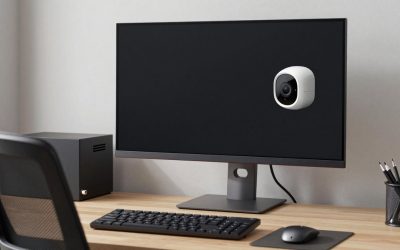
For most laptop workers, the sweet spot is a mid-priced fixed-focus 4K model with a privacy shutter, dual mics, and 65- to 78-degree lens. Mount it on top of your external monitor, not on the laptop screen if the laptop sits to the side — that side angle looks unprofessional after 30 minutes. Set the system to 1080p30 for calls and reserve full 4K only for local recordings.
If you present or move, pay for reliable autofocus and framing memory. The key test is not specs but behavior when you lean in to read: does it stay locked, or does it breathe? Retail listings will not tell you. Look for user reviews that mention focus hunting, auto-exposure pumping, and Mac settings support specifically.
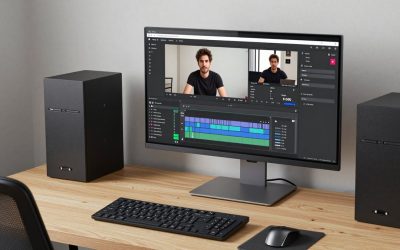
Creators who also record courses should consider a larger-sensor USB camera on a small tripod behind the monitor. It doubles as a meeting camera but shines for recording because you get cleaner shadows and more natural blur without digital artifacts. It is worse as a travel option and overkill if you never hit record. Be honest about that split; many people are better off with a simple webcam plus a decent key light and a dedicated USB microphone for home office.
FAQ
Will my coworkers see me in 4K?
Usually no. Zoom, Teams, and Meet typically show you at 720p to 1080p after compression. You still benefit because the camera downscales from 4K to make that 1080p cleaner, with better cropping and noise control.
Does 4K work on Mac without drivers?
Basic video and mic usually work plug-and-play over UVC. Special features like framing zones, blur strength, and firmware updates often need a vendor app that may be Windows-only. If you are Mac-only, confirm that before buying.
Why does my 4K camera look laggy or soft?
Most often it is USB 2.0 ports, a cheap hub, low light, or stacked background effects overloading the CPU. Plug into USB 3.0 directly, add face light, output 1080p for calls, and turn off duplicate effects.
Is a cheap 4K webcam enough for work?
Yes, if you sit still, have decent light, and use a headset mic. Fixed-focus budget models are often sharper in practice than fancy autofocus models because there is nothing to hunt. Spend more only if you need tracking, wide rooms, or heavy low-light use.
Related Reviews & Guides

Standing Desk Model Reviews

Best Laptop Camera for Video Conferencing