Last Updated: September 12, 2026
- Why Chair Choice Matters So Much
- The Adjustments That Actually Matter
- Getting the Fit Right for Your Body
- Seat Material and Cushioning
- Chair Types: Which Style Suits You
- Matching the Chair to Your Desk
- Budget Versus Investment
- Test Before You Commit
- Frequently Asked Questions
- Conclusion
- Related Articles
- Related Guides
⚡ Key Takeaways


- Sitting is not inherently harmful, but sitting badly for long stretches is.
- Marketing loves to count features, but only a handful of adjustments genuinely affect comfort and health.
- A chair is only ergonomic if it matches your dimensions.
- The seat surface affects comfort over long sessions.
Choosing an office chair is one of the most important decisions you will make for a home office, because it is the single piece of equipment your body is in contact with for eight or more hours a day. A poorly fitting chair quietly contributes to lower back pain, poor circulation, neck tension, and the slow slump that wrecks posture over years. Yet shopping for a chair is confusing: prices range from fifty dollars to well over a thousand, marketing throws around words like “ergonomic” and “lumbar support” without definition, and it is hard to know which adjustments actually matter. This guide cuts through the noise and explains how to choose an office chair that fits your body, your desk, and your budget.
🛒 Best Price Today on Amazon
Prime members get fast, free shipping on everything above, plus member-only deals. New members get a 30-day free trial — cancel anytime.
📄 In This Review
- Why Chair Choice Matters So Much
- The Adjustments That Actually Matter
- Getting the Fit Right for Your Body
- Seat Material and Cushioning
- Chair Types: Which Style Suits You
- Matching the Chair to Your Desk
- Budget Versus Investment
- Test Before You Commit
- Frequently Asked Questions
- Conclusion
- Related Articles
- Related Guides
Quick answer: Our top pick in 2026 is the Feet — our #1 rated choice. See the full ranked comparison, alternatives and buying advice below.
Why Chair Choice Matters So Much
Sitting is not inherently harmful, but sitting badly for long stretches is. The right chair supports the natural inward curve of your lower spine, distributes your weight evenly, and lets you change position throughout the day. The wrong chair forces your muscles to compensate, which is what leaves you stiff and sore. Because everyone’s body is different, the best chair is the one that adjusts to fit you, not the one with the longest spec sheet. Adjustability is the heart of ergonomics.
The Adjustments That Actually Matter
See also: How to Choose a Standing Desk with a CPU Holder • 40 Inches Wide Standing Desk Guide: Best Picks for Small Spaces
Marketing loves to count features, but only a handful of adjustments genuinely affect comfort and health. Prioritize these:
- Seat height: Essential. You should be able to plant your feet flat on the floor with your thighs parallel to the ground and knees at roughly 90 degrees.
- Lumbar support: Adjustable lumbar support that you can move up, down, in, and out fits the curve of your lower back to your spine, not a one-size-fits-all bump.
- Seat depth: A sliding seat pan lets you leave two to three finger widths between the seat edge and the back of your knees.
- Armrests: Adjustable arms support your forearms so your shoulders relax. Look for height adjustment at minimum.
- Recline and tilt tension: The ability to lean back and lock at different angles takes pressure off your spine.
Getting the Fit Right for Your Body
A chair is only ergonomic if it matches your dimensions. Here is how the key measurements should work out when you sit correctly:
| Body Area | Correct Position | Chair Feature Responsible |
|---|---|---|
| Feet | Flat on floor, thighs parallel to ground | Seat height |
| Knees | Roughly 90°, slightly forward of seat edge | Seat depth |
| Lower back | Supported in its natural inward curve | Lumbar support |
| Elbows | Roughly 90°, forearms supported | Armrest height |
| Shoulders | Relaxed, not hunched | Backrest and armrests |
If you are shorter and your feet dangle even at the chair’s lowest setting, do not raise the seat to reach the desk. Instead, set the chair for your arms and support your feet with a footrest so your legs stay properly supported.
Seat Material and Cushioning
The seat surface affects comfort over long sessions. Mesh seats and backs breathe well and stay cool, which matters in warm rooms or for people who run hot. Foam-cushioned seats offer a plusher feel but can trap heat and compress over time. Whatever the material, the front edge of the seat should have a “waterfall” curve that slopes down, which relieves pressure on the underside of your thighs and protects circulation to your legs. A firm, supportive cushion that does not bottom out under your weight will outlast a soft one that flattens within a year.
Chair Types: Which Style Suits You
Office chairs fall into a few broad categories, each with trade-offs:
- Task chairs: The everyday workhorse. Mid-back, adjustable, and good value. Ideal for most home offices.
- Executive chairs: High-back, padded, often leather. Comfortable and imposing but sometimes light on real ergonomic adjustment.
- Ergonomic chairs: Engineered around adjustability and support, usually with mesh and extensive controls. The best long-term investment for full-time desk work.
- Kneeling and saddle chairs: Niche options that change your posture entirely. They suit some people but are not universal solutions.
For a typical full-time home worker, a well-adjusted task or ergonomic chair offers the best balance of cost and health benefit.
Matching the Chair to Your Desk
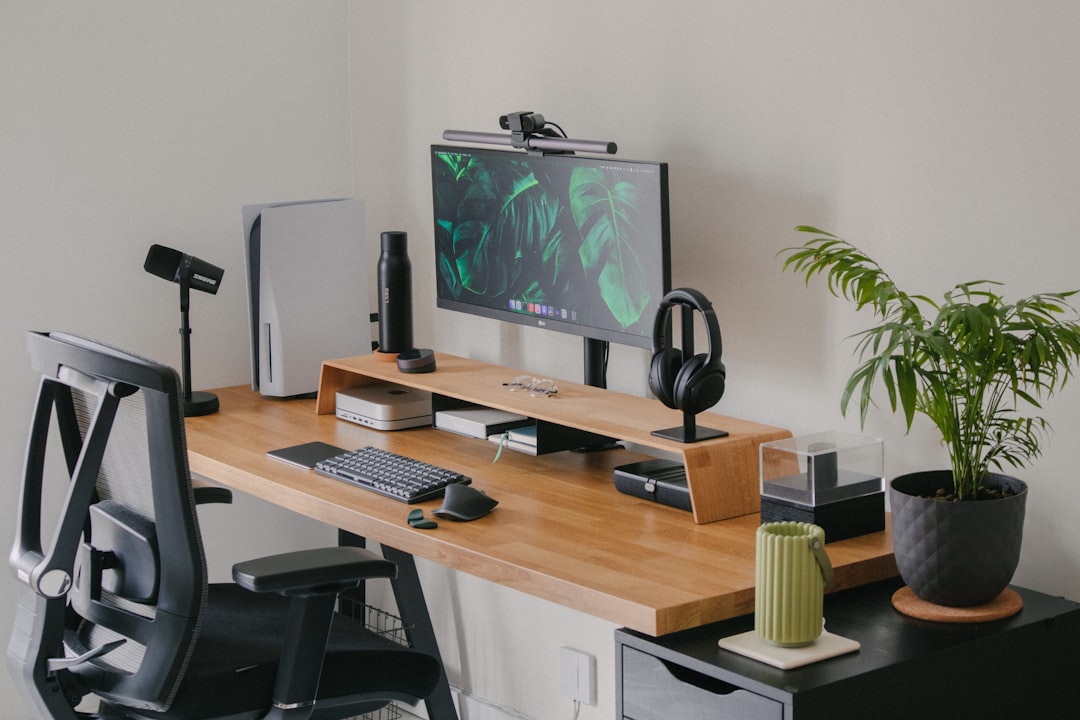
A chair never works in isolation. Its height has to coordinate with your desk so your elbows land at roughly 90 degrees when typing and your wrists stay straight. If your desk is fixed at a tall height, you may need to raise the chair and add a footrest. If you use a sit-stand desk, the chair only needs to handle the seated portion of your day. When you raise a laptop on a laptop stand to bring the screen to eye level, make sure your chair and external keyboard keep your arms at the right angle too. The chair, desk, screen, and keyboard form one system, and tuning them together is what prevents strain.
Budget Versus Investment
You do not have to spend a fortune, but extremely cheap chairs cut corners on the adjustments that matter, often offering only seat height and a fixed back. A modest step up gets you adjustable lumbar support, seat depth, and proper armrests, which is usually the threshold where a chair becomes genuinely supportive. Premium chairs add durability, warranties measured in years, and refined mechanisms. Think of it in terms of cost per hour: a chair you use 2,000 hours a year for several years justifies spending more than a chair for occasional use. Whatever your budget, prioritize adjustability over padding and brand names.
Test Before You Commit
If you can, sit in a chair before buying, and spend more than a few seconds in it. Adjust everything to your body and notice whether you can achieve the positions in the fit table above. When buying online, check the return policy so you can trial the chair at home for a week or two, since comfort over a full workday reveals problems that a showroom sit never will. Pay attention to how you feel at the end of the day, not the first minute.
Frequently Asked Questions
What is the most important feature in an office chair?
Adjustability, especially seat height and adjustable lumbar support. A chair that fits your body matters far more than padding, materials, or brand. If you can only prioritize a few things, make sure the chair adapts to you.
Is a mesh or cushioned chair better?
Mesh breathes well and stays cool, which suits warm rooms and people who run hot. Cushioned seats feel plusher but can trap heat and compress over time. Both work well if the chair is properly adjustable.
How do I know if a chair fits me?
When seated correctly, your feet should be flat on the floor, knees around 90 degrees, lower back supported in its natural curve, and elbows around 90 degrees with forearms supported. If you cannot reach those positions, the chair does not fit.
Do I need an expensive ergonomic chair?
Not necessarily, but very cheap chairs often lack the adjustments that protect your body. A mid-range chair with adjustable lumbar support, seat depth, and armrests is usually the point where comfort and health benefits begin.
What if my feet do not reach the floor?
Do not raise the seat to reach your desk, as that leaves your legs unsupported. Set the chair height for your arms and use a footrest to support your feet so your thighs stay parallel to the floor.
Conclusion
Choosing the right office chair is about fit, not features. Focus on the adjustments that let the chair match your body, seat height, lumbar support, seat depth, and armrests, then coordinate it with your desk and screen. Test it over a real workday rather than a showroom minute, and spend at the level your hours of use justify. Get this one purchase right and your back, neck, and posture will thank you for years.
Ready to decide? Our #1 pick for 2026 is the Feet.
Live price & availability on Amazon.
Related Reviews & Guides



Laptop vs Desktop for Work: Which Is Right for You?
Keyboard Tray Benefits: Why You Might Need One