Last Updated: August 30, 2026
- Why Typing Causes Wrist Pain
- The Neutral Wrist: Your Goal
- Set Your Keyboard and Desk Height Correctly
- Stop Resting Your Wrists While Typing
- Consider Your Keyboard and Mouse
- Take Breaks and Stretch
- Support Your Whole Posture
- When to See a Professional
- Top-Rated Picks
- Frequently Asked Questions
- Conclusion
- Related Articles
⚡ Key Takeaways
- Your wrist is a busy junction of tendons, nerves, and small bones.
- The single most important concept in preventing wrist pain is the neutral wrist position.
- Wrist angle is determined largely by the height of your keyboard relative to your elbows.
- Many people anchor their wrists on the desk or a wrist rest and pivot their hands to reach keys.
That aching, tingling, or burning sensation in your wrists after hours of typing is a warning sign worth taking seriously. Wrist pain from typing is one of the most common complaints among people who work at a computer, and it ranges from mild fatigue to repetitive strain injuries like tendinitis and carpal tunnel syndrome. The encouraging news is that most typing-related wrist pain is mechanical: it comes from how your hands, wrists, and arms are positioned, and how long you hold them there. Change the position, change the habit, and the pain usually fades. This guide explains why typing hurts your wrists and walks through the practical fixes that make the biggest difference.
As an Amazon Associate we earn from qualifying purchases at no extra cost to you.

![[360° Full Compression] Copper Wrist Compression Sleeve 1 Pair, [Ultra Comfort] Compression Wrist Brace for Pain Relief, Tendonitis, Arthritis, Typing, Sport, Daily Use, Wrist Support for Men & Women (L)](https://m.media-amazon.com/images/I/51xIeNtxi4L._SL160_.jpg)


🛒 Best Price Today on Amazon
Prime members get fast, free shipping on everything above, plus member-only deals. New members get a 30-day free trial — cancel anytime.
📄 In This Review
- Why Typing Causes Wrist Pain
- The Neutral Wrist: Your Goal
- Set Your Keyboard and Desk Height Correctly
- Stop Resting Your Wrists While Typing
- Consider Your Keyboard and Mouse
- Take Breaks and Stretch
- Support Your Whole Posture
- When to See a Professional
- Top-Rated Picks
- Frequently Asked Questions
- Conclusion
- Related Articles
Quick answer: Our top pick in 2026 is the Elbow angle — our #1 rated choice. See the full ranked comparison, alternatives and buying advice below.
Why Typing Causes Wrist Pain
Your wrist is a busy junction of tendons, nerves, and small bones. When you type, the tendons that move your fingers slide back and forth through a narrow channel at the wrist called the carpal tunnel, which also houses the median nerve. Hold your wrist in an awkward angle, especially bent up or down, and you compress that tunnel and increase friction on the tendons. Repeat that thousands of times a day and inflammation builds.
Three positional mistakes drive most of the trouble: extending the wrist upward (bending it back), deviating it sideways toward the pinky, and resting the wrist on a hard edge while typing. Add high keystroke force and long stretches without breaks, and you have the recipe for strain.
The Neutral Wrist: Your Goal
See also: Webcam Lighting Setup: Look Better on Every Call • How to Unlock Ichigo in Universal Tower Defense
The single most important concept in preventing wrist pain is the neutral wrist position. A neutral wrist is straight, neither bent up nor down nor angled to either side, as if you were about to shake someone’s hand but with the palm facing down. In this position the carpal tunnel is at its widest and the tendons glide with the least friction.
Almost every fix below is really just a way to help you keep your wrists neutral while you type. When your wrists float in a straight line from your forearms, the load on those tendons and nerves drops dramatically.
Set Your Keyboard and Desk Height Correctly
Wrist angle is determined largely by the height of your keyboard relative to your elbows. When you type, your elbows should be at roughly 90 degrees and your forearms should slope very slightly downward or stay parallel to the floor. If your keyboard is too high, your wrists bend back to reach it; too low, and they bend the other way.
| Element | Correct Setting | Effect on Wrists |
|---|---|---|
| Elbow angle | About 90° | Keeps forearms level |
| Forearm slope | Parallel or slightly downward | Maintains neutral wrist |
| Keyboard tilt | Flat or negative (back edge lower) | Prevents wrist extension |
| Wrist while typing | Floating, straight | Reduces tendon friction |
Counterintuitively, the little flip-out feet on the back of most keyboards make things worse by tilting the keyboard up and forcing your wrists to extend. Keep the keyboard flat, or use a slight negative tilt where the back edge sits lower than the front. A pull-out keyboard tray can position the keyboard below desk level at the perfect height, which is ideal if your desk is too tall.
Stop Resting Your Wrists While Typing
Many people anchor their wrists on the desk or a wrist rest and pivot their hands to reach keys. This pins the wrist in one spot and forces sideways deviation, exactly the motion you want to avoid. The goal is to keep your wrists floating and move your whole hand and forearm to reach distant keys.
A wrist rest is best used as a place to rest your palms during pauses between typing, not as a support to lean on while actively typing. If you do use one, choose a soft, low-profile pad and keep contact at the heel of your palm, not the wrist itself. A supportive desk mat with a comfortable surface can make the area in front of your keyboard a pleasant place to rest your palms during those pauses.
Consider Your Keyboard and Mouse
The equipment itself influences wrist posture. A few options to consider:
- Split or ergonomic keyboards: These angle the two halves so your wrists stay straight rather than deviating outward, which is especially helpful for people with broad shoulders.
- Low-force keys: Keyboards that require less pressure to register a keystroke reduce the impact on your fingers and tendons.
- Vertical or ergonomic mice: A mouse that keeps your hand in a handshake position relieves the forearm twist that a flat mouse forces.
- Trackpads and alternatives: Switching input methods occasionally varies the load on your wrist.
You do not need to buy everything at once. Start with positioning fixes, which are free, and add specialized hardware only if pain persists.
Take Breaks and Stretch
Even a perfect setup will cause strain if you type for hours without pausing. Tendons need recovery time. Build in micro-breaks: every 20 to 30 minutes, drop your hands to your sides, shake them out gently, and let your wrists rest. A few simple stretches help, such as gently extending your arm and pulling your fingers back to stretch the forearm, then the opposite direction. Hold each stretch for 15 to 20 seconds without forcing it.
Varying your tasks also helps. If you have been typing intensely, switch to a task that uses your hands differently for a while. Continuous, repetitive motion is the enemy, and breaking it up is one of the most effective preventive measures.
Support Your Whole Posture
Wrist position depends on the rest of your body. If you slouch or perch on the edge of your seat, your shoulders round forward and your arms end up at the wrong angle, which cascades down to your wrists. Sit back in your chair with your back supported, shoulders relaxed, and feet flat on the floor or on a footrest if they do not reach. A stable base lets your forearms hang correctly and makes it far easier to keep your wrists neutral. If you work on a laptop, raising the screen with a laptop stand and adding a separate keyboard lets you position the keyboard at the right height instead of hunching over a cramped built-in one.
When to See a Professional
Most typing-related wrist discomfort improves with positioning and habit changes. But pay attention to warning signs that warrant medical attention: persistent numbness or tingling in the thumb, index, or middle fingers; pain that wakes you at night; weakness or clumsiness in your grip; or symptoms that do not improve after a few weeks of ergonomic changes. These can indicate carpal tunnel syndrome or tendinitis that benefits from professional evaluation. Early intervention is far easier than treating an entrenched injury, so do not wait until the pain is severe.
Top-Rated Picks


| Product | Brand | Rating | Reviews | Price |
|---|---|---|---|---|
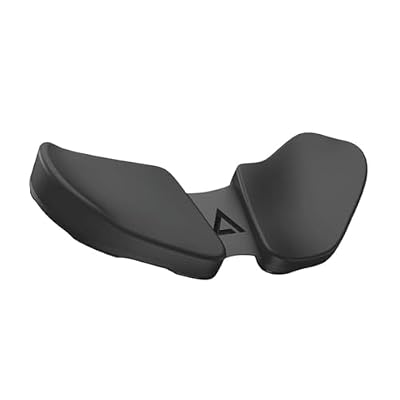
| Vaydeer Extra Large Wide Wrist Rest Set for Keyboard … | Vaydeer | ★ 4.7 | 3k | $26.99 |
| DELTAHUB Carpio 2.0 – Right-Handed Truly Ergonomic Wr… | DELTAHUB | ★ 4.2 | 2.5k | $39.90 |
| Upgraded Computer Wrist Elbow Pad, Creatiee Premium M… | CREATIEES | ★ 4.5 | 0 | $9.99 |
Frequently Asked Questions
What is the correct wrist position for typing?
Keep your wrists neutral, meaning straight and level with your forearms, not bent up, down, or sideways. Your wrists should float rather than rest on the desk while you actively type.
Should I use a wrist rest while typing?
A wrist rest is best for resting your palms during pauses, not for leaning on while typing. Resting your wrist while typing pins it in place and encourages sideways deviation, which can increase strain.
Do those little keyboard feet help or hurt?
They usually hurt. Flipping up the feet tilts the keyboard so the back is higher, forcing your wrists to bend backward. Keep the keyboard flat or slightly tilted with the back edge lower.
Can an ergonomic keyboard fix wrist pain?
A split or ergonomic keyboard can help by keeping your wrists straight instead of angled outward. However, positioning and break habits matter just as much, so address those first.
When should I see a doctor about wrist pain?
See a professional if you have persistent numbness or tingling in your fingers, pain that wakes you at night, grip weakness, or symptoms that do not improve after a few weeks of ergonomic changes.
Conclusion
Wrist pain from typing almost always traces back to position and repetition. Keep your wrists neutral and floating, set your keyboard flat at the right height, stop leaning on your wrists, take regular breaks, and support your whole posture so your arms hang correctly. These changes cost little and address the root cause. If pain lingers despite them, see a professional early, because catching repetitive strain before it becomes chronic is the smartest move you can make.
Ready to decide? Our #1 pick for 2026 is the Elbow angle.
Live price & availability on Amazon.
Related Reviews & Guides




Home Resonance Roblox ID Codes for Music and Audio

Webcam Lighting Tips for Better Video Calls