Last Updated: October 18, 2026
If you run OctoPrint, the camera is not for video calls. It is for checking a print from another room, catching failures early, and making timelapses that do not look like mush. The good news is you do not need to spend much. The bad news is the wrong camera will give you blurry close-ups, dropped frames, or a Pi that stalls mid-print.
I have run OctoPrint on Pi 3B+, Pi 4, and Pi 5 with both ribbon cameras and USB webcams. For most people monitoring a single printer in a home office, a cheap fixed-focus camera mounted correctly beats an expensive autofocus webcam mounted badly.
📄 In This Review
What actually matters for OctoPrint
Resolution is overrated. Focus distance, field of view, low light performance, and CPU load matter more. Most printers sit 30-60 cm from the camera in a dim corner. A 1080p sensor that cannot focus closer than 1 meter is useless, even if the spec sheet looks good.
Connection type is the first decision. Raspberry Pi CSI ribbon cameras use almost no CPU and stay stable at high framerates. USB webcams are easier to mount and move between machines, but they add USB and CPU load, especially on older Pis. Wi-Fi IP cameras add no load to the Pi, but setup in OctoPrint is fussier and latency is higher.
Also decide what you want: live check-ins or timelapses. For live check-ins, 720p at 10-15 fps is enough to see stringing, layer shifts, or spaghetti. For smooth timelapses, you want manual exposure control, solid mounting with no vibration, and consistent lighting. Do not chase 60 fps. OctoPrint rarely needs it and it will bog down a Pi Zero or 3.
Pi ribbon cameras: best for most single-printer setups
See also: Best Monitor for MacBook Air: Two USB-C 4K Screens and Six Adapter-Dependent Alternatives • Best Monitor for MacBook Pro: Eight Listings Sorted by Cable, Sharpness and Scaling
The Raspberry Pi Camera Module v2 is still the sensible default. It is small, cheap, uses the CSI port, and works out of the box with camera-streamer and OctoPi. Image quality is sharp enough in daylight and the latency is low.
Trade-offs: the standard v2 has a fairly narrow field of view and fixed focus set for about 1 meter to infinity. At 40 cm from the bed, prints can look soft. You can manually twist the lens to adjust focus for close distance, but it is fiddly and easy to scratch. The NoIR version sees better in the dark with IR illumination, but colors look washed out in daylight. Only buy NoIR if your printer lives in a dark enclosure.
The Pi Camera Module 3 and Pi HQ Camera are better optically, with autofocus or interchangeable lenses, but they cost more and need more tuning. Get the Module 3 if you want autofocus for close bed shots without fiddling. Get the HQ Camera only if you are serious about timelapses and do not mind a larger mount and higher price. For just checking if a print failed, they are overkill.
Failure mode to know: ribbon cables. They crack if you bend them repeatedly on an enclosure door, and the Pi will lose the camera mid-print. Buy a spare cable in the right length and route it with slack. If you need more than 1-2 meters, switch to USB instead of using long ribbon extensions.
USB webcams: best if you want plug-and-play
A basic 720p/1080p USB webcam is the easiest option. Plug it into the Pi, select it in OctoPrint, mount it on a small tripod or enclosure arm. You can also unplug it and use it for Zoom on your laptop, which you cannot do with a ribbon camera.
The classic budget pick in this category is the Logitech C270 class: 720p, fixed focus, very low CPU use. Honest take: for OctoPrint monitoring, it is fine. Image is soft in low light and colors are flat, but you can clearly see if the print detached or turned to spaghetti. Do not buy a 4K business webcam for OctoPrint. On a Pi 3 or Pi Zero 2, 1080p60 or 4K streams can cause stuttering, overheating, and even serial timeouts to the printer.
If you already own a midrange 1080p webcam like a C920-type model, try it first before buying anything. Set OctoPrint to 1280×720 at 10 fps to keep load down. Turn off autofocus if your software allows it. Autofocus is the number one cause of pulsing blur in OctoPrint streams because the camera hunts every time the print head moves or the bed heater LED blinks.
Mounting matters more than sensor. Clamp the camera so it looks slightly down at the bed, not straight through the enclosure plexiglass. Plexiglass adds glare from room lights. If you must shoot through it, turn off the camera’s status LED and angle it to avoid reflection.
| Camera type | Best for | Strengths | Weaknesses |
|---|---|---|---|
| Pi Camera Module v2 / v3 (CSI) | One Pi + one printer, low latency | Low CPU use, small, cheap, stable | Short ribbon, fiddly focus on v2, enclosure mounting needed |
| Budget USB webcam 720p/1080p | Beginners, renters, multi-use | Plug-and-play, long cable, reusable for calls | Higher CPU load, bad autofocus hunting, weak low light |
| Pi HQ Camera | Timelapse enthusiasts | Sharp lens options, manual control | Expensive, bulky, overkill for monitoring |
| Wi-Fi IP camera | Detached garage, multiple printers | No Pi load, night vision, standalone app | Latency, harder OctoPrint setup, needs stable Wi-Fi |
Wi-Fi / IP cameras: best for enclosures and second locations
If your printer is in a garage, basement, or detached shed, do not run a long USB cable back to your office Pi. Use a cheap Wi-Fi camera and pull its MJPEG or HLS stream into OctoPrint. Many people already have one for home security.
The upside is night vision, wide angle, and phone apps for alerts. The downside is delay – often 2-5 seconds – and more setup. You will need the camera’s stream URL, and some brands change firmware and break third-party streams. Test RTSP to MJPEG conversion before you rely on it. Also, do not put a cloud-only camera on the same congested 2.4 GHz network as your Pi if you can avoid it. It will drop frames exactly when you want to check a 12-hour print.
Who this suits: people running Obico or OctoEverywhere for AI failure detection from afar. Who it does not suit: anyone who wants crisp timelapses. IP streams compress heavily and look blocky up close.
What to buy in 2026
For a Prusa, Ender, or Bambu printer sitting next to your desk with a Pi 4 or 5 nearby: get a Pi Camera Module v2 or v3 with a printed focus tool and a short articulated mount. Total cost stays low and stream stability is excellent.
For a first OctoPrint setup where you are unsure: reuse any spare USB webcam you already own. A basic 1080p USB webcam with fixed focus is fine for failure checks and costs less than a roll of filament. Spend the savings on lighting – a $10 USB LED bar inside the enclosure improves image quality more than upgrading from 720p to 1080p.
For timelapses to post online: Pi Camera Module 3 or HQ Camera, plus solid mount, plus manual white balance locked in OctoPrint settings. Auto white balance shifting mid-print is what makes timelapses flicker.
Setup mistakes that ruin image quality
First, power. A Pi with an underpowered supply plus a USB webcam plus a printer drawing serial power will brown out. Use the official Pi supply, not a random phone charger. If you see lightning bolts or random disconnects, that is power, not the camera.
Second, resolution settings. Start at 640×480 or 1280×720 at 10 fps. Only raise it if CPU stays under 60 percent during printing. High resolution does not help if it causes OctoPrint to lag.
Third, focus and vibration. Print a simple camera arm that bolts to the printer frame or enclosure, not to the desk that wobbles when you type. Set focus once with a test cube on the bed, then lock it. If you use autofocus, lock it after it finds the bed.
FAQ
Can I use my work webcam for OctoPrint and Zoom?
Yes, most USB UVC webcams work for both. Just do not share it at the same time. Unplug from the Pi when you need it for calls, or keep a cheap dedicated camera on the printer. Constant plugging wears out Pi USB ports, so a short extension cable helps.
Do I need night vision for an enclosed printer?
Usually no. A small white LED inside the enclosure gives better color and detail than IR night vision. Use NoIR or IR only if you print in a dark room and do not want light spilling out at night.
Why is my OctoPrint stream blurry up close?
Minimum focus distance. Most webcams focus best beyond 60 cm. Move the camera back and zoom digitally, manually adjust the lens, or switch to a Pi Camera Module 3 with autofocus for close beds.
Will a camera slow down my prints?
A CSI camera almost never does. A high-resolution USB camera on an old Pi can. If you get stuttering or serial errors, drop to 720p at 10 fps, use a powered USB hub, and check your power supply.
Related Reviews & Guides
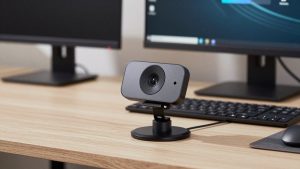
GABRYLLY Ergonomic Office Chair vs Flash Furniture Mid-Back Black Mesh Multifunction: Which Should You Buy?
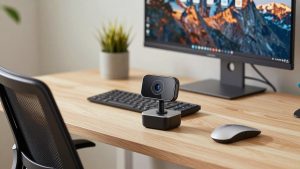
Best Webcam Company to Work For