Last Updated: October 18, 2026
If your budget is capped at 1500, you are shopping in the most crowded part of the webcam market. Most options here look identical on paper: 1080p, built-in mic, USB plug-and-play. In practice, they differ a lot in focus behavior, low-light noise, microphone usability, and mount quality.
For work calls on a laptop or Mac, you do not need 4K or AI tracking at this price. You need stable focus at arm’s length, acceptable skin tones in home lighting, and a mic that does not clip when you lean in. Get those three right and you will look better than most people on expensive laptops with bad built-in cameras.
📄 In This Review
What 1500 actually buys
Under 1500, almost everything is 720p or 1080p, fixed-focus or basic autofocus, with dual digital mics and a clip mount. There is no real optical zoom, no good background blur in hardware, and no excellent low-light performance. Sellers often list interpolated resolution, so treat any claim of 2K or 4K in this range as marketing.
That does not mean they are bad. A decent budget sensor with honest 1080p at 30fps is enough for Zoom, Teams, Meet, and Webex. Your lighting and positioning matter more than the sensor once you hit this level. A 900-rupee camera in daylight near a window will beat a 1400-rupee camera in a dark corner.
What to check before you buy
See also: Best Monitor for MacBook Air: Two USB-C 4K Screens and Six Adapter-Dependent Alternatives • Best Monitor for MacBook Pro: Eight Listings Sorted by Cable, Sharpness and Scaling
First, decide between fixed-focus and autofocus. Fixed-focus is set to be sharp from about 40cm to 2 meters. It never hunts or pulses during a call, which is why many office users prefer it. The trade-off is you cannot hold a document close to the lens and expect it to stay sharp. Autofocus can do that, but cheap autofocus modules often breathe in and out under warm LED light.
Second, check field of view. For one person at a desk, 70 to 80 degrees is ideal. Wider than 90 degrees makes you look small and shows your whole room. Many budget listings do not state this clearly. If they show a very wide sample image with curved edges, assume it is too wide for solo calls.
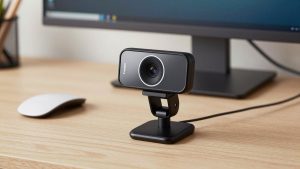
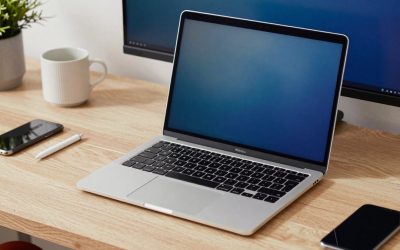
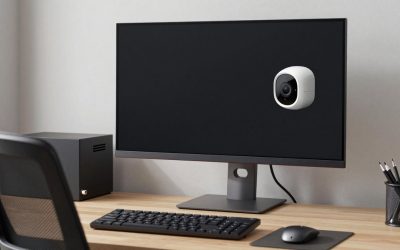
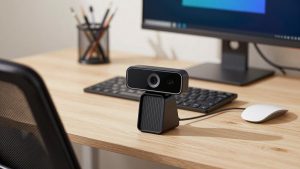
Third, look at the mount and cable. This is where cheap webcams fail. A weak clip slides off thin laptop lids, especially MacBook Air and older ultrabooks. A short 1-meter cable is annoying if your desktop tower sits on the floor. Look for a standard tripod thread on the bottom, so you can put it on a small tripod when the clip does not work.
Fourth, Mac compatibility. Most UVC webcams work on macOS without drivers, but focus, exposure, and mic gain controls often require Windows-only software. On a Mac, assume you get what you plug in. If you need manual exposure control for backlight, you will need a third-party camera app.
Picks by use, not by brand
For daily office calls in good light, a basic 1080p fixed-focus webcam is usually enough. It stays sharp at desk distance, has less shutter lag in meetings, and tends to have more natural colors than budget autofocus models. This suits you if you sit in the same spot, use headphones or a separate mic, and just want to look clear without fiddling with settings.
For teaching, tutoring, or showing objects, choose a budget autofocus model. Search specifically for an autofocus webcam for work from home with close focus around 10cm. The failure mode here is focus hunting when you move your hands. Hold the object still for two seconds and let it lock. If you move constantly, it will pulse and annoy viewers. This type suits teachers and sellers more than office workers.
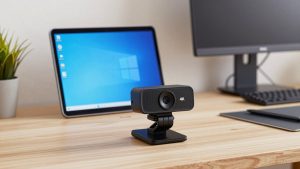
For shared rooms, night shifts, or weak laptop mics, prioritize a model with a larger lens, manual focus ring, and longer cable. A webcam with tripod and privacy shutter is practical if you join from a desktop, bunk bed, or rented room where mounting is awkward. The included mini-tripod is flimsy, but it solves height problems that a lid clip cannot. The privacy shutter is also useful if you keep the camera plugged in.
Quick comparison
Use this to match your situation rather than chasing the highest specs.
| Type under 1500 | Best for | Strength | Common problem |
|---|---|---|---|
| 720p fixed-focus, basic mic | Backup camera, kids classes, second PC | Cheap, no focus issues, works on old laptops | Soft image on large monitors, noisy in low light |
| 1080p fixed-focus, dual mic | Office Zoom / Teams all day | Stable image, decent colors in daylight | Mic picks up keyboard, no close-up focus |
| 1080p budget autofocus | Tutoring, documents, unboxing | Can focus close, more flexible framing | Focus pulses, overexposes windows behind you |
| 1080p with tripod + shutter | Desktops, shared rooms, night use | Flexible placement, privacy cover | Bulkier, tripod wobbles if bumped |
Laptop and Mac setup notes
On Windows laptops, plug directly into a USB 2.0 or 3.0 port, not an unpowered hub. Many call drops blamed on Wi-Fi are actually the camera losing power through a cheap hub. Set your meeting app to 720p if your upload is under 2 Mbps. Sending 1080p over weak internet makes you look worse, not better, because the app compresses aggressively.
On Macs, test in Photo Booth or FaceTime first. If the image is dark, add light in front of you, not behind. MacBooks tend to underexpose external webcams when a bright window is behind you. Close the curtain or move 90 degrees to the window. Do not expect the vendor’s beautify or background software to work on macOS at this price.
Audio deserves a separate note. Every mic in this range is usable for short calls but harsh for 4-hour days. It will pick up fans, typing, and room echo. If you take interviews or client calls, use earphones with an inline mic or a basic USB headset. Keep the webcam mic as backup, not primary.
What to avoid
Avoid any listing that promises 4K, 2K, or 48MP under 1500. It is upscaled 1080p or lower. You pay for the label with worse frame drops. Also avoid cameras with no returns and no clear focus type. If the page does not say fixed-focus or autofocus and does not show real low-light samples, assume the worst.
Avoid ring-light combos bundled with the camera unless you have no lamp at all. Those tiny USB ring lights create harsh hotspots on glasses and fade in a month. A 300-rupee desk lamp bounced off a wall gives better light for calls.
Finally, be honest about when to spend less. If you only join two calls a week in a bright room and your laptop camera already works, a sub-1000 fixed-focus camera as an external angle is fine. Save the rest for lighting or a headset, which improve call quality more than moving from 1000 to 1500 on the camera alone.
FAQ
Is 1080p under 1500 really 1080p?
Sometimes. Good ones output true 1080p at 30fps in daylight but drop detail in low light. Bad ones upscale 720p. Check video reviews with text held up to the camera. If small text smears, it is not true 1080p.
Fixed-focus or autofocus for office work?
Fixed-focus for most desk workers. It stays stable and looks professional. Choose autofocus only if you regularly show papers, products, or whiteboards close to the lens.
Will these work with MacBook Air and Mac mini?
Yes, if they are UVC compliant, which most are. They will work in Zoom, Meet, and Teams on macOS without drivers. You just may not get the Windows app for tweaking focus or exposure.
Why does my new webcam look worse than my phone?
Usually low light and wrong exposure. Phones do heavy processing. Budget webcams do not. Add frontal light, sit 60 to 80cm away, and set the app to 720p on slow internet. That fixes most complaints.
Related Reviews & Guides

Best 4K Webcam for Windows
Best Enterprise Grade Routers for Home Offices in 2026: Compared and Ranked