Last Updated: October 18, 2026
Zoom on a Mac is less demanding than most camera marketing makes it look. Zoom caps most group calls at 720p, and even with HD enabled you rarely get true 1080p unless everyone has a Business or Enterprise account and good bandwidth. What actually makes you look better is exposure control, a clean lens, stable focus, and a decent microphone placement — not more pixels.
If your current MacBook FaceTime camera is fine in daylight but falls apart in a dim home office, you don’t necessarily need a $200 upgrade. You need to fix light first, then decide if an external camera solves a specific problem like framing, focus hunting, or a second monitor setup.
📄 In This Review
Your options at a glance
Most Mac users for Zoom fall into one of these five setups. There is no single best camera, only the least annoying option for how you work.
| Setup | Typical cost | What you gain | Best for | Main drawback |
|---|---|---|---|---|
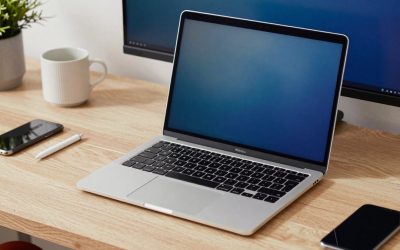
| Built-in MacBook / iMac camera | $0 | No setup, always aligned | Laptop-first workers, travel | Poor low light, fixed wide framing |
| Basic 1080p USB webcam | $40-$80 | Better low light, clip to monitor | Desktop monitor users | Focus can drift, mics are average |
| Higher-end 2K / 4K USB webcam | $120-$200 | Sharper crop, better auto-exposure | Presenters, coaches, interviews | Wasted on Zoom unless you crop or record |
| iPhone as webcam via Continuity Camera | $0 if you own iPhone + mount | Much better sensor and low light | Mac desktop users with iPhone XR or newer | Mount hassle, battery drain, calls interrupt it |
| Mirrorless camera + capture card / USB | $300+ | Shallow depth, best image | YouTube + Zoom hybrid setups | Overheating, complexity, overkill for Zoom |
When to stick with the built-in camera
See also: Best Monitor for MacBook Air: Two USB-C 4K Screens and Six Adapter-Dependent Alternatives • Best Monitor for MacBook Pro: Eight Listings Sorted by Cable, Sharpness and Scaling
On Apple Silicon MacBooks from the last three years, the built-in 1080p FaceTime camera is good enough for daily Zoom if you have decent light. It is centered, the color is consistent, and Zoom handles it without drivers.
It fails in two predictable ways. First, backlight: if you sit with a window behind you, your face goes dark and noisy because the sensor is small. Second, low light: evening calls in a room with one ceiling light will look soft and grainy no matter what software filter you use.
Before buying anything, try this: face a window or put a $25 LED panel behind your monitor at eye level, clean the lens with a microfiber cloth, and raise the laptop so the lens is at eye level. If that fixes 80 percent of the problem, save your money. The cheaper option is fine here — an external camera will not fix bad placement.
Basic 1080p USB webcam: the practical upgrade
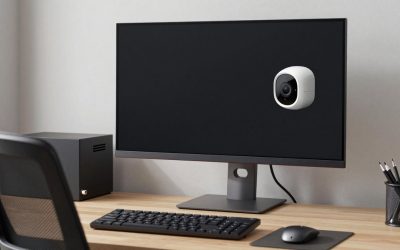
This is the right pick for most people using a Mac mini, Mac Studio, or a MacBook docked to an external monitor. The built-in camera points at the wall when the lid is closed, so you need something to sit on top of the monitor.
A simple 1080p autofocus webcam for Mac with a 78- to 90-degree field of view and dual mics will beat the built-in camera in a dim room, mostly because the lens and sensor are larger and the exposure is less aggressive.
Trade-offs to check: fixed-focus cheap models stay sharp if you sit still but blur if you lean in to show documents. Autofocus models can hunt — pulsing in and out — on patterned shirts or if you gesture a lot. Privacy shutters are useful, but thin clip mounts wobble on curved gaming monitors. On Mac, avoid anything that requires Windows-only software to enable 1080p or turn off beauty filters. If it is not UVC-compliant plug-and-play, skip it.
Who suits: hybrid workers, recruiters, and anyone doing 4-6 Zoom calls a day from a monitor. Who should skip: laptop-only users who already look fine in daylight.
Higher-end 2K or 4K webcam: only if you crop or record
Zoom will not show your 4K. It will downscale it. The reason to buy a higher-end model is not Zoom resolution, it is flexibility: you can crop in to head-and-shoulders without looking mushy, and the auto-exposure and white balance are usually better under mixed office lighting.
A 4K webcam for Mac Zoom calls makes sense if you also record Loom videos, teach, or present and want digital zoom and better background blur without a green screen.
Failure modes: these cameras run hot and some will throttle frame rate to 15 fps in low light to stay bright, which makes motion look smeary. They also expose bad lighting more clearly — every shadow looks sharper. You need USB 3.0 direct to the Mac, not through a cheap hub, or you will get freezes and disconnects mid-call. And the mics, while improved, still pick up keyboard clatter. A $30 USB headset will do more for how professional you sound than any camera upgrade.
iPhone as your Mac camera: best image for $0
If you have an iPhone XR or newer and macOS Ventura or later, Continuity Camera is the best image quality most Mac users can get without buying anything. The iPhone rear sensor is years ahead of any webcam under $150, especially in low light, and features like Center Stage and Desk View actually work well in Zoom.
The catch is workflow. You need a mount — MagSafe mounts for external displays or a tripod for desks work best — and the phone has to stay put. If a call comes in on that iPhone, Zoom can drop. Battery drains fast on long calls unless plugged in, which adds cable clutter. Vertical framing is also tighter, so it is less forgiving if you move around.
This suits Mac mini or Studio users who already own a recent iPhone and hate buying single-purpose gear. It does not suit people who take Zoom calls from their phone at the same time, or anyone who wants a set-and-forget office setup. For a permanent desk, a dedicated USB webcam plus a simple webcam mount for Mac monitor is less fiddly day to day.
Mirrorless and DSLR as webcam: usually overkill
A Sony, Canon, or Fujifilm camera with clean HDMI or USB webcam mode looks fantastic — creamy background, accurate skin tones, great in bad light. If you already stream or shoot video, using what you own for Zoom makes sense.
For everyone else, do not start here. You will deal with overheating limits after 45-60 minutes, batteries that die mid-meeting, lenses that are too tight for a desk, and audio sync issues if you route through a capture card. Zoom compresses away much of the advantage anyway. Buy this only if Zoom is 20 percent of the use and recording is 80 percent.
FAQ
Will any USB webcam work on a Mac?
Almost any modern UVC webcam works plug-and-play with Zoom on Mac, no driver needed. The problem is advanced settings — background blur strength, zoom level, HDR on/off — which often require Windows software. Check reviews from Mac users before buying.
Do I need 4K for Zoom?
No, for Zoom alone. Zoom typically shows you at 720p. 4K helps if you crop, record locally in QuickTime or OBS, or want better digital zoom. Otherwise a good 1080p camera with good light looks identical to attendees.
Why do I look grainy even with a good camera?
Usually underexposure. Your camera is boosting gain because your face is darker than the background. Face a light source, turn off bright lights behind you, and set Zoom to manually adjust for low light rather than auto. A lamp beats a new camera.
Is it better to use my iPhone or buy a webcam?
Image-wise, iPhone wins. Convenience-wise, a dedicated webcam wins. If you do back-to-back calls from the same desk, get the webcam. If you do occasional calls and want the best look with no spend, use Continuity Camera with a solid mount.
Related Reviews & Guides

Best standing desk for small business owners
Best standing desk for basement office