Last Updated: October 18, 2026
If you use Zoom for work, you don’t need Logitech’s most expensive webcam. You need reliable autofocus, decent low-light handling, and microphones that won’t make you sound like you’re in a tunnel. Logitech still dominates this category for a reason: drivers are stable on Windows and Mac, Zoom recognizes them instantly, and the image tuning is predictable.
After using most of the current lineup on real calls — not just test recordings — the sweet spot for most people is still 1080p with good autofocus. 4K only matters if you crop, present, or want to look sharper on a large conference room screen.
📄 In This Review
Quick answer: which one to get
For most Zoom users on a laptop or desktop: get the Logitech C920s. It’s 1080p, has dual mics with noise reduction, a physical shutter, and it just works. If your office is dim or you are often backlit, step up to the Brio 500. If you want the sharpest image for client-facing calls and have a newer computer, consider the MX Brio.
How the main options compare for Zoom
See also: Best Monitor for MacBook Air: Two USB-C 4K Screens and Six Adapter-Dependent Alternatives • Best Monitor for MacBook Pro: Eight Listings Sorted by Cable, Sharpness and Scaling
| Model | Resolution / Field of view | Best for | Watch out for |
|---|---|---|---|
| C270 / C310 | 720p / 60 degrees | Kids’ laptop, second computer, tight budget | Soft image, struggles in low light, narrow frame |
| C920s / C922 | 1080p / 78 degrees | Most home office Zoom calls | Needs decent light to look its best |
| C930e | 1080p / 90 degrees | Small huddle rooms, wider desk setups | Wide angle can distort if you sit close |
| Brio 500 | 1080p / 90 degrees | Backlit rooms, MacBooks, all-day calls | Costs more than C920s for same resolution |
| MX Brio | 4K / 90 degrees | Client-facing work, presentations, cropping | Needs USB-C and CPU headroom; overkill for many |
Best for most people: C920s (or C922)
The C920s is the default Zoom webcam for a reason. It’s 1080p30, autofocus is fast enough that you don’t hunt in and out when you lean forward, and auto-exposure doesn’t blow out your face when a window is behind you — though it won’t save you from a really bright window.
On Zoom specifically, it negotiates 1080p without fiddling with settings, and the dual microphones are usable in a quiet room. They are not great, but they are consistent. Failure mode: in a dim bedroom office at night, the image gets noisy and frame rate drops. A $20 desk lamp behind your monitor fixes more than any upgrade.
The C922 is essentially the same sensor with 60fps at 720p and slightly better compression for streaming. For Zoom, pick whichever is cheaper that week. If you already own a C920, C920s, or C922, don’t upgrade unless you’re changing rooms or lighting.
Who should skip it: if you use a MacBook with only USB-C ports, you’ll live on a dongle. It works fine with an adapter, but the cable is short and non-detachable.
Best if your lighting is bad: Brio 500
The Brio 500 is still 1080p, so don’t buy it expecting more detail. Buy it for better auto-exposure, better white balance, and Logi Tune software that actually helps on Zoom — auto-framing, background blur without Zoom’s CPU hit, and manual exposure control.
In hands-on use, it’s noticeably cleaner than the C920s at 7-9pm with only ceiling lights on. Skin tones look less orange, and backlight from a window is handled better. The mics are also a clear step up, with less keyboard clack.
Trade-offs: field of view defaults to 90 degrees, which is too wide if you sit 2 feet away — arms look stretched and the room looks messy. Set it to 78 or 65 degrees in Logi Tune. Also, Show Mode for whiteboards is gimmicky for most office workers. Get this if you take calls all day and want set-and-forget reliability, especially on Mac.
Sharpest image for client calls: MX Brio
The MX Brio is Logitech’s best-looking webcam on Zoom, but with caveats. In good light, 4K delivers visibly crisper hair, glasses, and text on a whiteboard behind you. Low-light noise is also much lower than any C-series camera.
Failure modes are real: 4K over Zoom often gets downscaled to 1080p or 720p anyway depending on your Zoom plan, bandwidth, and camera settings. You still benefit from better oversampling, but it’s not 4x sharper on the other person’s screen. It also runs warmer and wants a direct USB-C port, not a cheap hub. On older laptops, owners report dropped frames at 4K30 — drop it to 1080p30 and it’s rock solid.
Who it suits: consultants, coaches, sales, anyone whose face is the product on Zoom and who has good lighting already. Who should skip it: laptop users on hotel Wi-Fi, or anyone who mostly does internal standups. The cheaper option is fine there.
Best for small rooms and shared desks: C930e
The C930e is the business-model workhorse. Same 1080p class as the C920s, but with a wider 90-degree lens and better zoom controls in Logitech software. On Zoom, that wider view fits two people at a desk without shoving the camera six feet back.
Trade-off: if you sit alone and close, turn the field of view down or use digital zoom, otherwise you get that door-peeking distortion at the edges. Autofocus is reliable, but color is a touch cooler than the Brio series. It’s a good pick for a dedicated home office PC that sometimes doubles as a family Zoom station.
When the cheap one is fine
Logitech’s 720p models like the C270 are fine for a kid’s Chromebook, a rarely-used guest laptop, or as a backup you toss in a bag. For daily work Zoom, they are not fine — text looks soft, low light is muddy, and you will look like the person with bad Wi-Fi even when your Wi-Fi is perfect.
Rule of thumb: if you Zoom more than 3 hours a week for work, spend the extra $30-40 to get to the C922 class or better. Lighting and a $15 riser to get the camera to eye level will matter more than any further upgrade.
Setup tips that matter more than the model
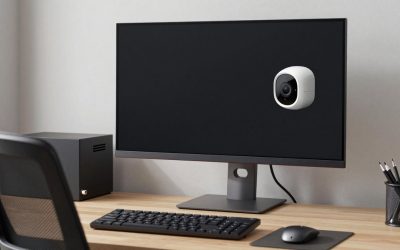
Mount at eye level. Laptop cameras shoot up your nose; clip the Logitech to an external monitor or stack it on books. Face a window or lamp, don’t sit with a bright window behind you. In Zoom Settings > Video, uncheck “Touch up my appearance” if your image looks waxy, and check HD if your plan supports it. In Logi Tune or Logitech Capture, lock exposure manually if your overhead light flickers.
For Mac users: all of these are UVC plug-and-play, no driver install needed for Zoom. Logi Tune on Mac enables framing and firmware updates — install it once, set your field of view, then quit it. For work laptops with locked-down USB policies, the older C920s/C930e are less likely to be blocked than 4K cameras.
FAQ
Do I need 4K for Zoom?
No, for most people. Zoom compresses video heavily and many meetings run at 720p or 1080p on the receiving end. 4K helps if you crop in, use a large display in a conference room, or want cleaner 1080p through oversampling, but lighting and lens quality matter more.
Will a Logitech webcam work with Mac and Zoom?
Yes. All current Logitech USB webcams work with macOS and Zoom without drivers. Use a quality USB-C adapter or dock, and install Logi Tune once to update firmware and set field of view and autofocus preferences.
Why do I look dark even with a good webcam?
It’s usually backlighting, not the camera. Close blinds behind you or add a light source in front of you. In Logi Tune, turn off auto-exposure and raise exposure slightly, or enable RightLight / HDR if your model supports it.
C920s vs Brio 500 — which should I buy?
Get the C920s if your lighting is decent and you want the cheapest reliable option. Get the Brio 500 if you call from a dim or backlit room, want better mics, or want auto-framing that follows you when you move.
Related Reviews & Guides

Best Laptop Camera for Zoom
6 Best Computer Laptop Portable Stands 2026