Last Updated: September 18, 2026
📄 In This Review
Quick answer: Our top pick in 2026 is the Keep the original monitor stands — our #1 rated choice. See the full ranked comparison, alternatives and buying advice below.
The Short Answer
Yes—if you regularly use two monitors and your desk can safely support a clamp or grommet mount, a dual monitor arm is usually worth it. It frees up desk space, makes screen positioning easier, and can improve your posture compared with leaving two monitors on their factory stands. If you rarely use the second screen, have a glass or unusually thin desk, or need to move the monitors often, skip it.
The key condition is that you should actually use both screens for several hours most days. A dual arm solves a real workspace problem; it is not automatically an upgrade just because two monitors look more professional.
As an Amazon Associate we earn from qualifying purchases at no extra cost to you.
What You Actually Get
See also: How to Clean a Monitor Arm (2026): Step-by-Step • How to Tighten a Loose Monitor Arm (2026): Step-by-Step
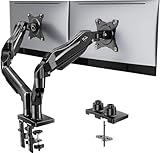
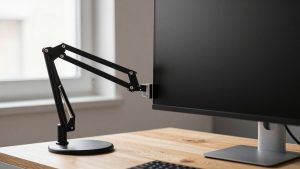
A dual monitor arm replaces two monitor stands with one desk-mounted support system. Most models use a C-clamp that grips the rear edge of the desk or a grommet base that passes through an existing cable hole. The arms then attach to the monitors through VESA mounting holes, usually the 75-by-75mm or 100-by-100mm patterns.
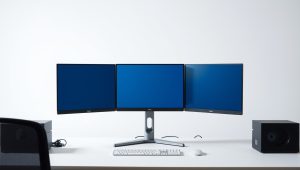
In practical terms, you gain independent control over height, tilt, swivel, and screen depth. You can place two monitors side by side, angle them inward, stack one above the other, or move one screen into portrait orientation if the monitor and arm support that position. You also get more usable space underneath the displays for a keyboard, notebook, speakers, or charging dock.
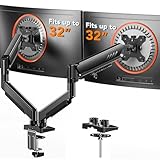
Weight capacity matters more than the headline size range. The HUANUO FlowLift Dual Monitor Stand supports 13- to 32-inch screens, with each arm rated for 4.4 to 19.8 pounds. The ErGear Dual Monitor Arm also supports 13- to 32-inch monitors and lists a maximum load of 19.8 pounds per arm. Check your monitor’s weight without its original stand before buying; a large gaming display with a heavy rear housing may be closer to the limit than expected.
Both examples support common VESA 75-by-75mm and 100-by-100mm mounting patterns, although you should verify your monitor’s specifications. Some displays require a separate VESA adapter, and a few budget monitors do not support arm mounting at all.
Installation is usually straightforward but not instant. You may need to remove the original stands, attach the VESA plates, tighten the desk clamp, and adjust arm tension with a hex key. The ErGear model emphasizes fast installation and tool-free VESA attachment, while the HUANUO model includes both C-clamp and grommet mounting options. A compatible desk should be thick and rigid enough to resist flexing; a thin particleboard top may bow under two moving monitors.
Pros
- More desk space: Removing two monitor bases can reclaim a surprisingly large area. The difference is especially useful on desks around 40 to 48 inches wide.
- Better screen alignment: You can set both displays to the same height and viewing distance instead of working around mismatched factory stands.
- Improved ergonomics: The top third of the primary screen can sit near eye level, reducing the need to look down. Your ideal height still depends on your posture, monitor size, and whether you wear bifocals.
- Flexible positioning: Angle both displays toward your chair, pull one forward for focused work, or rotate a compatible monitor to portrait mode for documents and coding.
- Cleaner cable management: Many arms include clips or channels that route display and power cables along the support structure, reducing loose wires across the desk.
- Useful for changing tasks: A second screen can hold email, reference material, chat, calendars, or a preview window while the primary monitor handles focused work.
- Potentially better value than upgrading one large display: A basic dual arm can cost roughly $35 to $60, before considering the price of a second monitor.
Cons
- Desk compatibility is nonnegotiable: Clamp mounts need a sturdy rear edge and enough clearance. Desks with a raised back, cable tray, beveled edge, or fragile glass top may not work.
- Adjustment can be fiddly: If your monitors have different weights, one arm may need more tension than the other. Poor adjustment can cause sagging, drifting, or screens that are difficult to align.
- Not every setup is stable at full extension: Pulling both arms far forward increases leverage on the desk clamp. The setup is generally most stable when the arms stay close to the mounting post.
- Monitor movement can disturb the other screen: On some lower-cost designs, repositioning one arm transfers a little motion through the post or clamp.
- You lose some built-in stand features: A monitor’s original base may include a useful height adjustment, swivel range, or cable channel that the replacement arm does not reproduce perfectly.
- Installation takes space and time: You may need access behind the desk, a screwdriver, and a second person to help hold a large screen during installation.
- It can encourage unnecessary screen clutter: Two monitors do not automatically improve focus. If you spend most of your time on one display, the second may become an expensive place to keep distracting tabs open.
Who Should Buy It
Buy a dual monitor arm if you work with two screens for at least part of every workday. It is particularly useful for spreadsheet-heavy jobs, video editing, programming, design, research, customer support, trading dashboards, and any role that requires constant reference material.
It also makes sense for a home office with limited depth. A pair of monitor stands can take up roughly 12 to 20 inches of front-to-back desk space, depending on their bases. An arm can leave that surface open for a keyboard, writing pad, or laptop. Gamers may also appreciate the ability to bring both displays closer and angle them toward the center of the chair.
A dual arm is a reasonable purchase when you have two VESA-compatible monitors weighing no more than the arm’s per-screen limit. At the budget end, the ErGear model is listed at $34.99 and supports up to 19.8 pounds per arm. The HUANUO FlowLift model is listed at $59.99 and offers the same 13- to 32-inch screen range, 19.8-pound-per-arm rating, and both C-clamp and grommet installation options. Choose based on your desk, mounting preferences, and adjustment needs rather than price alone.
Who Should Skip It
Skip a dual monitor arm if your second monitor is used only occasionally or if you expect to rearrange your desk frequently. Moving two screens on an arm is less convenient than lifting them from simple stands.
You should also avoid a clamp model for a glass desk unless the manufacturer specifically approves that surface and provides a suitable mounting solution. Be cautious with desktops thinner than about 0.6 inch, hollow-core furniture, and tops that wobble when you type. The exact safe thickness varies by mount, so confirm the clamp range before ordering.
If your monitors are unusually heavy, curved, or larger than 32 inches, look for an arm with a higher capacity and a wider supported size range. A single ultrawide monitor may also be a better solution than two smaller screens if your work benefits from one uninterrupted canvas.
Cheaper Alternatives
| Option | Cost | Trade-off |
|---|---|---|
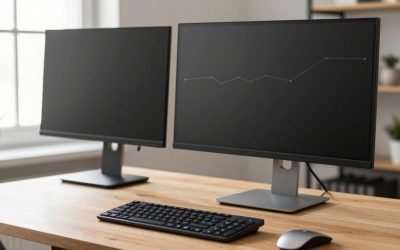
| Keep the original monitor stands | $0 | No installation cost, but you keep the largest bases and have less flexibility. |
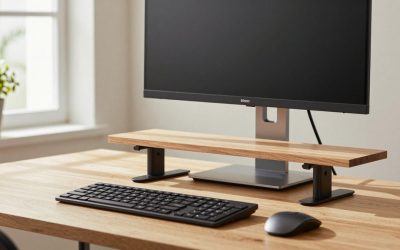
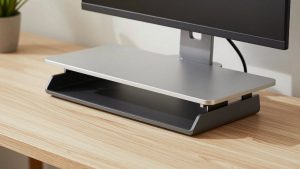
| Two basic monitor risers | $20–$50 total | Raises screens and adds storage underneath, but usually offers little or no tilt, swivel, or depth adjustment. |
| Fixed dual monitor stand | $25–$50 | Often cheaper than a fully adjustable arm, but may have limited height adjustment and no desk-clamp space savings. |
| Single monitor arm plus one factory stand | $20–$45 | A good compromise if one screen is primary, though the two displays may not align as cleanly. |
| Wall-mounted dual bracket | $30–$100 | Preserves all desk space, but requires drilling, suitable wall structure, and more permanent placement. |
FAQ
Will a dual monitor arm work with any two monitors?
No. Each monitor needs a compatible VESA mounting pattern, commonly 75-by-75mm or 100-by-100mm, and its weight must stay within the arm’s per-screen rating. Screen size is only part of the calculation. Check the monitor manual or product specifications, and remember to exclude the original stand when checking the display’s weight.
Is a dual monitor arm better than two monitor stands?
It is better for adjustability and desk space, but not in every situation. Factory stands can be more stable, simpler to install, and easier to move. Choose the arm when you need precise alignment, a clear work surface, or frequent changes in screen position.
How far should two monitors be from my face?
Start with roughly 20 to 30 inches from your eyes, then adjust until text is comfortable without leaning forward. Keep the primary screen centered in front of you. If one monitor is secondary, angle it inward rather than placing it at an extreme angle. Larger displays may need to sit farther away.
Can I put two monitors on a weak or glass desk?
Do not assume it is safe. Two monitors can create significant leverage at the desk edge, especially when the arms are extended. Use a rigid, supported desktop and verify the mount’s clamp requirements. For glass, choose a manufacturer-approved mounting method or use a freestanding stand instead.
Ready to decide? Our #1 pick for 2026 is the Keep the original monitor stands.
Live price & availability on Amazon.
Related Reviews & Guides
6 Best Triple Computer Monitor Stands 2026
6 Best Vivo Monitor Stand Duals 2026