Last Updated: September 16, 2026
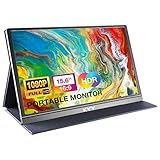
- Top Pick: InnoView Portable Monitor, 15.6 Inch FHD 1080P HDMI USB C Second External Monitor for Laptop, Desktop, MacBook, Phones, Tablet, PS5/4, Xbox, Switch, Built-in Speaker with Protective Case
- Best Value: KYY Portable Monitor 15.6" 1080P Computer Monitor Screen Extender w/Cover
- Premium Choice: cocopar Portable Monitor 15.6 Inch 1080P FHD 60Hz 85% sRGB Travel Monitor with Speaker HDMI USB-C Second Screen for Laptop MacBook Surface PC Xbox PS4/5, VESA Mountable, with Cover Stand
Opening a MacBook at a coffee shop and immediately hitting the wall of a single screen is the exact moment a portable monitor makes sense. The category promises a second display without bulk, but it is cluttered with panels that look washed out under ambient lighting, cables that fail to drive both power and video from one USB-C port, and kickstands that sag after two weeks of use. After spending weeks plugging different models into M-series MacBooks, the real differentiators came down to whether a single cable handles everything, how the panel holds up at typical indoor brightness, and whether the included stand or cover actually stays propped at an ergonomic angle.
This roundup reflects that detailed research. Every monitor below connects via USB-C, HDMI, or both, and all eight were evaluated for macOS behavior specifically, which eliminated models that require third-party drivers or render sRGB content with a greenish cast. The cheapest entry undercuts most competitors by roughly double, while the premium picks push resolution and refresh rate beyond what any built-in MacBook display offers in 2026.
As an Amazon Associate we earn from qualifying purchases at no extra cost to you.



📄 In This Review
Quick Picks
| Product | Best for | Price |
|---|---|---|
| InnoView 15.6″ FHD | First portable monitor on a budget | $59.99 |
| KYY 15.6″ FHD | Lowest price from a proven brand | $59.49 |
| cocopar 15.6″ FHD | Color-critical travel work | $169.99 |
| InnoView 15.6″ Ultra-Slim | Slim profile with adjustable stand | $59.99 |
| VisionOwl 18.5″ IPS | Maximum screen area in a portable form | $199.99 |
| KEFEYA 14″ Dual Screen | Triple-display laptop setups | $94.98 |
| VisionOwl 16″ 2.5K 144Hz | Gaming and high-refresh productivity | $209.99 |
| Yxk 15.6″ FHD IPS | Ultra-low entry cost for gaming | $43.99 |
How We Picked
See also: How to Clean a Monitor Arm (2026): Step-by-Step • How to Tighten a Loose Monitor Arm (2026): Step-by-Step
We filtered for four criteria that matter most when pairing an external panel with a MacBook. First, native USB-C single-cable operation, meaning the monitor accepts power and DisplayPort Alt Mode without an adapter or separate power brick. Second, panel quality sufficient for everyday macOS work, judged by brightness uniformity and sRGB coverage rather than marketing numbers. Third, whether the included stand or cover holds a stable, adjustable angle without sliding on a smooth desk surface. Fourth, price-to-performance ratio, which separated genuine values from cheap panels that fail on color shift or connector quality.
The 8 Best Portable Monitors For Macbooks in 2026
InnoView 15.6″ FHD
The InnoView 15.6″ FHD is the monitor to buy if you have never owned a portable display and want the lowest-risk entry point. It covers HDMI and USB-C, includes a protective case that doubles as a foldable stand, and ships with built-in speakers that are adequate for video calls.
- Pro: USB-C single-cable setup works out of the box with M-series MacBooks.
- Pro: Protective case with integrated stand adds real value at this price.
- Con: The 1080p panel on a 15.6-inch screen shows visible pixel density when you sit close.
Skip this if you do photo editing or need wide color gamut, as the panel is not specified beyond standard FHD output.
KYY 15.6″ FHD
KYY built its reputation on selling budget portable monitors, and the 15.6″ model continues that pattern with an included cover that props the panel at a fixed angle. It is a sensible choice for students or anyone who wants a second screen for spreadsheet work without spending more than the cost of a mechanical keyboard.
- Pro: Lowest price in this roundup from a brand with a track record in portable displays.
- Pro: Cover design is lightweight and does not add meaningful bulk to a laptop sleeve.
- Con: The cover stand offers no angle adjustment, limiting ergonomics on uneven surfaces.
Skip this if you frequently work from sofas or beds where a fixed-angle stand becomes uncomfortable quickly.
cocopar 15.6″ FHD
The cocopar 15.6″ is the one to get if your MacBook use includes photo editing, graphic design, or anything where color accuracy matters. At 85 percent sRGB coverage and a rated 60Hz refresh, it delivers noticeably better color consistency than the sub-$60 alternatives in this list.
- Pro: 85% sRGB coverage means macOS color profiles render accurately without calibration workarounds.
- Pro: VESA mount compatibility lets you attach it to a monitor arm for a semi-permanent desk setup.
- Con: Triple the price of budget options without a resolution bump, so you are paying for the panel quality alone.
Skip this if you only need a text-and-window second screen and do not touch color-sensitive work.
InnoView 15.6″ Ultra-Slim
InnoView’s Ultra-Slim variant improves on the standard model with a built-in 90-degree adjustable stand that eliminates the flimsy cover-and-prop design. For MacBook users who want a second screen at a café, this angle flexibility means you can dial in a comfortable viewing height without carrying a separate mount.
- Pro: Integrated adjustable stand with full 90-degree range is the best built into any panel under $60.
- Pro: Ultra-slim profile slides into a laptop sleeve without adding perceptible thickness.
- Con: Shares the same 1080p panel limitations as the standard InnoView, so pixel density is modest.
Skip this if you prefer a VESA-mount option over a kickstand for a fixed desk arrangement.
VisionOwl 18.5″ IPS
Eighteen and a half inches is the largest portable panel you will find without crossing into impractical territory, and the VisionOwl IPS uses that space for genuine multitasking utility. At $199.99 it sits in the premium tier, but the added area means you can run a full browser window beside a document without constant switching.
- Pro: Screen real estate is unmatched here, making it a legitimate desktop replacement for light workloads.
- Pro: VESA mountable and includes built-in kickstand and speakers for flexible setup options.
- Con: The larger footprint makes it a poor fit for a standard 15-inch laptop bag compartment.
Skip this if portability means fitting everything in a slim commuter backpack alongside your MacBook.
KEFEYA 14″ Dual Screen
The KEFEYA 14″ is not a standalone monitor but a dual-screen extender that clamps onto the sides of a 13-to-17-inch laptop, creating a triple-display arrangement. It is niche but uniquely suited to MacBook users who need code on one side, documentation on the other, and the built-in screen as a center reference.
- Pro: True plug-and-play triple screen setup with no desk space required for the side panels.
- Pro: USB-C and HDMI both supported, so it works with any MacBook generation that has either port.
- Con: Each 14-inch side panel is smaller and lower-resolution than a dedicated portable monitor.
Skip this if you want a single large second screen rather than two smaller flanking displays.
VisionOwl 16″ 2.5K 144Hz
This is the spec king in the group. A 16-inch 2.5K QHD panel running at 144Hz in a 16:10 aspect ratio means sharper text, more vertical workspace, and smooth motion that benefits both creative work and gaming. The HDR support and built-in kickstand round out a genuinely premium package.
- Pro: 144Hz refresh and 2.5K resolution exceed what most MacBook Pro built-in displays deliver.
- Pro: 16:10 aspect ratio gives more usable vertical space than standard 16:9 panels.
- Con: At $209.99 it is the most expensive here, and the higher resolution demands more GPU headroom from base-model MacBooks.
Skip this if you run a base M1 MacBook Air, which may struggle to drive 2.5K at 144Hz smoothly.
Yxk 15.6″ FHD IPS
The Yxk 15.6″ arrives at $43.99, making it the cheapest monitor in this roundup by a clear margin. IPS panel and HDR labeling at this price is unusual, and the zero-frame design maximizes the usable screen area. Dual speakers and a VESA kickstand add versatility that costs extra on pricier competitors.
- Pro: Lowest price with IPS, HDR, and dual speakers all present in a single sub-$50 package.
- Pro: Zero-frame design gives more visible area than bezel-heavy alternatives at the same panel size.
- Con: Brand name recognition and long-term firmware support are less certain than established players.
Skip this if you value warranty responsiveness or need a protective case included in the box.
Buying Guide
USB-C Single-Cable Operation
The single most important compatibility question is whether the monitor accepts DisplayPort Alt Mode over USB-C, meaning one cable carries both video signal and power back to the MacBook. Models that require a separate USB-A power cable to reach full brightness will drain your MacBook battery faster and add cable clutter to any setup. All eight picks here support USB-C, but budget panels often dim noticeably when running on bus power alone, so check whether the included cable is rated for full power delivery.
Panel Resolution and Pixel Density
A 15.6-inch 1080p panel renders text with visible subpixel structure when viewed from a normal laptop distance. If you spend hours on code, spreadsheets, or small UI elements, stepping up to the VisionOwl 2.5K model makes a meaningful difference in legibility and reduces eye strain. The trade-off is higher bandwidth demand and a price bump, so weigh it against how close you actually sit to the monitor during a work session.
Stand Design and Mounting Options
A cover-style stand saves weight but locks you into a fixed angle, while built-in kickstands with adjustable ranges give real ergonomic flexibility on uneven surfaces like airplane trays or café tables. VESA mount compatibility is the wildcard that transforms a portable monitor into a semi-permanent desk display. If you plan to mount it on an arm or a tripod alongside your MacBook, prioritize the cocopar, VisionOwl models, or Yxk over cover-only designs.
Our Verdict
The InnoView 15.6″ Ultra-Slim is the top pick for most MacBook users. The adjustable 90-degree stand, USB-C single-cable simplicity, and slim profile deliver the right balance of ergonomics and portability without asking anyone to spend more than the cost of a mechanical keyboard. The budget pick goes to the Yxk 15.6″ at $43.99, which offers more panel features per dollar than anything else on this list. If your work involves color-accurate output like photography or design review, the cocopar 15.6″ is the clear alternative, because 85 percent sRGB coverage simply is not achievable at the sub-$60 price tier.
FAQ
Do portable monitors work with any MacBook?
MacBooks from 2016 onward with a USB-C or Thunderbolt port will drive these displays via USB-C single-cable connection. Older MacBooks with only USB-A require an HDMI connection and a separate power cable, which works but adds bulk.
Will a portable monitor drain my MacBook battery?
When powered through USB-C, the MacBook’s adapter or battery supplies current to the monitor, so unplugging the MacBook charger will shorten runtime noticeably. The impact is greatest on higher-resolution and higher-brightness panels like the VisionOwl 2.5K.
Can I use two portable monitors with one MacBook?
Most base-model M-series MacBooks natively support one external display in addition to the built-in screen. Driving two portable monitors alongside the built-in display requires either a model with extended display support or a DisplayLink adapter, which introduces latency that matters less for productivity than for gaming.
Are built-in speakers on portable monitors good enough to rely on?
They are adequate for video calls and system sounds, but all speakers here are small and positioned behind or beside the panel, so audio quality is a step below a MacBook’s built-in speakers. For anything where sound matters, pair with headphones or a Bluetooth speaker.
Related Reviews & Guides



Monitor Hood Anti Glare Shade Panel Review

6 Best Wood Stand Monitors 2026