Last Updated: October 18, 2026
If you just need to show up clearly on Zoom, Teams, or Google Meet without sounding like you are calling from a bathroom, a cheap webcam with a microphone is enough. You do not need 4K, AI tracking, or a separate USB mic for daily standups, classes, or job interviews. What you do need is reliable 1080p, a mic that does not clip your voice, and a mount that stays put on your laptop or monitor.
The problem is that the cheapest options cut corners in places that matter for work. Weak low-light performance, harsh auto-exposure, and thin-sounding dual mics are common. The good news: once you know where those trade-offs show up, it is easy to pick a budget model that works for a home office and skip the ones that will frustrate you.
📄 In This Review
What you actually get for under $40
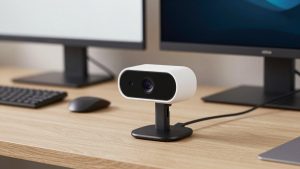
Most cheap webcams with a microphone top out at 1080p at 30fps with two small noise-reducing mics built into the front. Field of view is usually 65 to 90 degrees, focus is either fixed or basic autofocus, and the connection is USB-A with a 4 to 6 foot cable. For a well-lit home office, that is fine. Your face will look sharp enough on a 13 to 27 inch screen and your voice will be intelligible if you sit 2 to 3 feet away.
What you do not get is studio quality. In a dim room, budget sensors get grainy fast and auto white balance can turn skin tones orange or washed out. Mics pick up keyboard clicks, fan noise, and room echo. There is usually no real background blur in hardware — that is handled by Zoom or Teams and needs a decent CPU. If you work nights in a dark room or take calls in a noisy shared space, a cheap all-in-one will show its limits.
The microphone is the weak point
See also: Best Monitor for MacBook Air: Two USB-C 4K Screens and Six Adapter-Dependent Alternatives • Best Monitor for MacBook Pro: Eight Listings Sorted by Cable, Sharpness and Scaling
Treat the built-in mic as a convenience, not a replacement for a headset. On most budget models it is usable for 30-minute calls, but it has three predictable failure modes. First, it sounds thin and distant past 4 feet, so people will ask you to repeat yourself if you lean back. Second, it has aggressive noise suppression that can chop the start of sentences. Third, it picks up desk vibration if the webcam is mounted on a wobbly monitor.
For one-on-one calls in a quiet room, the built-in mic is fine. For all-day calls, interviews, or if you type while talking, use earbuds or a headset and keep the webcam mic as backup. If you hate headsets, sit closer, turn down mechanical keyboard noise, and set your meeting app to low or medium noise suppression instead of maximum. That prevents the underwater voice effect cheap mics often trigger.
The three budget types worth comparing
Basic 720p/1080p fixed-focus webcams are the cheapest and simplest. No autofocus to hunt during a call, very low CPU load, and they work well with older laptops and Macs. Best for kids’ school laptops, shared family computers, or as a spare. Trade-off: fixed focus is usually set around 2 to 6 feet. Too close and you look soft. Too far and text on a whiteboard behind you will be unreadable.
Budget 1080p autofocus webcams are the sweet spot for work. Autofocus keeps you sharp if you move, and many add a wider 80 to 90 degree lens and a physical privacy shutter. Look for models advertised as low-light corrected rather than just 1080p, because sensor quality matters more than pixel count at this price. When shopping, browse 1080p webcams with microphone and filter for recent reviews that mention Teams, Zoom, and Mac compatibility.
Budget 2K/QHD webcams sound better on paper than in practice. The sensor is often the same small 1080p-class sensor upscaled, so low light is no better and the file uses more CPU. Only consider one if you crop or zoom in often for presentations and have a newer laptop. Otherwise save the $10 to $15 and buy a small ring light instead — that will improve image quality more than extra pixels.
Quick comparison for work use
| Type | Video in good light | Mic quality | Common failure | Best for |
|---|---|---|---|---|
| Basic fixed-focus 1080p | Good enough for daily calls | Usable within 3 ft, thin | Soft image if too close; weak in dim rooms | School, spare laptop, tight budget |
| 1080p autofocus with shutter | Sharp, stable if lighting is decent | Clearer, still picks up keyboards | Autofocus hunting; overexposed windows | Home office, job interviews, hybrid work |
| Budget 2K webcam | Slightly sharper stills, similar live call | Similar to 1080p class | Higher CPU use; grain in low light | Presenters who crop video |
| Laptop built-in + cheap USB mic/headset | Depends on laptop, often 720p | Better than webcam mic | Bad angle; extra cable | Noisy rooms, all-day talkers |
Laptop and Mac notes that save headaches
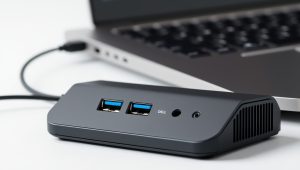
Most cheap webcams are plug-and-play on Windows, Mac, and Chromebooks with no drivers, but check the cable. Many still ship with USB-A only. If you have a MacBook or thin ultrabook with only USB-C, you will need a simple USB-C adapter or hub. Autofocus and exposure are usually fixed in hardware, so you cannot tune much on macOS unless the vendor offers software — most budget vendors do not.
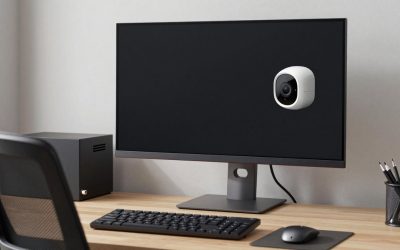
Mount fit matters more than people expect. Thick gaming monitors and iMac bezels can make a cheap clip slide. Look for a tripod thread on the bottom as a backup. A tiny desk tripod fixes angle problems on laptops too, where a lid-mounted webcam points up your nose. If you use a laptop docked to a monitor, mount the webcam on the external monitor at eye level and disable the laptop camera in your meeting app to avoid joining with the wrong one.
What to avoid and when cheap is fine
Skip no-name listings that promise 4K for $19.99, autofocus plus 10x zoom, or studio mic quality. Those specs are usually interpolated resolution and unfiltered mics. Also avoid models without a privacy shutter or at least an LED indicator if you work around roommates or kids. The shutter on cheap models is flimsy, but it is better than tape over the lens.
Cheap is fine when your room has decent light, calls are under an hour, and you sit close. A $25 to $35 autofocus model plus daylight from a window will beat a $80 webcam in a dark room. If you want a simple upgrade path, get a budget webcam for laptop home office use first, then add a $15 LED panel and wired earbuds. That trio solves 90 percent of work call complaints.
Spend more only if you stream, record courses, or are on camera 6 hours a day. Then better low-light performance, a wider dynamic range, and manual software controls are worth it. Casual users will not see the difference after Zoom compression.
Simple setup that makes a cheap webcam look expensive
Put a light source in front of you, not behind you. Face a window or a cheap LED panel and close blinds behind you to stop backlight washout. Set the camera at eye level, about arm’s length away. In Zoom or Teams, turn on HD if your internet can handle it, turn off touch-up filters that smear detail, and select noise suppression on low. Test the mic in your meeting app’s audio settings — speak at normal volume and watch the meter. If it pegs red, move the input volume to 70 to 80 percent to avoid harsh clipping.
If autofocus keeps pulsing, sit still for 5 seconds after joining, avoid busy patterned backgrounds, and add light. If the image is grainy, add light before raising exposure in software. And if family noise bleeds in, switch to a headset for that call rather than blaming the webcam. Many workers keep a compact USB headset with microphone for work calls in a drawer for noisy days and use the webcam mic the rest of the time.
FAQ
Is a cheap webcam with a microphone good enough for job interviews?
Yes, if the room is quiet and lit from the front. Sit 2 to 3 feet away, test audio and framing the night before, and use earbuds if there is any echo. Interviewers care about clear audio and eye-level framing more than resolution.
Why do I sound echoey or far away?
You are likely too far from the mic or in a hard-walled room. Move closer, lower speaker volume to prevent feedback, and turn on mild noise suppression in Zoom or Teams. A headset fixes it instantly if the problem persists.
Will a cheap webcam work with Mac and Chromebook?
Usually yes for basic video and mic over USB, but you may need a USB-C adapter and you likely will not get vendor tuning software. Stick to models with recent reviews specifically mentioning Mac or Chromebook and Zoom or Meet.
Should I get 1080p or 2K on a budget?
Get a good 1080p model with decent low-light handling. Budget 2K rarely looks better on live calls because meeting apps compress video, and it can use more CPU on older laptops.
Related Reviews & Guides

Best Ergonomic Office Chair for Writers
Best Webcam with Privacy Shutter