Last Updated: October 18, 2026
If you cam for a living, your camera is your work tool. Viewers decide in seconds whether your image looks clean and professional, and a soft, noisy laptop webcam will cost you tips and regulars. You do not need cinema gear to fix it, but you do need reliable autofocus, decent low-light performance, and accurate skin tones for long sessions.
This guide sticks to what actually works in a home office or bedroom studio on Windows, Mac, and laptops: USB webcams and plug-and-play mirrorless setups that behave like webcams. No capture-card science projects unless you want one.
📄 In This Review
What actually matters for camming
Resolution is overrated. What viewers notice is sharp focus on your face, stable exposure when you move, and low noise in warm, dim room light. Most successful streamers still deliver in 1080p. 4K helps if you crop or zoom digitally, but it also needs more light and more upload bandwidth.
Prioritize these three things: large sensor or good low-light processing, fast and quiet autofocus that does not hunt, and a 60 fps option for natural movement. A good 1080p 60 fps image beats a smeary 4K 30 fps image every time. Also check Mac compatibility. Some webcam software with background blur and manual controls is Windows-only, while the basic UVC feed still works on Mac.
Failure mode to avoid: buying a cheap no-name 4K webcam that interpolates resolution. It will look sharp on the box and mushy in OBS, with pulsing exposure and plastic skin tones. A honest 1080p camera from an established brand is better.
Quick picks by setup
See also: Best Monitor for MacBook Air: Two USB-C 4K Screens and Six Adapter-Dependent Alternatives • Best Monitor for MacBook Pro: Eight Listings Sorted by Cable, Sharpness and Scaling
| Setup | Best for | Strength | Trade-off |
|---|---|---|---|
| Mid-range 1080p 60 fps webcam | Starting out, laptop streamers | Easy USB setup, smooth motion, good autofocus | Softer in very low light, limited background blur |
| Premium 4K webcam with large sensor | Full-time creators, fixed home studio | Sharper crop, better low light, pro look | Costs more, needs good lighting to show difference |
| Mirrorless / vlogging camera as USB webcam | Top-end image, shallow depth of field | Best skin tones and low light | Price, heat on long sessions, needs power and tripod |
| Laptop built-in + good light | Travel or backup | Free, always with you | Noisy image, wide-angle distortion, poor in dim rooms |
If you are unsure, start in the middle. A solid mid-range webcam plus a $40-60 key light will outperform an expensive camera in a dark room.
Best value starter: 1080p 60 fps webcam
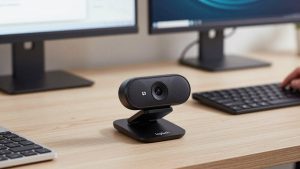
For most people, this is the sweet spot. You get plug-and-play USB, 60 fps for dancing, gesturing, and outfit changes without judder, and autofocus that stays locked at desk distance. On Macs and work laptops, it just shows up in Chrome, OBS, Streamlabs, Zoom, and browser-based cam sites without drivers.
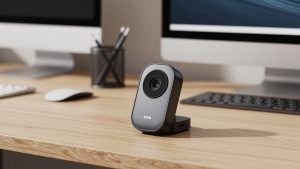
Look for a 1080p 60fps webcam with autofocus with a real 2+ megapixel sensor, dual mics you will probably not use, and a physical privacy shutter. 78 to 90-degree field of view is ideal. Wider than that makes a small room look cavernous and your face small.
Who it suits: new creators, anyone streaming from a laptop, and anyone who moves around. When the cheaper option is fine: if you already have a softbox or window light, this tier is often all you ever need. Upgrade your light before you upgrade the camera.
Failure modes: autofocus hunting if you have fairy lights or a bright window behind you, and over-sharpened faces. Fix it by facing your key light, closing blinds behind you, and turning sharpness down in the camera app.
Full-time upgrade: premium 4K webcam
If you cam 4+ hours a day from the same spot, a premium 4K webcam is worth it. The bigger sensor holds detail in warm lamp light, handles mixed daylight and LED without going orange, and lets you crop from wide to medium without going soft. You can frame a full upper-body shot and punch in for close-ups in software.
Shop for a 4K webcam with large sensor for low light with phase-detect or hybrid autofocus, HDR, and manual exposure in its app. Make sure it can do 1080p 60 fps as well as 4K 30 fps. You will likely stream in 1080p 60, record in 4K, or use 4K for digital zoom.
Who it suits: established creators with a fixed backdrop, good upload speed (10 Mbps+), and a modern laptop or desktop. Not ideal for older MacBook Airs that get hot decoding 4K for hours.
Failure modes: overheating softness on very long sessions, overactive auto-framing that zooms at the wrong moment, and Windows-only features. Test for 2-3 hours before a paid show. Turn off auto-framing and auto exposure if they breathe during a set.
Pro look: mirrorless camera as webcam
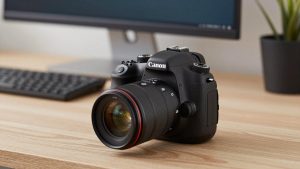
This is how you get that soft background and creamy skin tones webcams cannot fake. Many current vlogging and mirrorless cameras do USB streaming directly – you plug in USB-C, select USB streaming mode, and it appears as a webcam on Mac and PC. No capture card needed for basic 1080p.
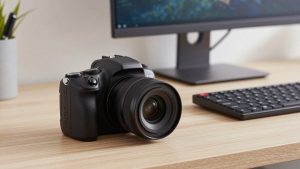
A mirrorless camera with USB streaming webcam mode paired with a fast 24mm or 35mm equivalent prime gives you real depth of field, far better low light, and interchangeable framing. It also doubles as a photo camera for promos and clips.
Trade-offs are real. Cost is 4x to 10x a webcam once you add lens, tripod, dummy battery for continuous power, and lighting. Some bodies overheat after 60-90 minutes in 4K, so run 1080p for long shows. Autofocus can pump with low-contrast lingerie or low light – use face/eye AF and lock exposure.
Who it suits: full-time creators who want a signature look and already control lighting and sound. Skip it if you cam from different rooms, travel a lot, or want one-cable simplicity.
Lighting and setup matter more than the camera
A $150 webcam with a proper key light beats a $900 camera in a dark room. You want one large, diffused light at face height, slightly above eye level, plus a dim warm lamp behind you for separation from the backdrop. Avoid overhead-only lighting – it creates harsh eye shadows.
Mount the camera at eye level, about arm’s length away. Laptop angle from below is unflattering and shows ceiling. Use a stack of books or a desktop tripod and webcam mount to raise it. If your image flickers, your shutter speed is fighting LED lights – lock exposure manually in the camera app or OBS.
For audio, viewers forgive 1080p but not hissy mics. A basic USB condenser or lav mic close to you is a bigger upgrade than 4K. Test a full-length recording for focus drift, fan noise, and Wi-Fi drops before you go live.
FAQ
Is 4K necessary for camming?
No. Most sites and viewers still watch in 1080p or lower, especially on phones. Buy 4K if you want to crop, future-proof clips, or get better low-light processing – not because viewers can see every pixel. Good lighting and 1080p 60 fps look more professional than noisy 4K.
Will these webcams work on MacBook?
Yes for basic video in Chrome, Safari, OBS for Mac, and cam sites, because they use standard USB video. Advanced tweaks like HDR strength, background replacement, and firmware updates are sometimes Windows-only. If you are Mac-only, check that manual focus and exposure are available without the Windows app.
Why does my camera look great for 10 minutes then get blurry?
Usually autofocus hunting, overheating, or auto exposure reacting to LEDs behind you. Move flashing lights out of frame, lock exposure, switch to single autofocus area on your face, and make sure air can reach the camera. For mirrorless, use a dummy battery and run 1080p instead of 4K for long sessions.
Can I just use my laptop webcam?
As a backup, yes. It is fine for chatting and travel, but the small sensor gets noisy in lamp light and the wide lens distorts your face up close. If money is tight, keep the laptop cam and add a key light and external mic first – that is the cheapest visible upgrade.
Related Reviews & Guides
Best Computer Camera with Microphone
Best Logitech Webcam for Home Office