Last Updated: October 18, 2026
- Top Picks at a Glance
- The Three Heights a Tall Person Needs to Set
- Comparison Table
- 1. FlexiSpot E6 MAX: Best Overall
- 2. Vari ComfortEdge: Best Range
- 3. EUREKA ERGONOMIC 72 Inch Standing Desk: Best with Keyboard Tray
- 4. Mount-It 72 Inch Dual Motor Standing Desk: Best Wide Desk
- 5. UPLIFT V3 with Foot Spacers: Best Long-Term Frame
- 6. Vari Pro Plus 36 (Manual): Best Converter Option
- Also Consider
- How We Chose
- Buying Guide: Setting Up a Standing Desk When You Are Tall
- Monitor Height by Screen Size
- Worked Example: A 6 ft 5 in User on the E6 MAX
- Chair and Desk Together
- Keeping Presets Useful
- Common Mistakes
- Frequently Asked Questions
- Which One Should You Buy?
- Sources
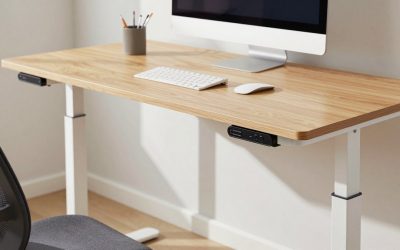
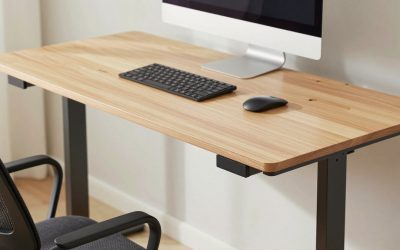
A standing desk for tall people has to do two jobs: reach your elbow height, and let you lift the monitor high enough that your neck stays level. For most people over 6 ft 3 in that means a desk with a ceiling near 50 inches plus a monitor arm that can hold the screen 9 to 12 inches above the desktop. The FlexiSpot E6 MAX is our top pick because it combines a ceiling of about 50 inches with a heavy-duty frame, and the Vari ComfortEdge (25 to 50.5 inches) is the runner-up for anyone who also needs a low sitting height or shares the desk.
Most articles stop at the maximum height of the desk. This one goes a step further and works out the three heights that matter at a tall person’s workstation: the keyboard, the monitor and the floor (because a mat or shoes changes the other two). It then compares six desks and one converter that can reach those numbers. The guide is research-based: we did not personally use these products, and specs come from manufacturer pages and listing details. Anything we could not confirm is marked “not listed”. It does not offer medical advice; if you have pain or a condition, a doctor or physical therapist can tailor your setup.
📄 In This Review
- Top Picks at a Glance
- The Three Heights a Tall Person Needs to Set
- Comparison Table
- 1. FlexiSpot E6 MAX: Best Overall
- 2. Vari ComfortEdge: Best Range
- 3. EUREKA ERGONOMIC 72 Inch Standing Desk: Best with Keyboard Tray
- 4. Mount-It 72 Inch Dual Motor Standing Desk: Best Wide Desk
- 5. UPLIFT V3 with Foot Spacers: Best Long-Term Frame
- 6. Vari Pro Plus 36 (Manual): Best Converter Option
- Also Consider
- How We Chose
- Buying Guide: Setting Up a Standing Desk When You Are Tall
- Monitor Height by Screen Size
- Worked Example: A 6 ft 5 in User on the E6 MAX
- Chair and Desk Together
- Keeping Presets Useful
- Common Mistakes
- Frequently Asked Questions
- Which One Should You Buy?
- Sources
Top Picks at a Glance
- Best Overall: FlexiSpot E6 MAX
- Best Range: Vari ComfortEdge Electric Standing Desk
- Best with Keyboard Tray: EUREKA ERGONOMIC 72 inch Standing Desk
- Best Wide Desk: Mount-It 72 inch Dual Motor Standing Desk
- Best Long-Term Frame: UPLIFT V3 with foot spacers
- Best Converter Option: Vari Pro Plus 36 (manual)
The Three Heights a Tall Person Needs to Set
See also: Working Table for Home: Sit-Stand and L-Shaped Setups Compared • Best Standing Desks for Students: Picks for Dorms, Small Rooms and Yearly Moves
Use these rules of thumb, then adjust by feel. Standing elbow height is roughly 63 percent of body height, and standing eye height is roughly 93 percent. The monitor’s top edge should sit at or slightly below eye level, and the keyboard should sit where your forearms are level. The table converts them into numbers for four heights, including the amount you need to lift a 27 inch monitor above the desktop.
| Body height | Keyboard (desktop) height | Eye height | Monitor top above the desktop | Bottom edge of a 27 in screen above the desktop |
|---|---|---|---|---|
| 6 ft 0 in (72 in) | About 45 in | About 67 in | About 22 in | About 9 in |
| 6 ft 3 in (75 in) | About 47 in | About 70 in | About 23 in | About 10 in |
| 6 ft 6 in (78 in) | About 49 in | About 73 in | About 24 in | About 11 in |
| 6 ft 9 in (81 in) | About 51 in | About 76 in | About 25 in | About 12 in |
A 27 inch 16:9 monitor’s screen is about 13 inches tall, so if the top edge needs to be 22 inches above the desktop, the bottom edge of the screen sits 9 inches above it. That is higher than most monitor stands allow, and it is why a tall person usually needs an arm or a riser even when the desk is already at full height. Add the thickness of an anti-fatigue mat (about half an inch) and thick-soled shoes (up to an inch) to the desktop number, and remember that each inch you add to the floor takes an inch off the margin of the desk’s ceiling.
Comparison Table
| Product | Best for | Key specs | Watch for | Price tier |
|---|---|---|---|---|
| FlexiSpot E6 MAX | 6 ft 3 in and up, heavy gear | About 24.4 to 50 in, 352 lb frame, dual motor, 3-stage | Several similar variants | Mid-range to Premium |
| Vari ComfortEdge | Shared desks, comfort | 25 to 50.5 in, 4 presets, sloped edge | Capacity falls with size | Premium |
| EUREKA 72 in | Keyboard tray users | About 29 to 48 in, 220 lb desktop, tray 28.38 x 9.8 in | Tray reduces knee room | Premium |
| Mount-It 72 in | Wide surface | 29.3 to 48.2 in, 220 lb, 72 x 29.5 in | 2-stage legs | Mid-range |
| UPLIFT V3 2-leg | Long-term ownership | 21.6 to 47.7 in (23.8 to 49.9 with spacers), 355 lb | Spacers needed for height | Premium |
| Vari Pro Plus 36 (manual) | Adding height to an existing desk | Lifts about 4.5 to 17.5 in, 35 lb, 11 settings | Keyboard sits above the desk when lowered | Mid-range |
1. FlexiSpot E6 MAX: Best Overall
- Height range about 24.4 to 50.0 inches on listings (confirm per variant)
- Dual motor, three stages, presets, anti-collision
- 352 lb frame rating on MAX listings
- Sizes up to 72 x 30, bamboo and solid wood tops
Best for: Users from 6 ft 2 in to 6 ft 6 in who want one desk that handles monitors, a PC and accessories. Skip if: you want a single-box desk.
With a ceiling of about 50 inches, the E6 MAX gives a 6 ft 5 in user a keyboard height of 48.5 inches with an inch to spare, and the 352 lb rating leaves room for a heavy monitor arm. The three-stage frame is steadier at the top of the range than two-stage designs. For a tall person, that stability matters when you place the monitor high.
Pros: tall ceiling, high rating, many sizes. Cons: multi-box shipping, confusing variants.
2. Vari ComfortEdge: Best Range
- 25 to 50.5 inches on every size
- Dual motors, four presets, 1.25 inch top with a sloped front edge
- Sizes from 40 x 26 to 72 x 30
- Capacity about 180 to 220 lb depending on size
Best for: A tall user who also wants a low sitting position, or two people of different heights. Skip if: you need a high load rating on a large top.
The ComfortEdge is the only desk here whose ceiling exceeds 50 inches. A sloped edge helps if you rest your forearms on the front of the desk, which long arms tend to do. Pick the 30 inch deep size so that you can place the screen farther away.
Pros: highest ceiling, wide range, comfortable edge. Cons: premium price, lower capacity on bigger tops.
3. EUREKA ERGONOMIC 72 Inch Standing Desk: Best with Keyboard Tray
- 72 x 30 inch wing-shaped top, dual motor, four presets
- Height range about 29 to 48 inches on most listings
- 220 lb desktop capacity, 44 lb on the shelves
- Keyboard tray 28.38 x 9.8 inches with tilt and swivel
Best for: Tall users up to about 6 ft 3 in who want a tray to drop the keyboard below the desktop. Skip if: you are over 6 ft 4 in, since the 48 inch ceiling is limiting.
A tray is a particular help to a tall person because the monitor wants to be high while the keyboard wants to be low. A tray lets the desktop sit one or two inches higher than the keyboard, which gives you more room for the monitor. The trade-off is knee room: a tray lowers the clearance when you sit, so measure the space under it.
Pros: tray and shelves included, wide top, four presets. Cons: limited ceiling, less knee room.
4. Mount-It 72 Inch Dual Motor Standing Desk: Best Wide Desk
- 29.3 to 48.2 inches, 72 x 29.5 inch top, 220 lb capacity
- Two motors, two-stage legs, three presets, anti-collision
- Limited lifetime warranty advertised
Best for: Users up to about 6 ft 4 in who want a big surface at a mid-range tier. Skip if: you need a lower sitting height than 29.3 inches.
The higher minimum suits tall people, who generally sit with a higher desk. A 48.2 inch ceiling supports a standing keyboard height of about 47 inches. Because the legs are two-stage, keep the load moderate and put monitors on arms close to the center line of the desk.
Pros: large top, tall minimum for tall users, warranty. Cons: two-stage legs, MDF top.
5. UPLIFT V3 with Foot Spacers: Best Long-Term Frame
- C-frame range 21.6 to 47.7 inches; 23.8 to 49.9 inches with spacers
- 355 lb lift capacity on the 2-leg frame (535 lb on the 4-leg)
- Laminate and bamboo tops, accessories and presets
Best for: Tall users who plan to keep the desk for years and want accessories. Skip if: you do not want to pay for extras.
The open C-frame gives a tall person more room for feet and shins, and the strong frame is steady even with a high monitor arm. Add the foot spacers to reach about 49.9 inches, which suits users up to about 6 ft 4 in.
Pros: frame strength, open front, accessories. Cons: premium price, spacers needed.
6. Vari Pro Plus 36 (Manual): Best Converter Option
- Lifts about 4.5 to 17.5 inches, 11 height settings
- 35 lb capacity, 36 inch wide upper tier for two monitors
- Spring-assisted lift, arrives assembled
Best for: Tall users who already own a good fixed-height desk of about 29 to 30 inches. Skip if: your desk is lower than 28 inches or you want a deep top.
Converters can work for tall people because they add height on top of a desk rather than replacing it. On a 30 inch desk, a 17.5 inch maximum lift gives a keyboard height up to about 47 inches, which covers standing for users up to about 6 ft 2 in. The limitation is the sitting position: when the unit is fully lowered, the keyboard tray still sits a few inches above the desk, so a tall user whose seated keyboard height is 30 to 31 inches may find the keyboard too high. The electric version of this unit lifts to about 19.25 inches, but it is a different model from the manual one reviewed here.
Pros: keeps your existing desk, assembled, 11 settings. Cons: high lowest position, 35 lb limit, smaller surface.
Also Consider
- Mount-It 32 x 22 gas-spring converter: raises from about 2.5 to 16.9 inches per the listing; on a 30 inch desk the top is around 47 inches.
- HUANUO 3-Stage Dual Motor Frame: 23.6 to 49.2 inches and 265 lb per the listing, for people who bring their own top.
- FlexiSpot E6 (standard): about 23.6 to 48.8 inches and 220 lb, suitable up to about 6 ft 4 in.
- ErGear Dual Motor Legs: 28 to 47 inches and 264 lb, a better fit for people up to about 6 ft 2 in.
How We Chose
This guide is research-based. We did not personally use these products. We started with desks and converters in this site’s product store, then focused on those with a published ceiling of at least 47 inches. We checked manufacturer pages, retailer spec sheets and independent write-ups for range, capacity and warranty, and we flagged the places where listings disagree. The ergonomic figures (elbow height at about 63 percent of body height, eye height at about 93 percent) are standard rules of thumb used in anthropometric tables, and we present them as planning estimates, not measurements of any individual. Prices are tiers only.
Buying Guide: Setting Up a Standing Desk When You Are Tall
Set the keyboard first
Stand in your usual shoes, bend your elbows to 90 degrees and measure from the floor to your forearm. That is the keyboard height. If your desk cannot reach it, a keyboard tray that hangs below the desktop only helps if the tray is adjustable in height.
Raise the monitor with an arm
Set the top edge of the screen at or slightly below eye level. For most tall users that puts the bottom edge of a 27 inch monitor 9 to 12 inches above the desktop. Check the arm’s rated height range, and make sure it fits the desk’s thickness.
Add a mat and account for it
A half-inch anti-fatigue mat adds comfort on hard floors, but it also raises your elbow height by half an inch. Set the preset with the mat in place.
Check leg room
Tall people have long legs, so check the clearance under the desktop: 24 inches or more is typical. Desks with a front crossbar, drawers or a deep keyboard tray reduce it.
Make sure the room allows full height
At 50 inches of desk height, a monitor on an arm may reach 70 inches or more. Check the ceiling, any shelves and light fixtures.
Monitor Height by Screen Size
Screens differ in height, and bigger screens need less lift from the arm because their top edge is already farther from the bottom. Use the table to estimate how high to hold the bottom edge so that the top is at eye level.
| Monitor | Screen height (approx.) | Bottom edge above desktop for a 6 ft 3 in user | Bottom edge above desktop for a 6 ft 6 in user |
|---|---|---|---|
| 24 in 16:9 | 11.8 in | About 11 in | About 12 in |
| 27 in 16:9 | 13.2 in | About 10 in | About 11 in |
| 32 in 16:9 | 15.7 in | About 7 in | About 8 in |
| 34 in 21:9 ultrawide | 13.4 in | About 10 in | About 11 in |
The figures assume the screen’s top edge sits at eye level, which is the upper limit of the usual guidance. Many people prefer the top edge an inch or two below eye level so their gaze tilts slightly downward, in which case lower the screens by the same amount. If you wear progressive lenses, a lower screen is often more comfortable. Choose an arm whose maximum height covers the numbers above and make sure it can support the monitor weight.
Worked Example: A 6 ft 5 in User on the E6 MAX
A 77 inch user needs a keyboard height of about 48.5 inches and has an eye height of about 72 inches. With a half-inch anti-fatigue mat under the feet, the target becomes 49 inches. The E6 MAX at about 50 inches covers it with an inch to spare. A 27 inch monitor with its top edge at 72 inches (23 inches above a 49 inch desktop) has its bottom edge about 10 inches above the desk, so the arm must hold the screen 10 inches up. At sitting height the same user needs a desktop at about 31.5 inches, which is well above the E6 MAX minimum of 24.4 inches, so there is no conflict between sitting and standing heights.
Now run the same numbers with the Mount-It 72 inch (29.3 to 48.2 inches). The standing target of 49 inches is almost an inch above the desk’s ceiling. The user would have to stand on a lower mat, wear flatter shoes or accept a keyboard about an inch lower than ideal. For many people that is acceptable, but if you also want to look at the monitor without tilting your head back, you will need to raise the screens by another inch. This is why the margin matters more than any other single figure.
Chair and Desk Together
A tall person who sits at the desk part of the day also needs a chair that raises the seat high enough. Many office chairs top out around 21 inches of seat height, which suits users up to about 6 ft 2 in; taller users should look for a tall-range gas cylinder or a chair rated for extended seat height. When you sit, aim for thighs roughly parallel to the floor and the seat edge a couple of inches from the back of your knees. Then raise the desk until the keyboard sits at elbow height, and confirm that your knees clear the underside of the top with at least an inch to spare. The seated preset should be set after the chair, never before.
Keeping Presets Useful
Most desks in this guide offer three or four memory presets. Use them to save the heights you actually need: one for sitting, one for standing in shoes and, if you use one, a third for standing with a mat or on a balance board. Name them on a sticky note on the underside of the desk so you remember which button is which. After a month of use, revisit them: most people find that the standing preset drifts upward by an inch as they get comfortable with the position.
Common Mistakes
- Setting the desk to elbow height but leaving the monitor on its stand, so the screen is far too low.
- Forgetting that a mat or shoes shift the target height.
- Choosing a desk with a 45 inch ceiling and compensating by raising the shoulders.
- Putting heavy items on a high, narrow shelf above the desk, where wobble is greatest.
Frequently Asked Questions
What height should a standing desk be for a 6 ft 4 in person?
About 48 inches, which is 63 percent of 76 inches. A desk with a 49 to 50 inch ceiling leaves a safe margin.
Do tall people need a monitor arm?
Usually yes. Even at full desk height, the screen’s top edge must be 22 to 25 inches above the desktop to reach eye level, which most stands do not allow.
Can a converter work for a tall person?
It can for standing, if your fixed desk is about 29 to 30 inches tall and the converter lifts 16 to 18 inches. Check that the lowest position suits sitting.
Is a keyboard tray good for tall people?
It can help by letting you set the keyboard lower than the desktop, which leaves room for the monitor. Check that it does not reduce knee room too much.
How do I stop my standing desk from wobbling at full height?
Choose a three-stage frame, keep monitors low and close to the center, level the feet and tighten the bolts after a few weeks.
Are taller desks harder to move?
The desk itself is the same weight, but wide tops and high ceilings add to the size of the box. Measure your doors and stairs.
How long should a tall person stand?
There is no single answer. Many ergonomics sources suggest alternating position through the day, and a clinician can give personalised advice if you have pain.
Should tall people use a balance board or footrest while standing?
Some people like a footrest or small platform to shift weight between feet, and the choice is personal. Anything you stand on raises your elbow height by its thickness, so set a separate preset for it. If you have balance or joint concerns, ask a clinician before adding a balance board.
What size monitor works best at a tall desk?
A 27 or 32 inch monitor on an arm works well because the arm can hold it high enough. Smaller screens are fine but need more lift from the arm. Ultrawide monitors are wide rather than tall, so they need less vertical lift than a 32 inch screen, which is useful on a desk with a lower ceiling.
Which One Should You Buy?
Buy the FlexiSpot E6 MAX if you are 6 ft 3 in or taller and want a sturdy ceiling near 50 inches. Buy the Vari ComfortEdge if you want the widest range and a comfortable edge. Buy the EUREKA if a keyboard tray is a priority and you are up to 6 ft 3 in, and the Mount-It if you want a wide surface at a mid-range tier. Buy the UPLIFT V3 with spacers for a durable frame, and the Vari Pro Plus 36 if you already have a fixed desk and only need to add standing height. Whatever you choose, plan the monitor arm along with the desk.
Sources
- FlexiSpot E6 and E6 MAX product listings
- Vari ComfortEdge and Pro Plus 36 product pages
- EUREKA ERGONOMIC 72 inch standing desk listings
- Mount-It manufacturer pages for the 72 inch desk and converters
- UPLIFT Desk V3 frame specification sheet
- Anthropometric rules of thumb used in office ergonomics guidance
Last updated: October 2026
Related Reviews & Guides



How to Fix a Wobbling Standing Desk (2026): Step-by-Step
Uplift V2 Sit-Stand Desk: Specs, Height Range, and Frame Details Explained