Last Updated: September 29, 2026
The right adjustable standing desk for a small space isn’t the smallest one you can find, it’s the widest one that still leaves 30 inches of clear floor behind your chair and clears the doorway on moving day. Most sizing guides push you toward 40-inch desks by default, but that number only works in specific room layouts. Here’s how to match desk width to your actual floor plan instead of a spec sheet.
📄 In This Review
Start With the Space Behind the Chair, Not the Desk Itself
The most common small-space mistake is measuring the wall gap and stopping there. A desk that fits against the wall can still make the room unusable if there’s no room to push back and stand up.
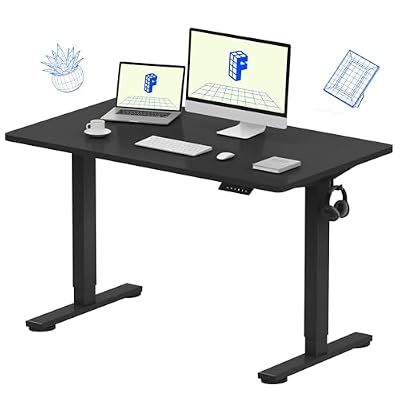
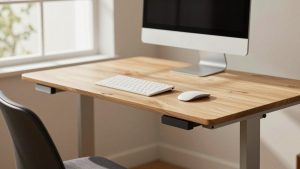
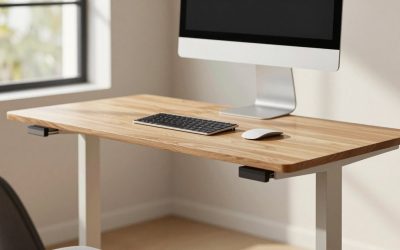
FLEXISPOT EN1 One-Piece Standing Desk, Electric Adjustable with 4 Memory Presets, 176 LBS Capacity, Stable & Quiet, Seamless Desktop for Home Office & Dual Monitors, 48"x24" Black
Included for 'Adjustable Standing Desks for Small Spaces: Sizing by Room, Not Spec Sheet' because the listing specifies Electric Adjustable with 4 Memory Presets and 176 LBS Capacity, details this guide uses to compare options.
View on Amazon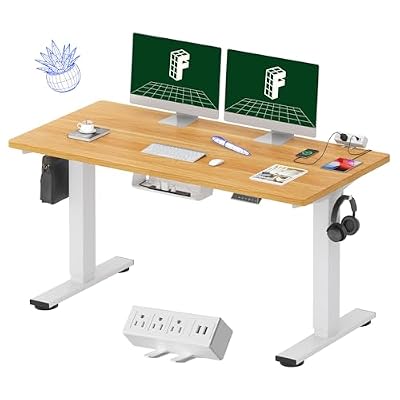
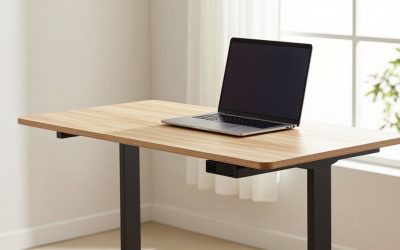
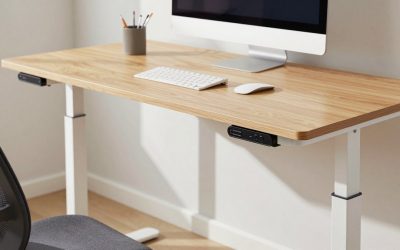
FLEXISPOT EN2 55"x28" Whole-Piece Standing Desk with Power Strip, Maple
Included for 'Adjustable Standing Desks for Small Spaces: Sizing by Room, Not Spec Sheet' because the listing specifies Maple, details this guide uses to compare options.
View on Amazon
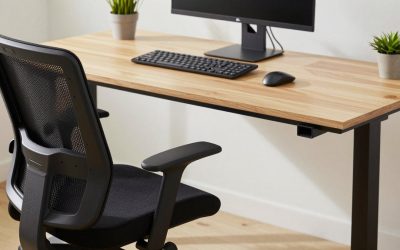
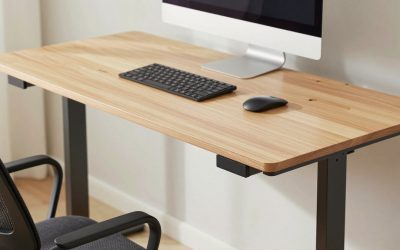
FLEXISPOT Comhar 48" Electric Standing Desk with Drawers, USB Charging Ports, Quick Assembly, Height Adjustable Sit Stand Computer Desk with Child Lock for Scandinavian Home Office, Maple
Included for 'Adjustable Standing Desks for Small Spaces: Sizing by Room, Not Spec Sheet' because the listing specifies USB Charging Ports and Quick Assembly, details this guide uses to compare options.
View on AmazonPlan for these clearances:
- 30 inches of open floor behind the chair for sitting down, standing up, and rolling back without hitting a wall or bed frame.
- 24 inches minimum walking clearance on at least one side of the desk if it’s not against a wall.
- 36 inches in front of the desk if you plan to stand and work, since standing posture shifts your body slightly forward of where you sit.
In a 10×12 ft room, a 48-inch desk against the long wall with a 30-inch chair zone still leaves roughly 6.5 feet of usable floor for a bed, dresser, or walking path. Drop to a 9×10 ft room and that same 48-inch desk starts eating into circulation space, which is when a 40 or 42-inch model earns its place.
Matching Width to Your Room: 40″ vs 42″ vs 48″
See also: Best 49 Inch Monitor: Eight Super Ultrawides Compared by Bandwidth and Desk Depth • Working Table for Home: Sit-Stand and L-Shaped Setups Compared
Standing desks are usually sold in these three width tiers for small-space lines, though some brands offer 45 or 47-inch options that split the difference.
| Width | Best Alcove/Wall Fit | Realistic Use Case | Typical Weight Capacity |
|---|---|---|---|
| 40 in | 42–44 in alcove or nook | Laptop + single monitor, no room for a printer or second screen | 110–150 lb |
| 42 in | 44–46 in wall segment | Laptop + monitor arm, small storage caddy on one side | 120–175 lb |
| 48 in | 60 in alcove (with side clearance) or open wall | Dual monitor setup, keyboard tray, room for a small desk lamp and notebook | 150–220 lb |
That 60-inch alcove is a common builder spec in condos and older apartments, tucked between a closet and a window wall. It looks like it demands a 60-inch desk, but a 48-inch desk in that space actually performs better: it leaves 6 inches of buffer so the desk isn’t wedged wall-to-wall, which matters because most electric standing desks flex slightly at full height and need a little side clearance to avoid rubbing.
Corner Placement and L-Frames: Why the Math Changes
L-shaped adjustable desks look efficient on paper because they use a corner instead of a wall run, but they need more total clearance than a straight desk of the same footprint. The inside corner of an L-desk creates a dead zone you can’t roll a chair into, so the usable work area is smaller than the dimensions suggest.
For an L-frame in a small room, budget:
- 42–48 inches along each leg of the L as a minimum for two work zones (monitor + laptop, for example)
- 36 inches of clearance in front of the corner junction, since that’s where your chair pivots between the two legs
- No door swing overlap — L-desks in corners next to a doorway often get clipped by the door arc, so measure the door’s swing radius before committing
If your room is under 100 square feet, a straight desk almost always beats an L-frame. The corner desk only pays off once you have roughly 110+ square feet to give the extra leg room without cannibalizing your walking path.
When a Desk on Wheels Makes More Sense Than a Fixed One
A small adjustable desk on wheels solves a problem that width charts don’t: rooms that do double duty. If the same space is a bedroom by night and an office by day, or if you’re renting and want to reclaim floor space for guests, a caster-base desk (usually 30–36 inches wide, sometimes narrower) lets you push the whole setup against a wall in seconds.
Trade-offs to know before choosing wheels over a fixed base:
- Locking casters are non-negotiable — without them, the desk creeps during typing, especially on hardwood or laminate floors.
- Wheeled desks typically cap out around 100–130 lb of weight capacity, lower than fixed frames, because the caster mounts limit the load rating.
- They’re less stable at full standing height (45–48 inches) than a floor-anchored frame, so if you’re doing precision work like drawing or typing fast, expect slightly more wobble.
Wheeled desks are the right call for renters, dorm rooms, and multi-use spaces. They’re the wrong call if you need a rock-solid surface for a dual-monitor setup or you’re over 200 lb of combined desk-plus-equipment load.
Assembly and Moving-Day Realities
Small-space buyers often forget that “compact desk” doesn’t mean “compact box.” Most 40–48 inch electric standing desks ship in a single box measuring 50–55 inches long and weighing 55–75 lb, because the desktop and dual motorized legs pack together. That box needs to clear:
- A standard interior doorway (typically 30–32 inches wide) — fine lengthwise, but awkward to maneuver through a hallway turn
- Elevator or stairwell turns in walk-up apartments, where a 55-inch box can be the limiting dimension, not the desk itself
Assembly typically takes 20–40 minutes for two people, longer solo since the desktop needs to be flipped and held steady while attaching the leg frames. The part that wears first on budget frames is usually the cable management tray clips and the motor sync at extreme height settings — desks used daily at both sitting and standing heights will show height-memory drift after 1–2 years on lower-end motors, which is worth checking in the return window rather than assuming it’s user error.
Quick Decision Matrix
| Your Situation | Recommended Width/Type |
|---|---|
| Studio apartment, laptop-only workflow | 40 in fixed-frame desk |
| 60 in alcove, want breathing room | 48 in fixed-frame desk (not 60 in) |
| Multi-use room (office by day, guest space at night) | 30–36 in desk on locking casters |
| Corner nook, 110+ sq ft room | 42–48 in L-frame per leg |
| Renter, frequent moves | Wheeled desk or bolt-free fixed frame under 60 lb box weight |
| Dual monitors, daily 8-hour use | 48 in fixed frame, 175+ lb capacity |
Price generally scales with width and motor count: 40-inch single-motor desks usually run $200–$350, while 48-inch dual-motor frames with higher weight capacity land in the $350–$600 range. Wheeled compact desks tend to sit lower, around $150–$300, since they skip the heavier steel base needed for floor-anchored stability.
Related Reviews & Guides

Bush Business Furniture Standing Desk: Models and Buying Guide
Fellowes Lotus Sit Stand Workstation: Features and Honest Review