Last Updated: September 29, 2026
- What Actually Changes When You Buy the Top Alone
- Material Comparison: Bamboo, Rubberwood, Laminate, MDF
- Sag Over 60+ Inch Spans: What the Numbers Mean in Practice
- Weight Limits and What They Actually Constrain
- Bolt Pattern and Pre-Drill Checks Before You Buy
- Matching Top to Situation
- Assembly and Durability Notes
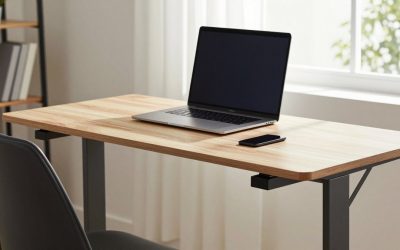
A standing desk top sold separately is worth buying when you already own a compatible frame and want to upgrade material, size, or looks without replacing the motor system. The best picks for 2026 depend on span length, weight tolerance, and whether the bolt pattern on the underside matches your existing frame’s mounting plate.
📄 In This Review
- What Actually Changes When You Buy the Top Alone
- Material Comparison: Bamboo, Rubberwood, Laminate, MDF
- Sag Over 60+ Inch Spans: What the Numbers Mean in Practice
- Weight Limits and What They Actually Constrain
- Bolt Pattern and Pre-Drill Checks Before You Buy
- Matching Top to Situation
- Assembly and Durability Notes
What Actually Changes When You Buy the Top Alone
A desk frame and a desk top are sold separately more often now because sit-stand frames (dual motor or single motor) have become fairly standardized in their mounting hardware, while top styles have diversified. Buying just the top saves money if your frame still works fine, but it shifts the risk entirely onto you to verify fit. Three things matter most: thickness (affects sag and screw bite), material (affects weight and long-term flatness), and the bolt pattern drilled into the underside (affects whether it bolts to your frame at all).
Material Comparison: Bamboo, Rubberwood, Laminate, MDF
See also: Best 49 Inch Monitor: Eight Super Ultrawides Compared by Bandwidth and Desk Depth • Working Table for Home: Sit-Stand and L-Shaped Setups Compared
These four materials cover nearly every table top sold separately for standing desks in 2026. Solid wood options are pitched as premium; engineered options are pitched as practical. The trade-offs are real, not just marketing.
| Material | Typical thickness | Sag risk over 60″+ span | Weight (60×30 top) | Usual price range |
|---|---|---|---|---|
| Solid bamboo (multi-ply) | 0.7–1.0 in | Low to moderate; quality depends on ply count and glue lines | 35–45 lb | $150–$350 |
| Rubberwood butcher block | 1.0–1.5 in | Low; dense solid wood resists deflection well | 50–65 lb | $200–$450 |
| Laminate (particleboard core) | 0.7–1.0 in | Moderate to high; visible sag common past 5 ft unmanaged | 30–40 lb | $80–$180 |
| MDF (painted or veneered) | 0.7–1.0 in | High; MDF is dense but flexes and can permanently bow under sustained load | 40–50 lb | $60–$150 |
Rubberwood butcher block holds a flat line best across long spans because it’s dense solid wood rather than a wood-fiber composite. Bamboo is lighter and stiffer than it looks thanks to cross-laminated construction, but cheap bamboo tops with thin face veneers and few plies will bow faster than a thick multi-ply version. Laminate is the budget standard and fine under 55 inches, but past 60 inches unsupported it visibly dips within a year unless the frame has a center leg or crossbar. MDF is the material most likely to develop a permanent sag if left in one position for months, since it doesn’t spring back the way solid wood does.
Sag Over 60+ Inch Spans: What the Numbers Mean in Practice
A desk top is a beam supported at two ends (or three, if there’s a center leg). Longer top, more sag, unless thickness and material stiffness compensate. As a rough guide for unsupported spans:
- 48–54 in: all four materials perform acceptably at 0.7 in or thicker
- 55–65 in: laminate and MDF start to show visible dip under monitor arms or heavy monitors (over 15 lb combined); bamboo and rubberwood stay flatter
- 66–72 in: only rubberwood butcher block or thick (1 in+) multi-ply bamboo reliably stays flat without a center support leg; laminate and MDF need a frame with a crossbar or third leg
If you’re going 66 inches or longer and your frame doesn’t have a center support, prioritize rubberwood or a thick bamboo top, or plan to add a stabilizer bar.
Weight Limits and What They Actually Constrain
The top’s own weight matters for two reasons: it eats into the frame’s total lift capacity, and it affects how easy the desk is to move or reposition once assembled. Most dual-motor frames lift 200–275 lb total, single-motor frames closer to 150–200 lb. A 60 lb rubberwood top leaves noticeably less headroom for monitors, a PC tower, and storage than a 35 lb bamboo top on the same frame. If you’re running dual monitors, a monitor arm, and a laptop dock, budget at least 40–50 lb of remaining capacity beyond the top’s own weight.
Bolt Pattern and Pre-Drill Checks Before You Buy
This is the step people skip and regret. Frames use metal mounting plates with pre-drilled or slotted holes, and tops need either matching pre-drilled holes or bare wood you drill yourself.
- Check the frame’s mounting plate spacing first. Measure hole-to-hole distance in both directions (most sit-stand frames use plates roughly 7–24 in adjustable range to fit different top widths).
- Confirm whether the top is pre-drilled or blank. Butcher block and premium bamboo tops are often sold undrilled, expecting you to position the frame and drill yourself. Laminate and MDF tops marketed as “standing desk replacement tops” are more often pre-drilled to common patterns.
- Check screw length against top thickness. A 1.5 in rubberwood top needs longer screws than the 0.7 in laminate hardware kit that shipped with your frame; using the wrong screws either strips the wood or pokes through the surface.
- Verify overhang tolerance. Frames are rated for a maximum unsupported overhang past the mounting plate, usually 4–6 in per side. A 30 in deep top on a frame designed for 24 in deep tops will overhang more than that on one side, undermining desk stability regardless of material.
Matching Top to Situation
| Your situation | Best pick | Why |
|---|---|---|
| Frame already has a center support leg, span under 60 in | Laminate | Cheapest option that won’t sag noticeably with that extra support |
| Long single-span desk (66 in+), no center leg | Rubberwood butcher block | Dense solid wood resists deflection without added support |
| Want to minimize load on an older or single-motor frame | Solid bamboo (thin multi-ply) | Best stiffness-to-weight ratio, leaves more lift capacity for accessories |
| Budget-first replacement, moderate span, moving soon | MDF | Lowest cost and lightest to carry, accept it as a shorter-term top |
| Renting, need to remove marks/holes eventually | Pre-drilled laminate matching original frame pattern | Avoids redrilling holes into either the top or frame plate |
Assembly and Durability Notes
Butcher block tops ship heavier and in larger boxes, which matters if you’re carrying one up stairs or through a narrow apartment doorway (check that your doorway clears at least 30–32 in for a 30 in deep top angled through). Laminate and MDF edges are the first thing to show wear, chipping or peeling at corners within a couple of years of regular bumps; solid wood edges dent but don’t peel. Bamboo’s biggest long-term risk is UV yellowing near sunny windows, not structural sag. If you’re drilling your own holes into a blank top, clamp a backer board underneath to prevent splintering on exit, and pre-mark hole centers with the frame’s plate as a template rather than measuring freehand.
Related Reviews & Guides


Best 49 Inch Monitor: Eight Super Ultrawides Compared by Bandwidth and Desk Depth
30 Inch Deep Standing Desk: Room to Work and Stay Organized