Last Updated: September 30, 2026
📄 In This Review
How Much Does 30 Inches of Desk Depth Actually Change?
A 30 inch deep standing desk is a strong choice if you need comfortable monitor distance and room to keep everyday work gear on the desktop. Compared with a common 24-inch-deep desk, it adds 6 inches of front-to-back space—enough to move a monitor farther away or create a separate area for a keyboard, notebook, and other essentials. The trade-off is a larger footprint, so measure your room and walking paths before choosing one.
Depth is the measurement from the front edge of the desktop to the back edge. It is different from width, which determines how much space you have side to side. A desk listed as 48 × 30 inches is 48 inches wide and 30 inches deep.

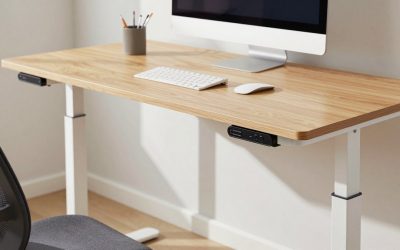
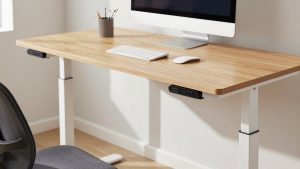
FLEXISPOT 60" x 30" Solid Bamboo Standing Desk, White Frame
Included for '30 Inch Deep Standing Desk: Room to Work and Stay Organized' because the listing specifies White Frame, details this guide uses to compare options.
View on Amazon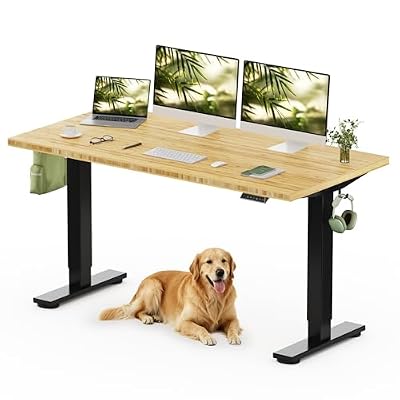
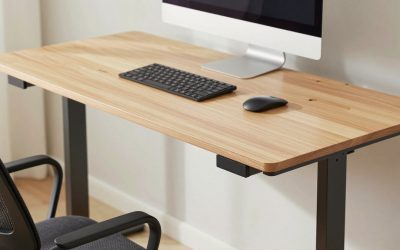
FLEXISPOT 60" x 30" Solid Bamboo Standing Desk, Black Frame
Included for '30 Inch Deep Standing Desk: Room to Work and Stay Organized' because the listing specifies Black Frame, details this guide uses to compare options.
View on Amazon
FLEXISPOT E6 Pro Large 72" x 30" Organic Modern Bamboo Standing Desk, Electric Dual Motor 3-Stage Height Adjustable Desk with Oval Legs, Heavy Duty 330lbs, Bamboo Desktop, White Frame
Included for '30 Inch Deep Standing Desk: Room to Work and Stay Organized' because the listing specifies Heavy Duty 330lbs and Bamboo Desktop, details this guide uses to compare options.
View on AmazonWhat the Extra Depth Does for Your Setup
See also: Best 49 Inch Monitor: Eight Super Ultrawides Compared by Bandwidth and Desk Depth • Working Table for Home: Sit-Stand and L-Shaped Setups Compared
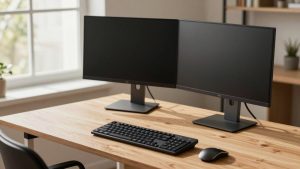
On a shallow desk, a monitor stand, keyboard, and mouse can compete for the same front-to-back space. A 30-inch surface gives you more flexibility: the monitor can sit farther from your eyes, while the keyboard and mouse stay close enough for relaxed use. It also leaves room behind or beside your main work area for a notebook, lamp, or docking station.
Depth does not automatically guarantee a comfortable viewing distance. Your monitor size, stand depth, eyesight, and preferred text size all matter. As a practical starting point, position the screen about an arm’s length away, then adjust so you can read without leaning forward. The larger desktop makes that adjustment easier; it does not replace ergonomic positioning.
Footprint and Room-Fit Measurements
Use the desktop dimensions to estimate the desk’s footprint, then add clearance for your chair and access. The figures below are planning estimates, not universal building requirements. Measure the desk frame as well as the top, since some bases extend beyond the desktop.
| Desktop size (width × depth) | Surface area | Planning notes |
|---|---|---|
| 48 × 30 in | 10 sq ft | Compact width for a laptop or one-monitor setup; still projects 30 inches into the room. |
| 60 × 30 in | 12.5 sq ft | More room for a monitor, keyboard, mouse, and a modest paperwork area. |
| 72 × 30 in | 15 sq ft | Generous side-to-side workspace; check that the room can accommodate the width and frame. |
| 60 × 24 in | 10 sq ft | Same area as a 48 × 30 desk, but narrower front-to-back and wider side to side. |
For a 60 × 30-inch desk, allow roughly 30 inches behind it for chair movement and about 30–36 inches for a useful path where people need to pass. That means a desk against a wall can require approximately 60–66 inches of room depth once chair and circulation space are included. A tighter arrangement may work if the chair does not need to roll back far, but it will feel less accessible.
In a 10 × 12-foot home office, a 60 × 30 desk can fit along a 10-foot wall, leaving about 60 inches across the room before accounting for other furniture. A 72-inch-wide version may fit that wall too, but a filing cabinet, door swing, or window placement can make the longer top awkward. Sketch the room to scale and mark the chair, door, and storage before ordering.
Choose by Work Style, Not Just by Desk Size
| Your situation | A sensible choice | What to check |
|---|---|---|
| Small apartment or shared room | 48 × 30 inches if depth matters; 48 × 24 inches if every inch of floor space matters more | Door swing, chair clearance, and whether the desk blocks a radiator or closet. |
| One large monitor plus paperwork | 60 × 30 inches | Monitor stand depth and whether the remaining front area is enough for writing. |
| Two monitors or equipment-heavy work | 60–72 inches wide × 30 inches deep | Frame stability, cable routing, and the combined weight of monitors and accessories. |
| Renter who may move soon | A top and frame that can be disassembled; consider 48 or 60 inches wide | Package dimensions, component weights, and whether the top separates from the base. |
| Children or pets in the workspace | A stable frame with a suitable rated capacity and rounded or protected edges | Tip resistance, pinch points, cord management, and access to the height-control switch. |
Surface and Frame Trade-Offs
| Construction | Advantages | Trade-offs to consider |
|---|---|---|
| Solid wood top | Can be refinished; substantial feel and visible natural grain. | Often heavier and more expensive; may respond to changes in humidity. |
| Engineered wood top | Usually more affordable and dimensionally consistent; many finishes are available. | Edges and screw holes can be less forgiving if repeatedly disassembled; protect the surface from standing water. |
| Steel height-adjustable frame | Supports a wide range of top sizes and allows seated-to-standing adjustment. | Stability varies with leg design, cross-bracing, height, and assembly; check the stated load limit. |
Check Height, Capacity, and Stability Before Buying
A height-adjustable desk should suit both your seated and standing positions. At sitting height, your shoulders should be relaxed and your elbows close to a right angle when your hands rest on the keyboard. Standing, use the same general arm position and keep the monitor at a comfortable viewing height. Compare the desk’s adjustment range with your body and chair rather than assuming one range fits everyone.
Check the manufacturer’s stated capacity and clarify whether it includes the desktop. Add the weight of the top, monitors, computer, and accessories; leave a margin rather than selecting a frame that is barely rated for the total. A 30-inch-deep top can carry more equipment simply because it offers more space, but extra surface area does not mean the frame can safely support extra weight.
Wobble can become more noticeable when a desk is raised. Frame geometry, fastener tightness, floor level, and the desk’s height all affect stability. A deeper top also creates more leverage if someone leans on its front edge. Assemble the frame on a level surface, tighten connections as directed, and avoid using the desktop as a step or support rail.
Assembly and Moving Realities
Before delivery, check the packed dimensions and component weights, not just the assembled desk size. A 60- or 72-inch desktop may be difficult to turn through a narrow hallway even if it fits through the doorway when carried upright. Measure the narrowest point along the route, including stair landings and tight turns, and confirm whether the top separates from the lifting frame.
Most adjustable frames require mounting the legs and control components, connecting cables, and fastening the top. Plan for a second person when positioning a large or heavy top; its size can make it awkward to handle alone. If you expect to move, retain the assembly instructions and hardware, and avoid repeated screw removal from engineered-wood mounting points where possible.
Bottom Line
Choose a 30 inch deep standing desk when your priority is a more flexible front-to-back layout: greater room to set monitor distance, keep input devices within reach, and separate work from paperwork. A 48 × 30-inch top suits tighter spaces where depth is valuable; 60 × 30 inches is a versatile starting point for a monitor and everyday accessories; and 72 × 30 inches makes sense when you have both equipment and room for a wider setup. Before deciding, map the full footprint, chair clearance, walking route, height range, and supported load.
Related Reviews & Guides


Standing Desk Bamboo vs Laminate Top: Which Is Right for Your Home (2026)
Vernal Standing Desk Review: Specs, Assembly and Everyday Performance