Last Updated: October 4, 2026
The best standing desk for most students is a compact single-motor electric desk around 48 × 24 inches, such as the FlexiSpot EC1 or a similar entry frame, because it fits small rooms, costs far less than premium models and can be broken down for yearly moves; students in dorms with a fixed desk are better off with a desktop converter, and those who want the most stable long-term desk should look at the Uplift V2 or FlexiSpot E7. The IKEA TROTTEN hand-crank desk is the cheapest route if you rarely change height.
Student life adds constraints office buyers rarely face: tiny rooms, shared housing rules, tight budgets and moving every 9–12 months. That shapes the choice more than motor speed or desktop finish.
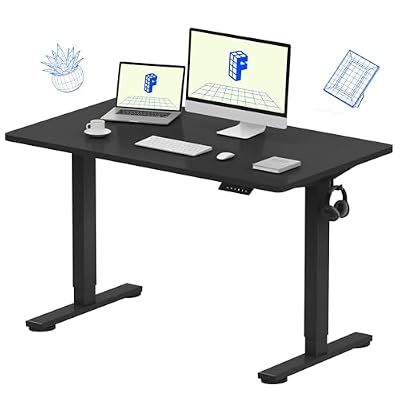
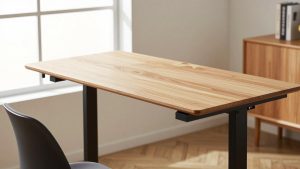
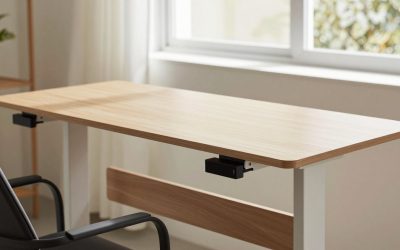
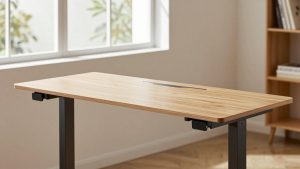
FLEXISPOT EN1 One-Piece Standing Desk, Electric Adjustable with 4 Memory Presets, 176 LBS Capacity, Stable & Quiet, Seamless Desktop for Home Office & Dual Monitors, 48"x24" Black
Included for 'Best Standing Desks for Students: Picks for Dorms, Small Rooms and Yearly Moves' because the listing specifies Electric Adjustable with 4 Memory Presets and 176 LBS Capacity, details this guide uses to compare options.
View on Amazon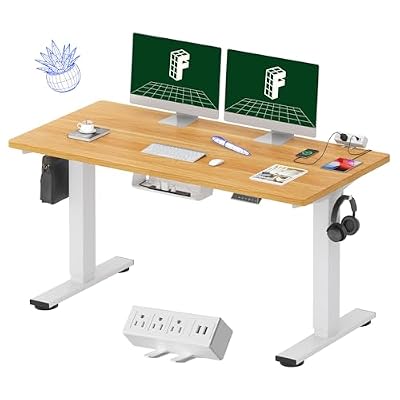
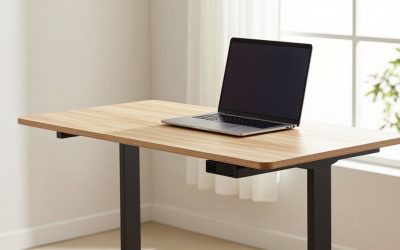
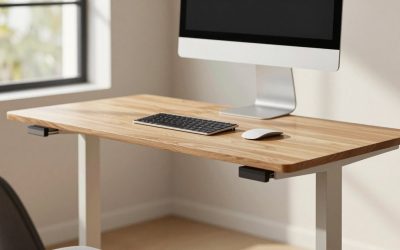
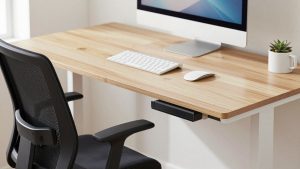
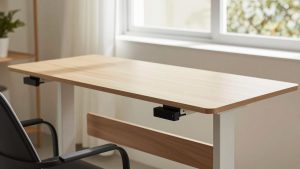
FLEXISPOT EN2 55"x28" Whole-Piece Standing Desk with Power Strip, Maple
Included for 'Best Standing Desks for Students: Picks for Dorms, Small Rooms and Yearly Moves' because the listing specifies Maple, details this guide uses to compare options.
View on Amazon📄 In This Review
Start with your room, not the desk
A typical double dorm room is roughly 12 × 15 feet, and a single in a shared apartment is often 9 × 10 to 10 × 12 feet. You need the desk footprint plus about 30–36 inches behind it for a chair to roll back, plus clearance for the door swing. In practice:
- 40–48 in wide × 24 in deep fits beside a bed in most 10 × 10 ft rooms and holds a laptop plus one 24–27 inch monitor.
- 55 in wide × 28 in deep leaves room for a monitor, keyboard and textbooks, but needs a room closer to 10 × 12 ft.
- Desk depth under 24 in makes a monitor sit too close for comfort; 24 in is a sensible minimum.
Desk height you actually need
See also: Ergotron WorkFit-TL: Desk Depth, Weight Math and Who It Suits • Best 49 Inch Monitor: Eight Super Ultrawides Compared by Bandwidth and Desk Depth
A desk is only ergonomic if it reaches your elbow height in both positions. Short students need a low minimum height; tall students need a high maximum. These are typical targets with shoes on:
| Your height | Seated desk height | Standing desk height | What to look for |
|---|---|---|---|
| 5’0″ (152 cm) | About 23 in | About 37.5 in | Frame that lowers to 25 in or below, or use a footrest |
| 5’4″ (163 cm) | About 25 in | About 40 in | Most standard frames work |
| 5’8″ (173 cm) | About 27 in | About 42.5 in | Most standard frames work |
| 6’0″ (183 cm) | About 28.5 in | About 44.5 in | Maximum height of 46 in or more |
| 6’4″ (193 cm) | About 30 in | About 47 in | Extended-range frame reaching 48–50 in |
Fixed dorm desks are usually 29–30 inches tall, which is too high for anyone under about 6 feet to type comfortably while seated, so a height-adjustable desk can fix seated posture as well as letting you stand.
Desk types compared for students
| Type | Example | Typical price | Shipping weight | Best for |
|---|---|---|---|---|
| Desktop converter | Vari or FlexiSpot converters | $120–$350 | 25–50 lb | Dorms that forbid removing furniture |
| Hand-crank desk | IKEA TROTTEN | $250–$330 | About 60–70 lb | Tight budgets, rare height changes |
| Single-motor electric | FlexiSpot EC1 | $150–$300 | 55–75 lb | Most students and renters |
| Dual-motor electric | FlexiSpot E7, Uplift V2 | $450–$900 | 80–110 lb across 2–3 boxes | Grad students, tall users, heavy setups |
The picks, by student situation
Best for most students: an entry single-motor desk
Single-motor frames like the FlexiSpot EC1 lift a laptop, monitor and books easily, with load limits commonly around 150–175 lb. They move more slowly than dual-motor desks and can wobble a little at full standing height, but for writing papers and online classes that rarely matters. A 48 × 24 in top keeps the package light enough for one person to move.
Best for dorms with a provided desk: a converter
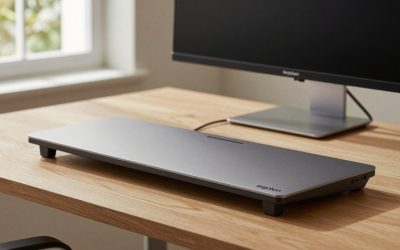
Many residence halls do not let you remove the room’s furniture. A converter sits on top of the existing desk and raises your keyboard and screen. Look for a keyboard tray that drops below the top surface; otherwise the keyboard ends up too high when seated. Converters are also the easiest option to carry home at the end of term.
Cheapest route: IKEA TROTTEN
The TROTTEN uses a hand crank rather than a motor, so there is nothing to break electrically and no outlet needed. The drawback is effort: cranking from sitting to standing height takes noticeably longer than pressing a button, and many people stop switching positions as a result. Good if you plan to stand only for longer study blocks.
Best long-term desk: FlexiSpot E7 or Uplift V2
If you are a graduate student, study from home for years, or are over six feet, a dual-motor frame is quieter, steadier at standing height and rated for heavier loads, often 300 lb or more. Uplift’s frame offers a long range of heights and many accessory options. These desks are worth it if you will keep them past graduation; they are overkill for a one-year sublet.
Decision matrix
| If you are… | Choose | Avoid |
|---|---|---|
| In a dorm with fixed furniture | Converter with low keyboard tray | Full desks you cannot store |
| Renting a small room, moving yearly | 48 × 24 single-motor desk | Solid wood tops over 60 lb |
| Under 5’3″ | Frame with a low minimum height | Converters on a 30 in desk |
| Over 6’1″ | Dual-motor extended range | Entry frames topping out near 46 in |
| On a strict budget | TROTTEN or entry electric | Premium bundles with unused accessories |
| Gaming or dual monitors | 55 × 28 dual-motor desk | Single-motor frames near load limit |
Moving-day realities
- Keep the hardware bag and Allen key taped under the desktop. Most frames take 30–60 minutes to strip down and reassemble.
- Separate the top from the frame before moving. The top is the bulkiest piece; the frame legs usually fit in a car trunk.
- Check doorway width. Standard interior doors are 30–32 inches wide, so a 48 × 24 top passes upright easily; a 60 × 30 top may need tilting.
- Edges wear first. Laminate and particleboard tops chip at corners during moves. Wrap corners in cardboard or a blanket.
- Re-level after every move. Uneven floors in older rentals cause wobble; adjustable foot levelers fix most of it.
Whichever you pick, alternate positions through the day rather than standing for hours; even 15–30 minutes of standing per hour of study is a reasonable starting rhythm, with a cushioned mat for hard floors.
Related Reviews & Guides
How to Choose a Standing Desk Frame in 2026: What Actually Matters
Hand Crank Sit Stand Desk: How It Works and Is It Worth It?