Last Updated: September 18, 2026
- Top Pick: gianotter Dual Monitor Stand Riser With Drawer and 2 Pen Holders
- Best Value: Canyora Computer Monitor Stand Riser for Desk, 3 Height Adjustable PC Laptop TV Desktop Monitor Stand Shelf, Metal Printer Table with Phone Holder, Stand Riser for Desk, Office Desk Organizers and Accessories, 2 Pack
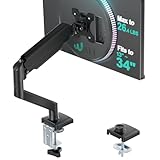
- Premium Choice: ErGear Single Monitor Arm, Fully Adjustable Monitor Mount for 13–34 Inch Screens, Fast Install Computer Monitor Stand with Tool-Free VESA Mount, Cable Management, Holds 19.8 lbs
Choosing between a monitor riser and a monitor arm is less about which accessory looks more modern and more about how you use your desk. The real decision is whether you want to place your screen on a stable platform or suspend it above the desk on an adjustable mount. A riser can add storage and raise a monitor with minimal installation. An arm can free nearly the entire desktop and make it easier to position a screen exactly where you want it.
Both options can improve a home office, gaming setup, or shared family workspace. The right choice depends on your monitor’s weight and VESA compatibility, the depth and strength of your desk, how often you adjust the screen, and whether you rent or own your home. Here is how a monitor riser vs monitor arm comparison works in practical terms for 2026.
As an Amazon Associate we earn from qualifying purchases at no extra cost to you.


📄 In This Review
Quick Verdict
Choose a monitor riser if you want an affordable, simple solution with built-in shelf space. It is especially useful for a laptop-and-monitor setup, a shallow desk, or a workspace where drawers, notebooks, and keyboards need a dedicated place. Most risers cost about $20 to $60, require no drilling or clamping, and can support a wide range of displays if their stated weight limit is sufficient.
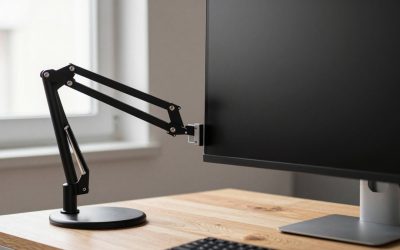
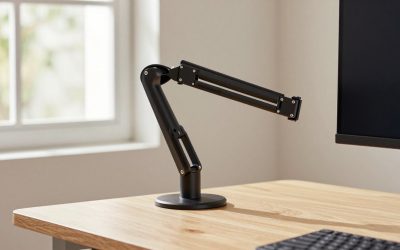
Choose a monitor arm if you want maximum adjustability and more usable desk area. An arm lets you raise, lower, tilt, swivel, and sometimes rotate a monitor from landscape to portrait orientation. Expect to spend roughly $25 to $150 for a single-monitor arm, with premium gas-spring models costing more. Your screen must usually have a VESA mounting pattern, such as 75 x 75 mm or 100 x 100 mm, and your desk must accommodate a clamp or grommet mount.
Side by Side
See also: How to Clean a Monitor Arm (2026): Step-by-Step • How to Tighten a Loose Monitor Arm (2026): Step-by-Step
| Factor | Monitor Riser | Monitor Arm |
|---|---|---|
| Comfort | Raises the screen by a fixed amount, often 3 to 6 inches | Provides precise height, depth, tilt, and swivel adjustment |
| Durability | Fewer moving parts; metal models can remain stable for years | Good arms are durable, but joints, springs, and clamps need occasional checking |
| Price range | About $20 to $60 for basic and adjustable models | About $25 to $150 for single-monitor models |
| Maintenance | Wipe the surface and check for loose feet or fasteners | Retighten joints or the desk clamp if the screen begins to sag or drift |
| Space needed | Uses the footprint of its base, commonly 10 to 16 inches deep | Uses little surface area but needs clearance behind or beneath the desk |
| Look | Furniture-like and visually substantial | Minimal and streamlined, with more visible hardware |
| Resale | Easy to repurpose for a laptop, printer, books, or television | Retains value when it fits common VESA sizes and includes mounting hardware |
| Best for | Simple setups, storage needs, renters, and non-VESA displays | Ergonomic setups, small desktops, frequent adjustments, and multiple screens |
Where Monitor Riser Wins
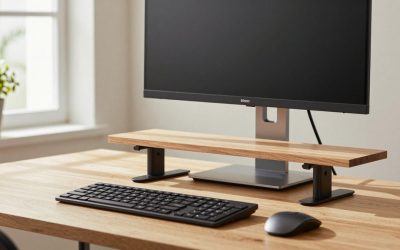
A riser is the easier choice when installation should take minutes rather than involve a clamp, screws, or VESA hardware. Place it on the desk, set the monitor on top, and adjust the rest of the workstation around it. There is no need to remove the monitor’s original stand, and you can continue using the display’s built-in height or tilt adjustments.
Risers also make good use of vertical space. A shelf can hold a keyboard, small speakers, a notebook, or a docking station when you are not using them. Some include drawers and pen holders. For example, a Gianotter dual-monitor stand riser with a drawer and two pen holders is listed at $26.99, a price that may appeal to anyone trying to combine screen elevation with small-item storage.
Adjustable risers are useful when the same desk serves different people. A two-pack such as the Canyora adjustable monitor riser, listed at $17.98, can separate two displays or serve two work areas. Models with several height settings commonly raise a monitor by approximately 3, 4, or 6 inches, although the exact positions vary. Check the platform width and maximum load before placing an ultrawide or two displays on one shelf.
A riser is also more forgiving with unusual equipment. Older monitors, televisions, all-in-one computers, and displays without VESA holes can sit on a platform. That makes a riser a practical option when you do not want to research mounting standards. It is also easy to move between desks and less likely to leave marks than a tightly clamped arm.
The main compromise is that a riser consumes desk depth. A platform measuring 14 inches deep can make a shallow 20-inch desk feel crowded, particularly when a keyboard and mouse sit in front of it. A fixed riser also cannot pull the monitor closer or push it away as precisely as an arm.
Where Monitor Arm Wins
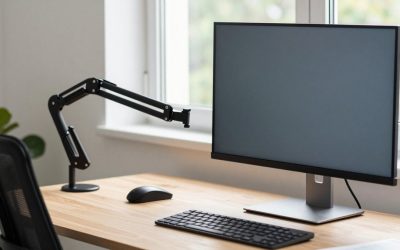
An arm is the better ergonomic tool for people who adjust their screen throughout the day. You can place the top of the monitor near eye level, move the display about 18 to 24 inches from your face, and angle it to reduce reflections. A single arm can also swing the screen aside when you need the desk for writing, crafting, or a laptop.
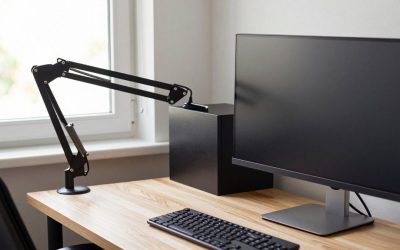
Arms are particularly effective on compact desks. The base usually occupies a narrow area at the rear edge, while the monitor floats above the work surface. That leaves room for a full-size keyboard, desk mat, speakers, and other accessories. A dual-monitor arm can create even more flexibility, though it requires a stronger desk and careful attention to total screen weight.
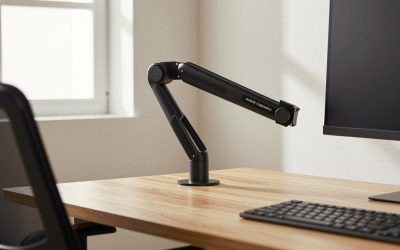
Budget single-monitor arms are widely available. The ErGear single monitor arm for 13- to 34-inch screens is listed at $26.99 and specifies a maximum load of 19.8 pounds. The WALI adjustable single monitor arm for 13- to 34-inch screens is listed at $25.49 with a stated capacity of up to 26.4 pounds. Those figures are product specifications, not a guarantee that either arm will suit every desk or monitor. Include the monitor’s actual weight without its original stand, and stay below the arm’s capacity.
Before buying, inspect the back of the display for four threaded mounting holes. A 75 x 75 mm or 100 x 100 mm VESA pattern is common, but some lightweight monitors use a proprietary adapter. Confirm that the arm’s clamp opens wide enough for your desk, often around 2 to 3.5 inches, and avoid clamping to fragile glass, hollow panels, or desks with a raised rear lip.
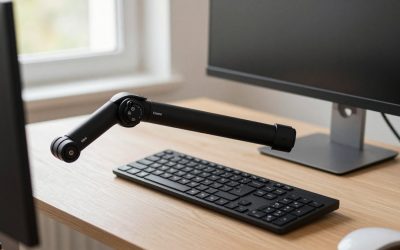
Arms have more parts to install and maintain. Cable channels can tidy the power and video cords, but the cables must have enough slack for movement. An arm that is overloaded or poorly adjusted may sag, rotate unexpectedly, or transfer pressure to the desk. For a secure setup, tighten the clamp, test the full range of motion slowly, and inspect it after the first week.
Cost Over 5 Years
The purchase price is only part of the comparison. A basic riser costing $20 to $35 may last five years or longer because it has no hinges, springs, or gas cylinder. If you replace it once to gain a different height or width, the five-year total may be $40 to $70. An adjustable metal riser in the $35 to $60 range can cost less over time if it continues to serve as a printer shelf or laptop stand after a monitor upgrade.
A basic arm costing $25 to $50 can also last five years, particularly with a monitor under the middle of its weight range. A higher-end gas-spring arm priced at $75 to $150 may be worthwhile if you reposition the screen daily or need smoother movement. Possible long-term costs include replacement VESA screws, a cable sleeve, or a new arm if the joints loosen or the desk changes.
Neither option uses meaningful operating power, so electricity is not a cost factor. The greater financial risk is buying the wrong size. A riser that is too narrow can require replacement, while an arm that cannot support the monitor may be unsafe. Verify dimensions, weight, VESA pattern, and desk thickness before ordering.
Which One for Your Home
Small Apartment
Choose a monitor arm when every square inch matters. It can free 1 to 2 square feet of surface area that would otherwise sit beneath the monitor. A wall-facing desk with a sturdy rear edge is usually a good candidate. Choose a riser instead if the desk cannot accept a clamp or if you need a shelf for a keyboard and accessories.
Family With Kids or Pets
A wide, heavy riser is often the calmer choice because it has a low center of gravity and fewer moving parts within reach. Look for nonslip feet, a platform at least as wide as the monitor base, and a weight rating comfortably above the display’s weight. An arm can work, but its clamp and moving joints should be inaccessible to children and protected from pets that may pull on cables.
Rental
Both options can be renter-friendly, but a riser creates the fewest concerns. It does not clamp to the desk and leaves no mounting holes. A desk-mounted arm normally does not damage a wall, yet its clamp can dent a soft desktop. Use a protective pad only if the manufacturer permits it and the clamp remains secure.
Long-Term Home
Invest in an arm if you expect to keep the same desk and want the greatest ergonomic flexibility. It is a strong choice for a permanent office, portrait-oriented reading, or a future dual-screen arrangement. Choose a metal riser if your needs are likely to change and you want an accessory that can later hold a printer, laptop, or storage bins.
FAQ
Is a monitor riser or arm better for posture?
An arm generally offers more precise positioning, but either option can improve posture if the screen is near eye level and about an arm’s length away. A riser may be enough if its height places the top third of the display at eye level.
Can a monitor riser hold two monitors?
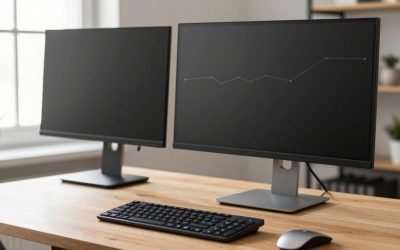
Some can, but measure the combined width and weight. Two 24-inch monitors may span roughly 42 to 44 inches side by side, while many single risers are much narrower. Use a riser specifically rated for the combined load and check that both screens sit fully on the platform.
Do all monitors work with monitor arms?
No. Most arms require a VESA mounting pattern and a monitor within the stated screen-size and weight range. A VESA adapter may be available for some displays, but it should be designed for that exact model rather than improvised.
Which option is easier to move?
A riser is usually easier to lift and relocate because the monitor can remain on its original stand. An arm can move with the desk, but removing the clamp, monitor, and cable management takes more time. For a frequently changing workspace, the riser is the simpler choice.
Ready to decide? Our #1 pick for 2026 is the Comfort.
Live price & availability on Amazon.
Related Reviews & Guides



6 Best Dual Monitor Stand Risers 2026
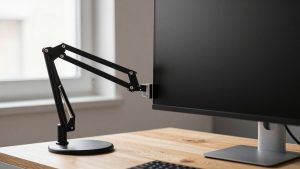
How to Tighten a Loose Monitor Arm (2026): Step-by-Step