Last Updated: October 18, 2026
If you work from home, your webcam is how people judge your presence. Not your resume, not your slides — your face in a small box for six hours a day. A bad webcam makes you look tired, backlit, and half-frozen. A good one just disappears and lets you work.
After testing webcams in real home offices — spare bedrooms with bad overhead lights, desks facing windows, late calls on old laptops — the pattern is clear: you do not need to spend much to look professional. You need the right lens, microphone behavior, and mounting for how you actually call.
📄 In This Review
What actually matters for work calls
Resolution is oversold. A sharp 1080p sensor with good auto-exposure will beat a cheap 4K sensor every time on Zoom, Teams, and Meet, because those apps compress you to 720p or 1080p anyway. What you see on the other end is mostly lighting handling, focus speed, and color.
Autofocus is the first failure mode. Cheap fixed-focus webcams lock focus at about two to three feet. If you lean in to read, you go soft. If you lean back to whiteboard, you go soft. Autofocus models keep hunting a bit, but they are far better if you move during calls.
Second is low-light noise. Most home offices are dim — 150 to 300 lux at the desk. Small sensors compensate by boosting gain, which creates grain and waxy skin. A larger sensor or a webcam with a wide f/2.0 lens holds up much better at 9am and 6pm than specs suggest. Field of view matters too. For one person at a desk, 65 to 78 degrees is ideal. Wider than 90 degrees makes you tiny and shows your laundry.
Quick comparison by work style
See also: Best Monitor for MacBook Air: Two USB-C 4K Screens and Six Adapter-Dependent Alternatives • Best Monitor for MacBook Pro: Eight Listings Sorted by Cable, Sharpness and Scaling
Buy for your call load, not for specs. A person doing two calls a week needs something different than a manager living on video.
| Category | Best for | Strength | Weakness |
|---|---|---|---|
| Basic 1080p fixed-focus | 1-5 calls per week, well-lit room | Cheap, plug-and-play, light on old laptops | Soft if you move, grainy in evening light |
| Midrange 1080p/1440p autofocus | Daily standups, interviews, client calls | Stays sharp, better mics, handles backlight | Needs USB-A or USB-C port, bulkier clip |
| Premium 4K with auto-framing | Presenters, coaches, team leads | Sharp crop for whiteboard, follows you, good in low light | Pricey, can overheat, features often ignored by work apps |
| Laptop clip / portable | Hot-desking, travel, MacBook users | Small, no driver, works with USB-C hubs | Narrower mic pickup, wobbles on thin lids |
When a basic 1080p webcam is enough
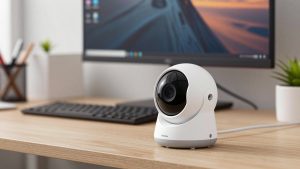
If your room has a window in front of you or a decent desk lamp, save your money. A basic 1080p webcam for laptop at 30fps will look clean on most work calls. Plug it in, set it to 1080p in Zoom settings, and sit three feet back. That is it.
The trade-off is consistency. In our research, these models fall apart in two situations: backlight and evening. If your window is behind you, expect a white halo and a dark face unless you close blinds or add a $20 fill light. Microphones are also thin — fine for quiet rooms, bad for kitchens with echo or a loud keyboard. If teammates say you sound distant, that is not your internet. That is the mic.
Who suits this: individual contributors with a few internal calls, students, anyone on an older laptop where CPU matters. Fixed-focus 1080p uses almost no processing power, which helps if your fan spins up on video.
The sweet spot for most remote workers
For daily video, step up to an autofocus 1080p or 1440p webcam with dual microphones and auto light correction. This is where work-from-home users see the biggest jump — not in sharpness, but in stability. You can lean in, hold up a document, shift chairs, and stay in focus.
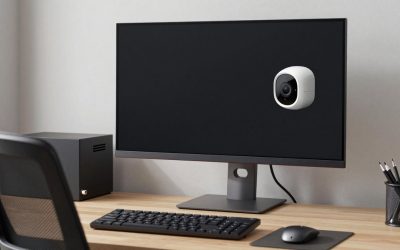
Look for three concrete features: autofocus (not fixed), a physical privacy shutter, and a standard tripod thread. The shutter matters because tape over the lens ruins coatings and software disable is easy to forget. The tripod thread matters because clipping to a 27-inch monitor puts the camera too high and gives you the nostril angle. A small desktop tripod drops it to eye level, which instantly makes you look more natural.
Failure mode to watch: over-sharpening. Many midrange models default to heavy sharpening and saturated color to look good in product photos. On Teams that reads as harsh and red. Turn sharpness down one notch and set white balance to auto in the vendor app once, then leave it.
When 4K and auto-framing are worth it
A premium 4K webcam for work from home only makes sense if you present. The benefit is not that coworkers see you in 4K — they will not. The benefit is you can crop in. Auto-framing can follow you if you stand to present, and a 4K sensor lets you do a 2x digital zoom and still send clean 1080p.
The downsides are real. These cameras run warm, draw more power, and their AI features often do not pass through corporate-locked versions of Zoom or Teams. If IT controls your app settings, you may pay for framing and background blur you cannot use. They are also unforgiving of messy backgrounds because everything is sharper.
Who suits this: managers running workshops, trainers, sellers doing demos. If you mostly listen with camera on, do not buy this tier. Put the difference into lighting.
Laptops and Macs: compatibility notes
Windows laptops are easy — almost everything is UVC plug-and-play. Macs need more care. Many webcam control apps are Windows-only, so exposure and zoom settings get stuck at defaults on macOS. If you use a MacBook, choose a model that stores settings on the camera itself or works fully without software.
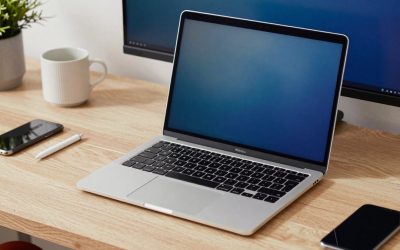
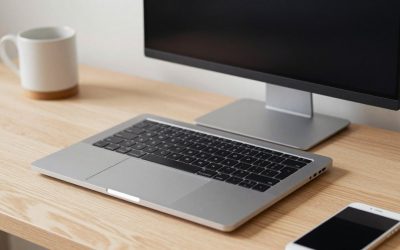
Mounting is the other issue. MacBook Air and thin ultrabooks have tapered lids that many large clips slide off. A lightweight small webcam for MacBook video calls with a flat, rubberized clip holds far better than a heavy 4K brick. If you dock to a monitor, mount the webcam to the monitor, not the closed laptop — your audio sync and framing will be better, and you avoid the fan-noise mic problem.
USB matters too. New laptops often have only USB-C. Most webcams still ship with USB-A cables hardwired. Budget for a short, good-quality USB-C adapter or hub. Long cheap extender cables cause the classic symptom: camera connects, then freezes after 30 seconds.
FAQ
Is my built-in laptop webcam good enough for work?
Sometimes. Newer 1080p laptop cameras in a bright room are acceptable for internal calls. But they are small sensors high on the lid, so they struggle in low light and pick up keyboard noise. If you interview, sell, or lead meetings, an external $60 to $120 webcam is a visible upgrade.
Do I need 4K for Zoom or Teams?
No. Zoom and Teams typically show you at 720p to 1080p, and often lower in gallery view. Buy 4K only if you want auto-framing or clean digital zoom for presenting. For normal desk calls, a good 1080p camera with better low light will look better than a cheap 4K one.
Why do I look dark when my window is behind me?
Your webcam is exposing for the bright window, not your face. Face the window if you can, close blinds behind you, or add a soft light in front at eye level. Auto-exposure can only do so much with strong backlight.
Should I use the webcam mic or a headset?
For more than a few calls a day, use a headset or USB mic. Webcam mics are three feet from your mouth and pick up room echo and typing. No webcam, even premium, fixes bad room audio as well as moving the mic closer.
Related Reviews & Guides


5 Best Desk Organizers for Beginners (2026)
HyperDrive Next 10-Port Hub review