Last Updated: October 9, 2026
The moment you plug a 5K monitor into a Mac or a high-end Windows rig, you expect text so sharp you forget it is a screen. The reality is messier. Some panels deliver that crispness at close range while looking muddy on HDR video. Others nail connectivity with Thunderbolt passthrough but ship with a color gamut that makes your editing workflow feel like a compromise. The best 5k monitors thread that needle: they give you genuine pixel density, honest color, and the right ports so your desk stays clean.
What separates a monitor worth $900 from one at $500 is rarely one spec. It is the combination of panel technology, power delivery over a single cable, and whether the resolution matches your actual workflow. A creative who color-grades in DaVinci Resolve needs different attributes than a developer who wants two windows side by side at native sharpness. This roundup reflects that split, covering Mac-first panels, ultrawide productivity displays, gaming-oriented 5K options, and a renewed entry that costs less than a mechanical keyboard.
As an Amazon Associate we earn from qualifying purchases at no extra cost to you.


Quick Picks
| Product | Best for | Price |
|---|---|---|
| BenQ MA270S | Mac creators who want plug-and-play | $999.99 |
| INNOCN 40C1U | Ultrawide productivity at a value price | $535.48 |
| Samsung ViewFinity S8 | Reliable name-brand high-res work | $589.99 |
| Dell UltraSharp U3425WE | Corporate users who want Dell support | $780.00 |
| KTC 5K 27″ Dual Mode | Budget buyers wanting 5K with USB-C | $599.99 |
| INNOCN 49C1R | Immersive ultrawide gaming | $535.49 |
| LG 27GM950B-B | Competitive gamers who want 5K detail | $899.99 |
| KTC H27P3 (Renewed) | Shoestring 5K for Mac mini users | $374.49 |
How We Picked
See also: How to Clean a Monitor Arm (2026): Step-by-Step • How to Tighten a Loose Monitor Arm (2026): Step-by-Step
We weighted four factors across every panel in this roundup: actual pixel density and whether the resolution is true 5K (5120×2880) or a stretched ultrawide variant, color accuracy out of the box measured by delta-E and gamut coverage, the quality of video and data I/O including USB-C power delivery wattage, and long-term value relative to the asking price. Monitors that looked great in sRGB but fell apart in P3, or that charged premium pricing for a mediocre HDR implementation, were marked down.
The 8 Best 5K Monitors in 2026
BenQ MA270S
The MA270S is the monitor BenQ built after realizing Mac users were tired of dongles and guesswork. Its 27-inch 5120×2880 Nano Gloss panel renders text with almost e-ink clarity, and Mac Color mode means you get P3 coverage without manually calibrating every time you plug in a new device. Dual Thunderbolt 4 ports deliver 96W to your MacBook and 15W to a second device, plus daisy chaining and KVM switching so you can bounce between a Mac and a Windows box with one keyboard.
- Pro: Nano Gloss surface reduces reflections without the haze of matte coatings.
- Pro: 96W Thunderbolt passthrough means one cable for video, data, and power.
- Con: At $999.99, it is the priciest 27-inch option here.
Skip this if you are on a budget or do not run macOS; its Mac-specific features lose value on a Windows-only desk.
INNOCN 40C1U
INNOCN’s 40-inch ultrawide packs 5120×2160 into a 21:9 frame, giving you roughly the horizontal space of two 27-inch QHD monitors with no bezel gap. The 100Hz refresh makes cursor movement feel fluid, and Delta E under two means out-of-box color is close to accurate. USB-C is present for single-cable laptop connection, and the height-adjustable stand is a rarity at this price.
- Pro: Massive horizontal workspace at under $550.
- Pro: Low color deviation for a value panel.
- Con: Not true 5K vertically; text is slightly less sharp than 5120×2880 options.
Skip this if you need vertical pixel density for code editors or detailed retouching.
Samsung ViewFinity S8
Samsung’s ViewFinity line targets professionals who want dependable performance without negotiating feature trade-offs. The 27-inch S80HF sits in a comfortable middle tier: it delivers high-resolution clarity with Samsung’s color tuning, and the ViewFinity software suite lets you split the screen into layouts that suit spreadsheet-heavy work. At $589.99 it is cheaper than most 5K-class rivals from mainstream brands.
- Pro: Strong brand support and warranty network.
- Pro: Useful software-based screen splitting without extra utilities.
- Con: Limited Thunderbolt or high-wattage USB-C options compared to Mac-focused competitors.
Skip this if you require single-cable docking for a laptop or deep color-accuracy guarantees.
Dell UltraSharp U3425WE
The U3425WE brings Dell’s UltraSharp pedigree to a 34-inch ultrawide with 5K QHD resolution. For corporate buyers who want a monitor that IT can standardize on, this is the path of least resistance. Dell’s Premier Color validation and wide service network offset a price tag that puts it above more feature-rich panels.
- Pro: Consistent color calibration backed by Dell’s enterprise validation.
- Pro: Excellent build quality and stand ergonomics.
- Con: At $780, it costs more than INNOCN alternatives with comparable specs.
Skip this if you are buying outside a procurement channel and want maximum performance per dollar.
KTC 5K Monitor 27 Inch Dual Mode
KTC’s 27-inch 5K panel includes a dual-mode resolution option, letting you switch between native 5K and a lower resolution that boosts refresh rate for lighter gaming. The 65W USB-C port handles single-cable laptop connection at this price point, which is unusual. It is the most straightforward way to get genuine 5120×2880 pixel density on a desktop without crossing the $600 threshold.
- Pro: True 5K resolution at $599.99.
- Pro: Dual mode gives flexibility for gaming or smoother desktop motion.
- Con: 65W charging is adequate but not ideal for power-hungry mobile workstations.
Skip this if you need more than 65W over USB-C or plan to connect multiple devices through the monitor.
INNOCN 49C1R
The 49C1R stretches 5120×1440 across a 49-inch 32:9 curved panel with an R1800 radius. At 120Hz with HDR400 and 99% sRGB, it is built for people who want immersion without a triple-monitor rig. The USB-C port and height adjustment make it viable as a daily driver for both gaming and productivity.
- Pro: Sweeping curvature creates genuine immersion for racing and flight sims.
- Pro: Under $550 for a 49-inch ultrawide is exceptional value.
- Con: Vertical resolution is only 1440p; text sharpness falls short of true 5K panels.
Skip this if you primarily do text-heavy work or photo editing where vertical pixels matter.
LG 27GM950B-B
LG’s Ultragear Evo uses a Mini-LED backlight with 5K resolution and a 165Hz refresh rate, targeting gamers who refuse to give up pixel density. The IPS panel paired with Mini-LED local dimming produces HDR highlights that standard edge-lit displays cannot match, and the 165Hz refresh keeps fast-paced play smooth.
- Pro: Mini-LED delivers deep blacks and bright highlights simultaneously.
- Pro: 165Hz at 5K is rare and useful for competitive play.
- Con: $899.99 places it in premium territory, and Mac-specific color modes are absent.
Skip this if your priority is color-accurate creative work rather than high-refresh gaming.
KTC H27P3 (Renewed)
A renewed 27-inch 5K panel at $374.49 with 217 PPI, HDR400, and a 65W USB-C port is a bold proposition. The 135% sRGB coverage exceeds most competitors at twice the price, and compatibility with the Mac mini makes it a natural budget pick for Apple Silicon users entering 5K. The tilt-only stand is its most obvious limitation.
- Pro: Lowest price for genuine 5120×2880 resolution with USB-C.
- Pro: 135% sRGB provides vivid, saturated color output.
- Con: Renewed status means no headroom for a full warranty, and tilt-only adjustment limits ergonomics.
Skip this if you need height adjustment or a full manufacturer warranty.
Buying Guide
Understanding the Three “5K” Resolutions
Not every monitor marketed as 5K shares the same pixel grid. True 5K is 5120×2880 (16:9), giving you roughly 14.7 million pixels and ideal text rendering for coding and layout work. 5K2K or 5120×2160 (21:9) trades vertical pixels for width, which helps multitasking but softens small text slightly. A 5120×1440 ultrawide (32:9) goes even wider but drops vertical resolution enough that you may notice font aliasing. Match the ratio to how you actually split your screen.
Connectivity Determines Daily Comfort
The difference between a great 5K desk and a cable-management nightmare often comes down to a single port. Thunderbolt 4 with 96W or higher delivers video, data, and power through one cable while supporting daisy chaining. USB-C at 65W handles most modern laptops but will throttle a 96W MacBook Pro under sustained load. If you run a dock setup or need KVM switching between two computers, prioritize monitors with explicit KVM and multi-port Thunderbolt configurations.
Panel Technology Matters More Than HDR Badges
HDR400 is a marketing label, not a performance tier. Mini-LED backlighting with local dimming zones produces real HDR contrast that edge-lit IPS panels cannot replicate regardless of certification. Nano Gloss coatings on high-end panels reduce reflections while preserving color pop, whereas standard matte coatings can introduce subtle grain. For creative work, look for P3 coverage and stated delta-E values; for gaming, prioritize refresh rate and response time over HDR claims.
Our Verdict
The BenQ MA270S is the top pick for anyone in the Mac ecosystem who wants a single cable, accurate P3 color, and a panel that makes text disappear. It is expensive, but in this category you are paying for a cohesive experience rather than a spec sheet. The KTC H27P3 (Renewed) earns the budget nod at $374.49: nothing else at that price delivers 217 PPI with USB-C. If your priority is gaming immersion over pixel density, the LG 27GM950B-B wins because no other monitor here combines 5K clarity with 165Hz and Mini-LED contrast.
FAQ
Is 5K overkill for a 27-inch monitor?
At 27 inches, 5K yields roughly 218 PPI, which is close to Apple’s Retina threshold. If you sit within arm’s length, text and interface elements will appear noticeably smoother than on 4K at the same size. For casual media viewing the benefit shrinks, so it depends on how much time you spend reading on screen.
Do I need Thunderbolt or is USB-C enough?
USB-C with DisplayPort Alt Mode and power delivery handles most laptops fine. Thunderbolt 4 adds higher bandwidth for daisy chaining a second monitor and supports more data throughput for connected peripherals. If you dock one laptop and stop there, USB-C at adequate wattage is sufficient.
Are renewed monitors safe for daily use?
Renewed or refurbished units typically pass seller-inspection testing and come with limited warranties. The main risk is shorter usable life and cosmetic wear. For a budget 5K entry like the KTC H27P3, the price reduction usually justifies accepting tilt-only adjustment and a shorter coverage window.
Will a 5K monitor slow down my GPU?
Rendering 14.7 million pixels demands significantly more GPU power than 1080p or even 4K. Integrated graphics handle desktop and productivity tasks at 5K without issue, but gaming at native 5K requires a current-generation discrete GPU. If your use case is coding, design, or video editing, most modern systems scale fine at this resolution.
Part of our monitors buying guide hub.
Ready to decide? Our #1 pick for 2026 is the BenQ MA270S.
Live price & availability on Amazon.
Related Reviews & Guides


Best Vertical Monitors for Coding in 2026: Compared and Ranked
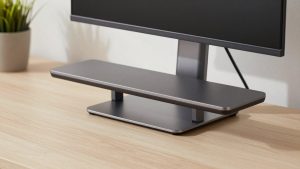
Monitor Riser vs Monitor Arm: Which Is Right for Your Home (2026)