Last Updated: September 29, 2026
The Desky Dual Mini earns its name because it shrinks the frame, not the motor system: you still get two motors and a 308 lb weight rating in a footprint that fits desks as narrow as 23.6 inches wide, all the way up to 47.2 inches. That makes it one of the few dual motor sit stand desks built specifically for small rooms, corner nooks, and secondary workstations where a standard 60-inch frame simply won’t fit.
The question worth answering before you buy isn’t “is it strong enough” (it is, on paper). It’s whether a narrower dual-motor frame holds that same rock-solid feel at full extension that wider frames are known for. That’s where the tradeoffs actually live.

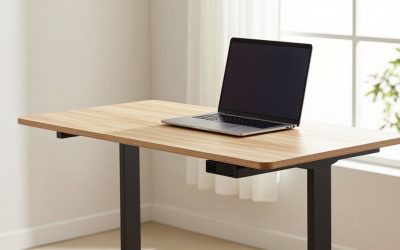
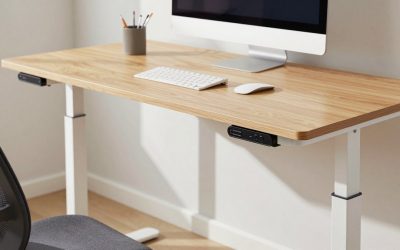
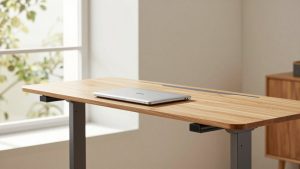
Desky Dual Mini Sit Stand Desk White 32" White
Included for 'Desky Dual Mini Sit Stand Desk: Small Footprint, Full-Size Frame?' as a relevant option in this category; details come from the product listing.
View on Amazon
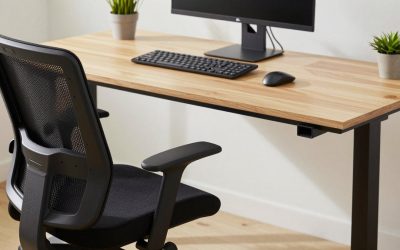
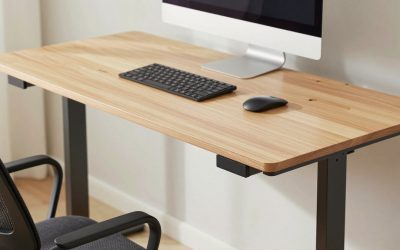
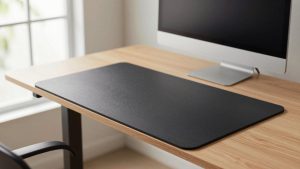
Desky Dual Mini Sit Stand Desk Black 32" Matte Black
Included for 'Desky Dual Mini Sit Stand Desk: Small Footprint, Full-Size Frame?' as a relevant option in this category; details come from the product listing.
View on Amazon
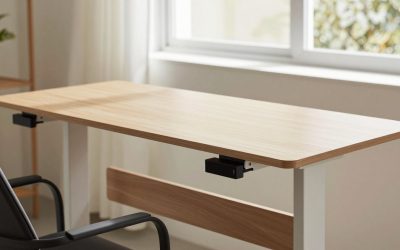
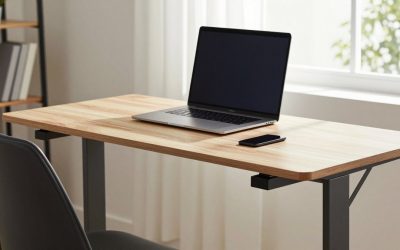
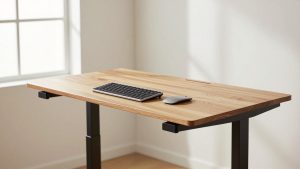
Desky Dual Mini Sit Stand Desk Natural Walnut 32" Matte Black
Included for 'Desky Dual Mini Sit Stand Desk: Small Footprint, Full-Size Frame?' as a relevant option in this category; details come from the product listing.
View on Amazon
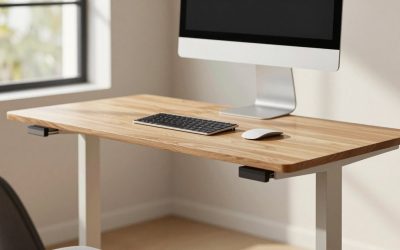
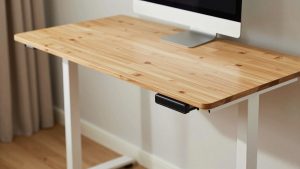
Desky Dual Mini Hardwood Sit Stand Desk Acacia 32" Matte Black
Included for 'Desky Dual Mini Sit Stand Desk: Small Footprint, Full-Size Frame?' as a relevant option in this category; details come from the product listing.
View on Amazon📄 In This Review
What “mini” actually means here
Desky’s standard dual-motor frames typically span a wider desktop range, often starting around 39 inches and running past 70 inches for L-shapes or wide singles. The Mini frame cuts the bottom end dramatically, down to 23.6 inches, which is narrow enough for a compact tabletop you’d normally associate with laptop carts or single-motor budget desks.
That width range matters for room planning. A 23.6 to 47.2 inch frame comfortably fits:
- A small bedroom office corner, roughly 6×8 ft, where a full-size desk would block a doorway swing
- A closet-converted workstation or Murphy desk setup
- A secondary desk for a tablet, laptop dock, or gaming console in a living room
- Dorm rooms and rentals where floor space is charged by the square foot
In a typical 10×12 ft room, a 47.2-inch-wide desktop still leaves roughly 3 to 4 feet of walking clearance behind the chair if placed against one wall, assuming a standard 30-inch-deep desktop and a chair that pulls out about 20 inches. Go with the minimum 23.6-inch width and you free up almost another foot and a half of usable floor space compared to a 60-inch frame, which is the real selling point for anyone squeezing a desk into an existing room rather than designing one from scratch.
Lift speed and the 308 lb rating
See also: Best 49 Inch Monitor: Eight Super Ultrawides Compared by Bandwidth and Desk Depth • Working Table for Home: Sit-Stand and L-Shaped Setups Compared
Dual-motor frames lift faster and more evenly than single-motor desks because each leg has its own drive instead of a synchronized belt pulling both from one motor. On the Mini, that translates to a lift speed in the same range as Desky’s full-size dual-motor desks, typically covering the full height adjustment in well under 15 seconds, with smoother starts and stops under load than single-motor competitors.
The 308 lb rating is generous for a frame this narrow. For context, that’s enough to support:
- A dual-monitor arm setup (20-30 lbs)
- A heavier engineered wood or bamboo desktop (40-60 lbs for larger tops)
- A small standing desk plant, monitor lights, and a laptop dock
- Most CPU towers mounted via under-desk brackets
In practice, few people running a compact 24 to 47 inch desktop will approach that ceiling. The rating exists more as a stability buffer than a hard requirement most buyers will test.
Stability at max height: the real tradeoff
This is where frame width and wobble are directly connected, and it’s the one thing a spec sheet won’t tell you clearly. Wider dual-motor desks (55 inches and up) plant their legs farther apart, which increases the base’s resistance to side-to-side sway at full height. Narrower frames like the Mini have legs spaced closer together by design, since the frame has to physically fit under a smaller desktop.
That doesn’t make the Mini unstable. Desky’s dual-motor engineering (crossbar reinforcement, telescoping leg columns) keeps front-to-back wobble well controlled even at max height. But side-to-side sway at the far ends of a fully extended desktop will be more noticeable on a narrow frame than on a 60-plus inch frame with widely spaced legs, simply due to leverage. If you’re running a 47.2-inch desktop at standing height and typing near the edge rather than the center, you’ll feel slightly more give than you would on a full-size frame at the same height.
| Frame type | Typical width range | Leg stance | Wobble at max height | Best for |
|---|---|---|---|---|
| Desky Dual Mini | 23.6″-47.2″ | Narrow | Low front-to-back, moderate side-to-side at full extension | Small rooms, secondary desks, laptop-only setups |
| Standard dual-motor frame | 39″-63″ | Medium-wide | Low in both directions | Primary home office desks, dual-monitor setups |
| Wide dual-motor frame | 55″-71″+ | Wide | Very low, even under load | L-shapes, multi-monitor, drafting or CAD work |
| Single-motor budget frame | 40″-55″ | Medium | Higher, uneven lift under load | Occasional standing use, tight budgets |
If your desktop overhangs the frame significantly (say, a 47-inch top on the narrower leg setting), that overhang amplifies any sway you’d otherwise get. Keeping the desktop width close to the frame’s actual footprint, rather than maxing out the overhang, is the simplest fix.
Who should choose the Mini vs. a wider frame
| Your situation | Better choice | Why |
|---|---|---|
| Small apartment or dorm, single monitor | Dual Mini | Frame footprint matches the room; full lift speed and weight capacity without the bulk |
| Renter needing an easy-to-move setup | Dual Mini | Narrower frame and lighter overall assembly are easier to disassemble and relocate |
| Dual or triple monitor setup | Standard or wide dual-motor frame | Wider stance handles the added weight and edge-loading without extra sway |
| Back pain requiring frequent sit-stand transitions | Either, but prioritize dual-motor over single | Even, fast lift matters more than width; Mini works fine if desktop stays under 40″ |
| Kids or pets around the desk | Standard dual-motor frame | Wider base resists tipping if bumped or leaned on; more margin for accidental knocks |
| Home office as a primary workstation | Standard or wide frame | More desktop real estate and stability for all-day, heavier use |
Assembly and moving realities
Because the Mini frame is smaller, the shipping box is noticeably lighter and shorter than a full-size dual-motor kit, generally making it a one-person assembly job in under 30 minutes with a power drill. The leg columns are shorter to match the narrower desktop range, which also means less telescoping travel to align during setup compared to wider frames.
For moving, the reduced footprint pays off twice: it fits through standard 30 to 32-inch doorways without needing to remove the desktop first, and the lighter frame (crossbar and legs, excluding desktop) is manageable for one person to carry. The parts that wear first on any electric sit-stand frame are the same regardless of size: the motor’s internal gearing after years of heavy daily cycling, and the cable management clips or grommets, which loosen with repeated desktop swaps. The Mini isn’t exempt from either, but its lighter overall load (smaller desktop, less mounted hardware) tends to reduce strain on the motors over time compared to a wide frame carrying a heavier multi-monitor load.
Price range
Compact dual-motor frames like the Mini usually run $300 to $500 for the frame alone, with desktop bundles typically landing between $400 and $700 depending on material. That’s often $50 to $150 less than Desky’s standard-width dual-motor frames, reflecting the smaller material footprint rather than any reduction in motor quality.
The Dual Mini makes the most sense as a space-first decision: choose it because your room dictates a narrower desk, not as a discount version of a full-size frame. If your room can accommodate a wider desktop, the added leg stance on a standard or wide dual-motor frame will give you a steadier work surface at standing height, especially once monitors and desk accessories start adding weight near the edges.
Related Reviews & Guides
Standing Desk Bamboo vs Laminate Top: Which Is Right for Your Home (2026)

60 x 30 Standing Desk: Is That Size Right for Your Room?