Last Updated: September 18, 2026
📄 In This Review
Quick answer: Our top pick in 2026 is the Existing floor or table lamp with a directional LED bulb — our #1 rated choice. See the full ranked comparison, alternatives and buying advice below.
The Short Answer
Yes, a desk lamp is worth buying if your room lighting leaves your work surface dim or creates glare. The one condition is that you choose a lamp with adjustable direction and brightness; a fixed, overly bright lamp can make reading and screen work less comfortable instead of improving it.
A desk lamp is a small purchase, but it can make a noticeable difference in how usable a desk feels. It adds focused light for reading, writing, crafting, studying, and detailed work without requiring you to illuminate the entire room. In 2026, many affordable models also include dimming, multiple color modes, USB charging, and clamp-style mounting.
As an Amazon Associate we earn from qualifying purchases at no extra cost to you.


What You Actually Get
See also: Best Gaming Desk Pads for Full Desk Coverage • Best Desk Organizers Under $30: Match the Organizer to Your Clutter
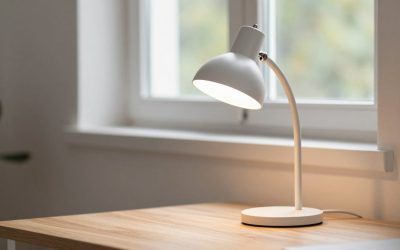
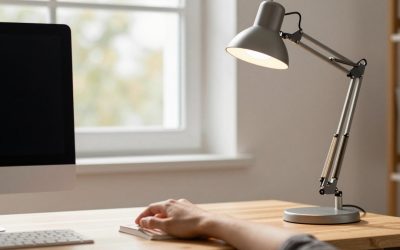
A typical desk lamp consists of a light head, an arm or neck, a base or clamp, and a power connection. Most current models use LEDs, which consume relatively little electricity and produce less heat than older incandescent bulbs. The lamp may offer a warm setting for relaxed reading, a neutral setting for general work, and a cooler setting that makes white paper appear brighter.
Expect a basic LED desk lamp to cost roughly $15 to $40. Budget models often use a touch control, a small plastic base, and several preset brightness or color modes. The LED light source is usually built in rather than replaceable, so the lamp’s useful life depends on the quality of its electronics as well as the LEDs.
Two common designs illustrate the choice. A compact LED desk lamp with USB ports, touch controls, and five modes may cost about $16.97. It is convenient for a home office, nightstand, or student desk, particularly when you want to charge a phone nearby. A clamp lamp such as the Airlonv 17-inch LED model may cost about $19.92 and use stepless dimming. Its clamp saves desk space, while the longer light bar can cover a wider work area.
Neither type replaces good room lighting. A desk lamp is best used as task lighting, with enough ambient light behind or around you to reduce the contrast between the desk and the rest of the room. Positioning matters as much as the lamp itself.
Pros
- Improves task visibility. Focused light makes printed pages, handwriting, drawings, small parts, and keyboard controls easier to see. This is especially useful when overhead lighting is weak or positioned behind you.
- Reduces dependence on bright room lighting. You can keep the rest of the room at a comfortable level while directing light only where you need it. This can be useful in a shared room or a bedroom workspace.
- Usually inexpensive. Functional LED models commonly fall between $15 and $40. That is a relatively small investment compared with replacing a ceiling fixture or adding permanent electrical work.
- Uses little energy. Many household LED desk lamps use approximately 5 to 12 watts. Exact consumption varies by brightness, light size, and design, but LED technology is generally economical for several hours of daily use.
- Produces less heat than traditional bulbs. A modern LED lamp is generally more comfortable beside your hands, papers, or monitor than a hot incandescent bulb. It can still become warm near the light head, so ventilation should not be blocked.
- Offers adjustable color and brightness. Preset modes can help you switch from a warmer tone for reading to a brighter neutral or cool tone for detailed work. Dimming is valuable when you work at different times of day.
- Saves space with a clamp. Clamp lamps attach to the rear or side of a desk and leave the desktop clear. A clamp typically needs a usable edge and a thickness within its stated range, often around 1 to 2 inches, so measure before buying.
- Can add useful charging features. A USB port may let you charge a phone, earbuds, or another small device from the lamp’s power adapter. This is convenient, although it should not be treated as a high-speed charging station unless the output is clearly specified.
- Easy to relocate. A lightweight lamp weighing roughly 1 to 3 pounds can move between a desk, console, bedside table, or craft station without tools.
Cons
- It takes up space unless you choose a clamp. A base may occupy approximately 6 to 9 inches of desk depth. On a small desk, that can compete with a keyboard, notebook, speakers, or monitor stand.
- Cheap models can feel flimsy. At the lower end of the price range, the arm may drift, the hinge may loosen, and the base may slide when you adjust the light. A heavier base is usually more stable but less portable.
- Built-in LEDs are not user-replaceable. If the electronics fail, you typically replace the entire lamp rather than swapping in a new bulb. Check the return policy and warranty before buying an unusually inexpensive model.
- Touch controls can be inconvenient. Some touch panels are too sensitive, difficult to locate in the dark, or easy to activate accidentally while cleaning. Physical buttons are often preferable if you want tactile feedback.
- Multiple modes do not guarantee better light. A lamp can advertise several settings while still having a narrow beam, uneven brightness, or distracting glare. Look for a diffused light panel and an adjustable head, not just a high mode count.
- It can create screen glare. A lamp pointed toward a monitor may reflect in the display or shine into your eyes. Place it to the side, slightly behind the monitor, and angle the light toward the desk rather than directly at the screen.
- Clamp models have mounting limits. They may not work with a rounded desktop, glass surface, thick apron, cable tray, or sit-stand desk edge. Tightening the clamp too aggressively can also mark delicate furniture.
- Cords add clutter. Most plug-in lamps need an outlet within reach, and USB-equipped models still require their power cable. Battery-powered alternatives eliminate the cord but need regular charging and may not stay bright for a full workday.
- Color quality varies. If you paint, sew, photograph products, or work with color-sensitive materials, a budget lamp may not render colors accurately. Look for a stated color-rendering index of 90 or higher when accuracy matters.
Who Should Buy It
Buy a desk lamp if you read or work at a fixed surface for at least a few hours each week, especially when the room has one overhead light or a window behind you. It is also a practical choice for students, remote workers, artists, hobbyists, and anyone who shares a room and needs focused illumination without lighting the whole space.
Choose a base model when you want portability and have enough desk depth. Choose a clamp model when every inch matters or when you need to illuminate a long work area. Prioritize a movable head, smooth dimming, a stable mounting point, and a light source that does not reflect directly into your eyes or monitor.
Who Should Skip It
Skip a desk lamp if your workspace is already evenly lit, your ceiling fixture provides comfortable task lighting, or your desk has no safe place for a base or clamp. You may also prefer a floor lamp or wall-mounted fixture if the desk is extremely small.
A desk lamp is not the right solution for persistent eye strain, headaches, or vision changes. Better lighting can improve comfort, but it cannot diagnose or correct an eyesight problem. If discomfort continues, consider an eye examination and review your screen distance, text size, and break habits as well.
Cheaper Alternatives
| Option | Cost | Trade-off |
|---|---|---|
| Existing floor or table lamp with a directional LED bulb | $5–$15 for a bulb | Lowest-cost option, but it may be too large for the desk and usually offers less precise adjustment. |
| Clip-on reading light | $8–$20 | Uses very little space, but it covers a smaller area and may wobble on a thick desk edge. |
| USB light bar or monitor light | $15–$35 | Keeps the desktop clear, but it may be designed mainly for screens and provide limited light for paper. |
| LED strip behind the desk | $10–$25 | Adds soft ambient light and reduces harsh contrast, but it is not a replacement for focused task lighting. |
| Used adjustable lamp with a new LED bulb | $10–$30 | Can offer a stronger arm and replaceable bulb, but condition, wiring, and style will vary. |
FAQ
Are desk lamps good for your eyes?
A desk lamp can make work more comfortable by improving visibility and reducing the need to squint. It does not prevent all eye strain, however. Use moderate brightness, avoid reflections on the screen, keep some ambient room light on, and follow regular screen breaks.
Is warm or cool light better for a desk?
Neither is universally best. Warm light around 2700K to 3000K can feel relaxed for reading, while neutral or cool light around 3500K to 5000K may make detailed daytime work feel clearer. Adjustable lamps are useful because your preference can change with the task and time of day.
Where should a desk lamp be placed?
For most right-handed users, place the lamp on the left side so your writing hand is less likely to cast a shadow; reverse that arrangement if you are left-handed. Keep the light slightly behind or beside the monitor and aim it at the work surface. The light head should not shine directly into your eyes.
What should I look for before buying?
Check the lamp’s height, base or clamp dimensions, cord length, brightness control, color settings, and warranty. A head or arm that adjusts through roughly 45 to 90 degrees is more useful than a fixed light. For a small desk, also confirm the base depth or the clamp’s maximum opening before ordering.
Ready to decide? Our #1 pick for 2026 is the Existing floor or table lamp with a directional LED bulb.
Live price & availability on Amazon.
Related Reviews & Guides



How to Clean a Desk Mat (2026): Step-by-Step
Best Power Strip with USB-C for Your Desk: Port Wattage, Mounting and Picks by Setup