Last Updated: October 7, 2026
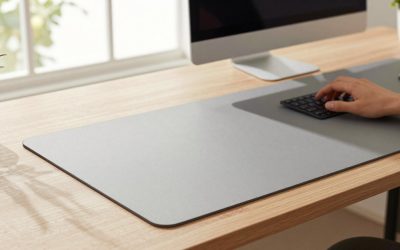
The best gaming desk pad for full desk coverage is the largest stitched-edge mat that leaves your desk controls and monitor bases stable, fits your available surface with a small margin, and has a fabric top suited to your preferred mouse glide. Measure the usable desktop—not the advertised desk size—before choosing: monitor arms, desk grommets, raised edges, and sit-stand cable hardware can all reduce the space a pad can cover.
📄 In This Review
Quick answer: For most people in 2026, the best gaming desk pads for full desk coverage is the 24–36 × 18–24 in — our #1 rated choice. See the full ranked comparison, alternatives and buying advice below.
Choose by desk size and setup
Full coverage does not always mean edge to edge. A pad that presses against a desk’s front lip may bunch under your wrists; one that covers a control panel or blocks a cable grommet can be inconvenient. Measure the flat, usable area, then leave roughly 1–2 inches clear at the back or sides where you need access to controls, ports, or clamps.
| Usable desktop width × depth | Pad size to consider | Best fit | Check before buying |
|---|---|---|---|
| 24–36 × 18–24 in | 24 × 12 to 31.5 × 15.7 in | Compact desk, laptop, keyboard, and mouse | Whether the keyboard and mouse both fit without overhanging |
| 40–48 × 24–30 in | 35.4 × 15.7 to 39.4 × 19.7 in | Standard gaming setup with one monitor | Room for monitor feet and a clear strip at the back |
| 55–63 × 28–31.5 in | 47.2 × 23.6 to 55.1 × 23.6 in | Wide setup, larger mouse area, or two monitors | Monitor-base footprint, desk controls, and cable exits |
| 70–72 × 30–36 in | 63 × 31.5 in or a close custom fit | Extra-wide desk with multiple peripherals | Whether the pad can stay flat without covering controls or clamps |
These are practical starting points, not guarantees: manufacturers’ dimensions vary, and a large monitor stand can take up more area than its screen suggests. For a monitor arm, measure the clamp and the space needed to operate it. For a freestanding monitor, check that every foot rests fully on the desk or pad; a soft mat under only part of a stand can make it wobble.
Match the surface to your mouse and maintenance needs
See also: Best Desk Organizers Under $30: Match the Organizer to Your Clutter • Best Power Strip with USB-C for Your Desk: Port Wattage, Mounting and Picks by Setup
Most full-size gaming pads use a woven fabric surface bonded to a rubber or foam backing. The surface affects glide; the backing affects grip and cushioning. A smooth, tightly woven top tends to feel quicker, while a more textured weave can offer more stopping control. These are broad tendencies, not standardized categories, so product descriptions and stated cleaning instructions matter.
| Construction or feature | What it offers | Trade-off to consider |
|---|---|---|
| Smooth woven fabric | Easy mouse movement and comfortable wrist contact | May feel too fast if you prefer more friction; dust and oils show over time |
| Textured or control-oriented fabric | More surface feedback and a less slippery feel | Can feel rougher, and some weaves are harder to wipe clean |
| Rubber-backed mat | Helps prevent sliding on a smooth desktop | Can retain a rubber smell when new; backing may be difficult to clean if soaked |
| Stitched perimeter | Helps protect fabric edges from fraying | Raised stitching may rub against wrists or sleeves if it sits at the desk’s front edge |
| Water-resistant top | Can buy time to wipe up small spills | “Water-resistant” does not mean waterproof; liquid can still reach seams or backing |
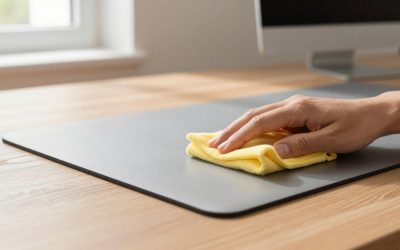
For spill resistance, look for a clearly described coated or treated surface, and verify the care instructions. A coating can make cleanup easier but may change the texture or mouse glide. If you eat or drink at your desk, prioritize a wipeable surface and removable mat over assuming any fabric pad can safely be machine-washed. Blot spills promptly rather than rubbing liquid into the weave.
Thickness, stitching, and sit-stand compatibility
Common full-size pads are around 2–4 mm thick. A thinner pad generally creates less of a height change between the mat and bare desk, which helps if a keyboard sits partly off the pad. A thicker pad adds cushioning but can make that transition more noticeable and may catch on a desk’s raised front edge. If wrist comfort is the priority, consider the pad alongside your chair and desk height: your shoulders should relax, elbows should sit near a right angle, and wrists should remain fairly straight while typing.
Stitching is most useful when it is low-profile, even, and securely bound to the edge. It cannot prevent every kind of wear: rubbing against a desk lip, repeated washing, and pulling the pad up by one corner can still loosen the perimeter. Check whether the edge seam feels raised and whether it will land where your forearms rest.
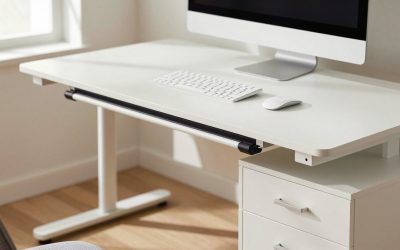
On a sit-stand desk, a mat does not need to be specially branded for standing desks, but it does need to stay put as the desk moves. Test its grip with the desktop at sitting and standing heights, and check that it does not snag on a control panel, cable tray, or monitor-arm clamp. A pad that is nearly as wide as the desktop may curl or shift if its edges are pinched by nearby objects. Leave enough clearance for the desk’s full travel and any attached accessories.
Pick by your situation
| Your setup | Prioritize | Likely compromise |
|---|---|---|
| Small apartment or compact desk | Measure around the keyboard and mouse; choose a pad that does not crowd the desk edge | Less room for wide mouse sweeps or extra peripherals |
| Kids, pets, or frequent drinks nearby | Easy-clean, spill-resistant top, grippy backing, and clearly stated care instructions | A coated surface may feel different from untreated cloth |
| Renting or moving often | Rollable fabric construction and dimensions that fit in a standard moving box or bag | A tightly rolled pad may need time to flatten; avoid creasing it |
| Wrist or forearm discomfort | Smooth, comfortable fabric; low-profile stitching; suitable chair and desk height | A desk pad alone does not correct poor posture or replace an ergonomic assessment |
| Sit-stand desk with monitor arm | Clearance for the clamp, control panel, cables, and full height range | You may need a smaller pad than the desktop’s full width suggests |
Before ordering: a quick fit check
- Measure the flat desktop width and depth, excluding rounded corners, bevels, and areas occupied by controls.
- Mark the proposed pad footprint with paper or painter’s tape. Confirm that the keyboard, mouse, and monitor feet fit where you want them.
- Check that monitor feet sit evenly and that an arm clamp can attach directly to the desk as intended.
- For sit-stand desks, run the desk through its range and watch for pad movement, cable snags, or contact with accessories.
- Read the cleaning and flattening instructions. Most rollable mats should be rolled for storage rather than folded sharply.
When moving, a full-coverage pad is usually light compared with a desk or monitor, but its size makes it awkward to pack. Roll it loosely with the fabric side out if the maker permits, secure it without a tight crease, and let it rest flat after unpacking. If an edge stays curled, follow the manufacturer’s flattening advice instead of applying high heat, which can damage coatings or backing.
Bottom line
For most gaming setups, a medium-to-large woven pad with a grippy backing, low-profile stitched edges, and a thickness near 2–3 mm is a practical balance. Choose a smoother surface for easier glide or a more textured weave for added control, and treat spill resistance as cleanup help—not spill-proof protection. The best fit is the largest size that leaves room for desk controls, stable monitor support, and unobstructed sit-stand movement.
Ready to decide? Our #1 pick for 2026 is the 24–36 × 18–24 in.
Live price & availability on Amazon.
Related Reviews & Guides



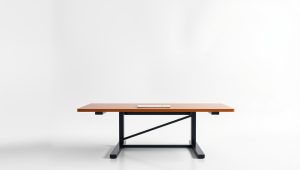

6 Best Desk Chairs With Footrest 2026
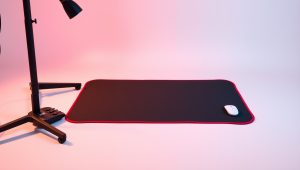
6 Best Anti-Fatigue Mats For Standing Desk 2026