Last Updated: September 18, 2026
- Top Pick: CHARYJOD LED Desk Lamp for Office Home, Height Adjustable Architect Desk Light with USB Adapter, Stepless Dimming Desk Lamp Light for Reading, Study, Workbench
- Best Value: LED Desk Lamp with Clamp, Architect Desk Lamp with Dual Light and Adjustable Swing Arm, Clip-on Eye-Care 4 CCT Modes & 5 Brightness Levels Table Light Modern Computer Lighting for Home Office
- Premium Choice: Bostitch Office VLF100D Swing Arm Desk Lamp, Metal, 36" Reach with Multi-Joint Adjustment, Includes Replaceable LED Bulb (VLF), Black
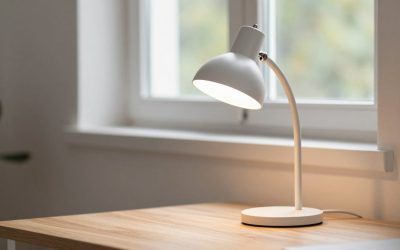
Choosing a desk lamp is less about finding the tallest model and more about matching its height, reach, base, and shade position to your work surface. The right dimensions place light over your task without blocking your monitor, shining into your eyes, or tipping when the arm is extended. This desk lamp height and reach dimensions guide explains the measurements that matter for home offices, study areas, bedside tables, craft stations, and workbenches.
📄 In This Review
The Short Answer
Most useful desk lamps stand 14 to 24 inches tall (36 to 61 cm) and provide 12 to 30 inches of horizontal reach (30 to 76 cm). Compact lamps with a fixed or flexible neck usually need 6 to 12 inches of clearance behind the work area. Swing-arm architect lamps commonly reach 24 to 36 inches, but their bases or clamps also require a secure mounting location.
As an Amazon Associate we earn from qualifying purchases at no extra cost to you.

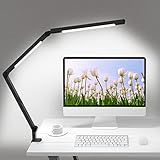


For a standard 28- to 30-inch-high desk, look for a lamp that positions the shade 15 to 20 inches above the desktop and 12 to 18 inches to the side of your main task area. A wider desk, drafting table, or workbench may benefit from a 30- to 36-inch reach. For reading or bedside use, a 12- to 18-inch lamp is usually sufficient.
As a practical buying range, basic adjustable lamps often cost about $25 to $45, while larger metal swing-arm models, clamp lamps, and lamps with multiple color-temperature settings commonly range from $35 to $80. Wattage is typically 5 to 12 watts for integrated LED lamps and about 6 to 10 watts for replaceable LED bulbs, although brightness should be compared by lumens rather than wattage alone.
Standard Sizes
See also: Best Gaming Desk Pads for Full Desk Coverage • Best Desk Organizers Under $30: Match the Organizer to Your Clutter
The measurements below represent common desk-lamp categories rather than a single model. “Reach” means the approximate horizontal distance from the base or clamp to the shade when the arm is extended. Actual usable reach decreases when you angle the shade downward or fold the joints.
| Lamp type | Typical height | Typical reach | Base or mounting footprint | Best for |
|---|---|---|---|---|
| Compact task lamp | 12–18 in (30–46 cm) | 6–12 in (15–30 cm) | 5–7 in wide (13–18 cm) | Nightstands, small desks, reading |
| Standard adjustable desk lamp | 16–24 in (41–61 cm) | 10–18 in (25–46 cm) | 6–8 in wide (15–20 cm) | Home offices and homework desks |
| Architect swing-arm lamp | 20–30 in (51–76 cm) | 24–36 in (61–91 cm) | 6–9 in wide (15–23 cm), or clamp-mounted | Large desks, drafting, detailed work |
| Clamp-on task lamp | 18–30 in (46–76 cm) | 18–36 in (46–91 cm) | Clamp opening commonly 1.5–2.5 in (4–6 cm) | Small or crowded work surfaces |
| Monitor-bar or narrow light | 1.5–3 in above monitor (4–8 cm) | 16–25 in (41–64 cm) | Fits monitor width, often 17–32 in (43–81 cm) | Glare-conscious computer setups |
Many affordable adjustable models fall between 16 and 24 inches tall and use a weighted base, flexible gooseneck, or two-joint arm. A lamp advertised with a 24-inch height may only reach 14 to 18 inches forward, so check both measurements rather than relying on maximum height.
Long-arm designs advertise reach values of 30 or 36 inches. That measurement is useful for a deep desk, but full extension places more leverage on the base or clamp. A metal lamp with a heavy base may weigh 4 to 8 pounds, while a lightweight clamp lamp may weigh 2 to 5 pounds. Confirm that the desk edge can support the clamp and that the lamp will not contact a wall, shelf, or monitor when repositioned.
How to Measure Your Space
- Measure desk height. Most desks are 28 to 30 inches high (71 to 76 cm). Record the distance from the floor to the top of the work surface, then consider whether the lamp will sit beside a monitor, keyboard, or notebook.
- Mark the task zone. Measure the area where you write, read, draw, sew, or use tools. A lamp should reach the center of this zone without requiring the base to sit in the middle of the desk.
- Measure available depth. Leave at least 4 to 6 inches (10 to 15 cm) behind a freestanding base so the arm can move without hitting a wall. Add more room for an arm that folds backward.
- Check vertical clearance. Measure from the desktop to the underside of shelves, cabinets, or wall art. Choose a lamp whose maximum height is at least 2 inches (5 cm) lower than the obstruction.
- Account for the shade. Record the shade’s length and diameter. A 5- to 7-inch shade is common, but a wide shade may block part of a monitor or occupy more desk space than the arm suggests.
- Test the clamp location. Measure the desk thickness and confirm the clamp opening. A typical clamp accepts about 1.5 to 2.5 inches, but some need a clear, flat edge rather than a beveled or rounded surface.
- Allow for adjustment. Do not measure only the lamp’s maximum extension. Plan for the shade to sit 12 to 18 inches from the front edge of the desk and angle downward about 30 to 45 degrees toward the work.
By Room or Use Case
Home Office
A 16- to 24-inch lamp with 12 to 20 inches of reach works well on most office desks. Place it opposite your writing hand when possible: left of the work area for a right-handed user and right for a left-handed user. This reduces shadows across paper. A swing arm or clamp model is especially useful when the desk already holds a monitor, laptop stand, speakers, and charging equipment.
Study and Homework Desk
Choose 14 to 20 inches of height and at least 10 inches of reach. The shade should illuminate a notebook without sitting directly in the student’s line of sight. Dimming and adjustable color temperature can make the lamp more versatile, but physical reach still matters more than extra settings if the desk is deep.
Reading Chair or Bedside Table
For a nightstand or side table, a 12- to 18-inch lamp is generally easier to control than a long architect arm. The bottom of the shade should be near eye level when you are seated, or slightly below it, to limit glare. Measure the table width carefully; a 5- to 7-inch base can consume much of a narrow nightstand.
Crafting, Sewing, and Detailed Work
Use a 20- to 30-inch adjustable lamp with 24 to 36 inches of reach when the task may move around a large table. Clamp mounting preserves workspace, while a weighted base is easier to reposition. For close detail work, prioritize a shade that can angle downward and a head that rotates at least 90 degrees. Integrated LEDs commonly use 5 to 12 watts; choose based on brightness and beam spread rather than wattage alone.
Workbench or Drafting Table
A long, multi-joint swing arm is usually the best fit. Look for 30 to 36 inches of reach and a secure metal base or clamp. On a standing-height workbench, a 24- to 30-inch lamp may be too short unless it mounts at the rear edge. Check the arm’s lowest position as well as its maximum height so the shade can illuminate small parts without being placed too close.
Common Sizing Mistakes
- Buying by height alone: A tall lamp may still fail to reach the center of a deep desk. Compare height, horizontal reach, and joint range.
- Ignoring the base diameter: A broad weighted base can take up 7 to 9 inches of valuable surface area. Confirm that it will not cover a notebook or interfere with a mouse.
- Using maximum reach every day: Fully extended arms can be unstable and may droop. Select a lamp that reaches your task area with one or two inches of adjustment left.
- Placing the shade too low: Keep it high enough to spread light across the task without creating a bright hotspot. A starting height of 15 to 20 inches above the desk works for many setups.
- Forgetting cord clearance: A rear-mounted lamp still needs room for its power cord, adapter, or USB connection. Leave roughly 2 to 4 inches behind the base or clamp.
- Overlooking weight and clamp fit: A long metal arm can pull on a thin desktop. Verify both the lamp weight and the mounting surface before buying.
FAQ
How tall should a desk lamp be?
For most desks, choose a lamp that is 16 to 24 inches tall. The shade will usually work best 15 to 20 inches above the desktop. Smaller 12- to 18-inch lamps suit bedside tables, while 24- to 30-inch models are more useful for large work surfaces.
How much reach does a desk lamp need?
Allow 12 to 18 inches of reach for a typical office or study desk. Choose 24 to 36 inches for a deep desk, crafting table, or workbench. Measure from the intended base or clamp position to the center of the area you need illuminated.
Is a clamp lamp better than a base lamp?
A clamp lamp saves desk space and can provide long reach, making it helpful on crowded surfaces. A base lamp is simpler to move and does not require a compatible desk edge. Select a clamp when every inch matters; select a base when flexibility and easy repositioning are more important.
What wattage is best for a desk lamp?
Most integrated LED desk lamps use about 5 to 12 watts, while replaceable LED bulbs commonly use 6 to 10 watts. Look for brightness information in lumens, with roughly 450 to 800 lumens suitable for general reading and desk tasks. Dimming is useful when the lamp serves more than one purpose.
Ready to decide? Our #1 pick for 2026 is the Compact task lamp.
Live price & availability on Amazon.
Related Reviews & Guides
Standing Desk vs Sitting: Health Benefits, Drawbacks & Best Hybrid Approach
Is a Desk Cable Tray Worth It? An Honest Answer (2026)