Last Updated: October 18, 2026
If you switch between Mac and Windows, you want a webcam that just works on both without driver hunts or settings that reset every update. Most modern USB webcams do work on both, but autofocus behavior, mic quality, and companion software are very different across platforms. I have used the same cameras on a MacBook Air, a Windows laptop, and a docked desktop setup, and the differences show up fast.
The short version: for most work calls, a simple 1080p USB webcam is enough. Pay more only if you need a wider field of view, better low-light handling, or manual controls that actually stick on macOS.
📄 In This Review
What actually matters for Mac + Windows use
Resolution is not the deciding factor. A clean 1080p image with good exposure beats a noisy 4K image every time, especially on Zoom, Teams, and Meet, which compress everything anyway. What matters more is plug-and-play UVC support, meaning the camera works with the built-in USB video standard and does not need a driver. Almost all work-focused webcams are UVC, which is why they work on both Mac and Windows out of the box.
Where Mac users get tripped up is software. Many webcam brands offer a Windows app for zoom, focus, exposure, and background effects, but offer a stripped-down Mac app or none at all. If you need to lock exposure or turn off auto-focus, check that those settings can be saved on the camera itself or adjusted in the app you actually use. On Windows, you also get more control through OBS, the Camera app, and third-party utilities. On Mac, you are often stuck with auto unless the camera has onboard controls.
Audio is the other trade-off. Dual mics on webcams are fine for a quick call in a quiet room, but they pick up keyboard noise, echo, and room reverb. If you are on calls all day, plan on a separate headset or USB mic regardless of which webcam you buy.
Quick comparison by category
See also: Best Monitor for MacBook Air: Two USB-C 4K Screens and Six Adapter-Dependent Alternatives • Best Monitor for MacBook Pro: Eight Listings Sorted by Cable, Sharpness and Scaling
| Category | Best for | Strengths | Weak points |
|---|---|---|---|
| Built-in laptop camera | Travel, casual calls | No setup, always with you | Small sensor, grainy in low light, fixed angle |
| Budget 1080p USB webcam | Most office workers | Plug-and-play on Mac/Windows, cheap, better than built-in | Basic low light, aggressive auto-exposure, mediocre mics |
| Midrange 2K / 4K USB webcam | Home office, teaching, presenting | Larger sensor, better dynamic range, wider lens options | Costs more, 4K often cropped/downscaled by meeting apps |
| Mirrorless / DSLR as webcam | Streaming, recording, high-end setup | Best image quality, real lens blur | Complex, needs power + HDMI/USB capture, overheating risk |
For most people: a basic 1080p webcam is fine
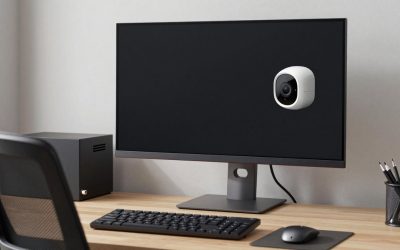
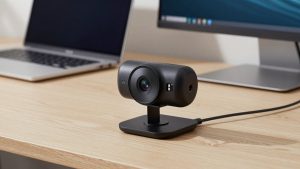
If your day is Zoom and Teams from a desk with decent light, do not overbuy. A basic budget 1080p webcam will look sharper than a MacBook or Windows laptop camera because it sits at eye level, has a slightly larger lens, and handles backlight a little better. Mount it on top of your monitor, plug it directly into the laptop or dock, and select it once in Zoom/Teams settings.
Failure modes to know: cheap models tend to hunt for focus if you gesture with your hands or lean in and out. They also blow out windows behind you. Fix both with positioning, not money. Face a window or put a cheap desk lamp in front of you, not behind you, and sit about arm’s length away. That alone makes a $40 camera look better than a $150 camera in a dark room.
Who this suits: hybrid workers, students, anyone using a work-issued laptop where you cannot install camera utilities. No admin rights needed, no drivers, easy to move between Mac and Windows.
When it is worth paying for 2K or 4K
Step up if you present a lot, teach, record Loom-style videos, or sit in a poorly lit room. A good midrange 4K webcam for Mac and Windows usually gives you a bigger sensor, better auto white balance, and a choice of field-of-view settings. The 90-degree wide mode is useful if two people share a desk. The 65- to 78-degree mode looks more natural for one person and avoids that stretched-corner look.
Be honest about 4K: Zoom, Teams, and Meet rarely send true 4K. You are mostly buying better 1080p, not actual 4K detail for the other side. The benefit is cleaner downscaling, less noise, and more headroom to crop. If a listing promises DSLR-like blur from a tiny webcam sensor, treat that as software blur. It works okay on Windows with good lighting, but edge halos around hair and glasses are common on both platforms.
Mac-specific catch: some midrange cameras default to heavy auto-sharpening and auto-exposure on macOS with no way to turn it down unless you use the Windows app once to save settings. If you have access to a Windows PC, set it there first, then move the camera to your Mac. Also test the mic separately on Mac in System Settings > Sound > Input. Some cameras default to aggressive noise suppression that makes you sound thin.
Setup tips that matter more than the model
On MacBooks with USB-C only, plug the webcam directly into a good dock or Apple adapter, not a cheap unpowered hub. I have seen more dropouts and flicker from bad hubs than from any camera defect. If the image freezes when you open Teams and a second app, that is usually bandwidth, not a broken camera. Unplug other USB video devices and try a different port.
On Windows, check privacy settings first if the camera does not appear: Settings > Privacy & security > Camera. Laptops from Lenovo, HP, and Dell also have a physical shutter or Fn-key camera kill switch that confuses people. On Mac, check System Settings > Privacy & Security > Camera, and remember that macOS will only list apps that have asked for access at least once.
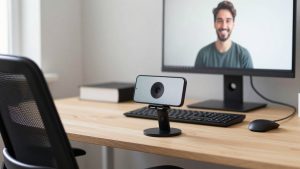
For mounting on an external monitor, a small tripod behind the keyboard often beats a monitor clip. Monitor clips sit too high on 27- and 32-inch displays and create an unflattering chin-up angle. A $15 mini tripod puts the lens at eye level and reduces wobble when you type.
Should you use a real camera as a webcam?
Only if you already own one and like tinkering. Image quality is excellent, but you inherit new failure modes: batteries dying mid-call, 30-minute recording limits on older cameras, overheating on long meetings, and HDMI capture quirks on Apple Silicon Macs. For pure work calls, it is overkill. Where it makes sense is if you also record courses, YouTube, or demos and want one setup that does both. In that case, look at a USB HDMI capture card for webcam use and test it on both OSes before you depend on it for work.
If you just want to look better on calls without that hassle, spend the difference on light and audio. A daylight-balanced lamp in front of you and a wired headset will improve how others perceive you more than any sensor upgrade.
FAQ
Do I need different webcams for Mac and Windows?
No. Buy a standard UVC USB webcam and it will work on both without drivers. The difference is companion software and manual controls, which are often better on Windows.
Why does my webcam look worse on Zoom than in the preview?
Meeting apps compress video and often cap resolution to save bandwidth. Good lighting and sitting closer to the camera help more than buying a higher-resolution model.
Is 4K worth it for work calls?
Sometimes. You are mostly paying for cleaner 1080p, better low light, and framing options, not true 4K to the other side. If your room is bright and calls are casual, save your money.
My Mac does not see the webcam. What should I check?
Try a direct port or powered dock instead of a cheap hub, check System Settings > Privacy & Security > Camera, and quit other apps that might be holding the camera. If it works in Photo Booth but not Zoom, it is an app permission issue, not the camera.
Related Reviews & Guides
Best Document Camera for Mac
Best USB Camera for Mac