Last Updated: October 18, 2026
If you landed here looking for a porch camera, baby monitor, or a 24/7 security camera you can check from your phone, this site is probably not what you need. We cover webcams for work — USB webcams for laptops, Macs, and home offices, used for Zoom, Teams, and Meet.
That said, a lot of people search for “live viewing” when what they actually want is simpler: leave a camera on in the home office and peek in during the day, watch a pet while you are at work, or monitor a front door from a laptop that is already running. For that narrow use case, a work webcam can work. It is not a replacement for a real security system, and you should not buy one expecting it to act like one.
📄 In This Review
What live viewing actually requires
A security camera is built for three things a work webcam is not: continuous power and recording, motion alerts, and remote viewing when you are away from the computer. Most dedicated security cameras connect over Wi-Fi, write to cloud storage or an SD card, and let you open a phone app to see a live feed in two seconds.
A USB webcam does none of that by itself. It needs a laptop or desktop that stays on, stays awake, and stays connected. It has no battery, no internal storage, and usually a 65 to 90-degree field of view meant to frame one face, not a whole room. It also has no infrared night vision. In a dark room, it sees nothing. If your laptop goes to sleep, updates, or loses Wi-Fi, your “live feed” stops.
So be honest about the job. If you need overnight recording, outside weatherproofing, or phone alerts while you are away from home, buy a real security camera from a security-focused site. If you just want to check in on your office, desk setup, or dog during work hours from another device in the same house, a webcam you already own is often enough.
When a work webcam is enough
See also: Best Monitor for MacBook Air: Two USB-C 4K Screens and Six Adapter-Dependent Alternatives • Best Monitor for MacBook Pro: Eight Listings Sorted by Cable, Sharpness and Scaling
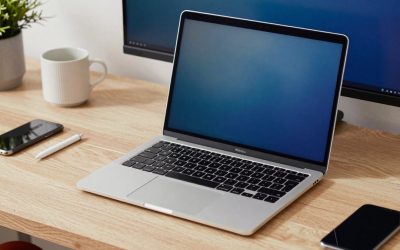
A work webcam makes sense for live viewing in one specific setup: a computer that is already on all day in a fixed spot. Think a Mac mini in a home office, an old Windows laptop on a shelf, or your work laptop docked at your desk.
In that case you can leave the camera plugged in and use a video app to view it locally. The cheapest reliable method is still a continuous call you join from another device — start a Zoom or Discord call on the office PC with camera on and muted, then join with your phone to check in. It is clunky, but it works without new software and without opening your network to the internet.
Free tools like OBS with its virtual camera preview, or Apple’s Continuity Camera if you want to use an iPhone as a Mac webcam for a wider shot, also work for in-home checking. The trade-off is the same: no motion history, no notifications, and the host computer cannot sleep. If someone closes the laptop lid, you lose video.
Work webcam setups people actually use for checking in
There is no “best security camera” here, because none of these are security cameras. There are only less-annoying compromises. Pick based on where the computer lives.
For a desk that is already set up, leave your normal 1080p USB webcam where it is. A standard 1080p model with autofocus is fine for seeing who walked into the office or whether the dog is on the chair. You do not get a wider room view, but you also do not buy, mount, or configure anything new. The main failure mode is exposure: most office webcams blow out badly when a bright window is behind the desk, leaving you with a white blob instead of a room.
For a room view from a shelf or bookcase, a wide-angle webcam helps more than resolution does. A 4K sensor does not help if the lens only shows a chair. Look for a stated 95 to 110-degree field of view, which will show most of a small office from 8 to 10 feet away. In practice, a wide angle webcam for home office mounted high and angled down gives you a much more useful live check than a sharp 4K close-up of a monitor. The trade-off is distortion at the edges and worse low-light performance, because those smaller wide-angle sensors get noisy fast after sunset.
For Mac users who do not want another cable, using an iPhone as a webcam is often the best image for daytime check-ins. The phone’s wider lens and far better auto-exposure handle mixed office lighting better than most sub-$150 USB webcams. The failure mode is mounting and power: phones overheat on long sessions in sunlight, Continuity drops if Wi-Fi gets crowded, and you need to keep the phone plugged in. It is good for occasional peeks, bad as an always-on feed.
Quick comparison for home-office check-ins
This is not a security-camera comparison. It is a comparison of work-webcam compromises, assuming the host computer stays on.
| Setup | What you see | Biggest limitation | Suits |
|---|---|---|---|
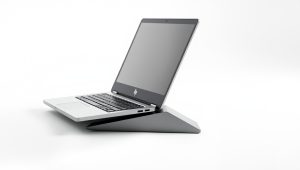
| Laptop built-in webcam, lid open | Tight shot of desk/chair | Sleeps when lid closes, narrow view | Quick pet check during workday |
| 1080p USB webcam on monitor | Clear daytime face/desk view | Narrow angle, no night vision | People who already own one |
| Wide-angle USB webcam on shelf | Most of small office | Noisy in low light, needs USB power | Room check from another device |
| iPhone as Mac webcam | Best daytime exposure | Heat, disconnects, needs charging | Occasional checks, not 24/7 |
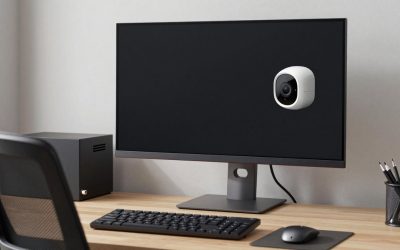
| Dedicated Wi-Fi security camera* | Whole room, phone app, night vision | Outside what we test | True security, alerts, away-from-home viewing |
*Included for context only. If you need recording, night vision, or viewing from outside your home network, you need this category, not a work webcam.
What to avoid
Do not buy a high-end 4K work webcam just for live room checks. You pay for sharp facial detail and better color in calls, neither of which matters for seeing if a package arrived. A cheaper 1080p model is fine if lighting is decent and you are only checking in during the day.
Do not rely on a work laptop as a security recorder. Corporate MDM policies, automatic sleep, Teams auto-updates, and VPN disconnects will kill the feed at the worst time. If you go this route, use a spare personal machine, turn off sleep, plug in power and ethernet if you can, and test what happens after a reboot. Most feeds fail because the app does not auto-restart after an update.
Also avoid leaving a live Zoom or Meet running all day as “surveillance” on a metered connection or on a work account. It will burn upload bandwidth — often 1 to 2 Mbps continuously — and it can violate employer policy if you stream your home all day over a work account. For local viewing, a direct preview app that does not go through the cloud is safer and lighter.
Finally, think about privacy before you point any always-on camera at a shared space. A webcam has a small LED, but housemates, cleaners, or guests may not notice it. Tell people it is there, avoid audio recording if you do not need it, and do not expose the feed outside your home network unless you know how to secure it. An open port for remote viewing is how people get watched without knowing it.
What to buy if you must use a webcam
If you already own a decent webcam, buy nothing. Reposition what you have high up, disable sleep on the host PC, and test a daytime check-in from your phone. That solves 80 percent of “is the dog okay” use cases.
If you are buying specifically for a wider office view, prioritize field of view and a physical shutter over resolution. A 1080p camera with a 100-degree lens and tripod thread you can mount on a mini tripod for webcam is more useful than a sharp 4K camera stuck on top of a monitor staring at a wall. Expect to spend less than you would for a great calls-focused webcam, and expect to replace this idea with a real security camera if you start wanting nighttime video or phone alerts.
The honest line is this: webcams are good for live calls and okay for casual daytime check-ins on a computer that is already on. They are bad security cameras — no night vision, no alerts, no failover. If your need grows past peeking in, stop forcing a work tool to do a security job.
FAQ
Can I use my laptop webcam as a security camera?
For casual daytime check-ins, yes. For actual security, no. You get no night vision, no motion alerts, no continuous recording, and the feed stops when the laptop sleeps or updates.
How do I view my webcam live from my phone?
Easiest private method is to start a muted video call on the office computer and join from your phone on the same account. For local-only viewing, use a camera preview app. Avoid opening your camera to the public internet unless you understand passwords, updates, and network security.
Do I need 4K for live room viewing?
No. Field of view and lighting matter more. A 1080p wide-angle view that shows the whole office is more useful than a sharp 4K close-up of one chair, especially in daylight.
When should I just buy a real security camera?
When you need night vision, outdoor use, motion alerts, cloud recording, or reliable viewing when you are away from home. Those are core security-camera features that work webcams do not have.
Related Reviews & Guides
Best External Webcam for MacBook Air
Webcam for PC with Mic Price