Last Updated: October 18, 2026
📄 In This Review
Why Logitech still dominates home offices
For work calls, Logitech is the safe default for a reason: drivers are stable, Zoom, Teams, Meet and Webex recognize them instantly, and they work on both Windows laptops and Macs without extra software. I have tested cheap no-name 4K webcams that looked sharper on paper but dropped frames, blew out windows, or lost focus every time someone moved. Logitech rarely does that.
That does not mean you should buy the most expensive Logitech. For a typical home office — desk 2-3 feet from the camera, mixed window and overhead light, laptop or mini PC — a mid-range 1080p Logitech is often clearer in practice than a 4K model used badly. What matters more is autofocus behavior, exposure handling, microphone pickup, and how the camera mounts to your monitor.
What actually matters for work calls
See also: Best Monitor for MacBook Air: Two USB-C 4K Screens and Six Adapter-Dependent Alternatives • Best Monitor for MacBook Pro: Eight Listings Sorted by Cable, Sharpness and Scaling
Resolution is overrated. Most meeting apps compress you to 720p or 1080p anyway. Sensor quality and processing matter more. Look for good auto-exposure, natural skin tones, and a lens that does not turn your white wall into a glowing blob.
Field of view is a real trade-off. A 90-degree lens shows your whole room, which is bad if your office is a bedroom corner. A 65-78 degree lens looks more professional because it crops tighter on your face. Logitech’s software, Logi Tune, lets you adjust this on newer models, but on Macs some features arrive late or require the desktop app.
Autofocus versus fixed focus trips up a lot of buyers. Autofocus is better if you move, whiteboard, or hold products up to the camera. Fixed focus is fine — and sometimes sharper — if you sit still. The failure mode with cheap autofocus is hunting: pulsing in and out during a call. Logitech’s C-series autofocus is generally stable, but the older C920 can be slow to lock in low light.
Audio is the hidden weak point. Every Logitech webcam mic will pick up keyboard clatter and room echo. They are usable for backup, but if you take calls all day, use a headset or USB mic. Do not buy a $199 webcam for the mics alone.
Quick comparison
These are the four Logitech models that make sense for most home workers right now. Anything older than the C920s is only worth it used, and anything marketed for streamers adds features you will not use on Teams.
| Model | Resolution | Focus / FOV | Best for |
|---|---|---|---|
| C920s Pro HD | 1080p30 | Autofocus / 78 degrees | Budget home office, laptops |
| C930e / C930s | 1080p30 | Autofocus / 90 degrees | Small conference corner, wider shot |
| Brio 500 / Brio 505 | 1080p30 | Autofocus / 90, 78, 65 degrees | Hybrid workers, Mac users |
| MX Brio 705 | 4K30 / 1080p60 | Autofocus / 90, 78, 65 degrees | Presenters, poor lighting |
Best budget pick: C920s Pro HD
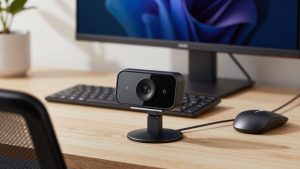
For most people working from a laptop at a desk, the Logitech C920s Pro HD is still the rational buy. Image is clean 1080p in decent light, colors are accurate, and the clip fits thin laptop lids as well as thick monitors. It includes a privacy shutter, which the base older C920 lacked.
Trade-offs are real. Low-light performance is mediocre — expect grain if your only light is a ceiling can behind you. The built-in dual mics sound thin and pick up typing. The cable is short and permanently attached, so routing it on a standing desk or monitor arm is annoying. Autofocus can hunt for a second when you lean in close.
Who it suits: anyone who wants plug-and-play for 3-5 calls a day and already uses earbuds or a headset. If your room is dark, spend $25 on a small LED panel instead of upgrading the camera. You will look better than a Brio owner with bad lighting.
Best all-rounder: Brio 500
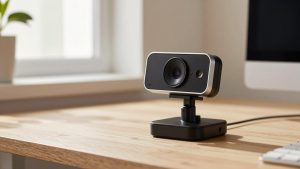
The Brio 500 (business version is called the Brio 505) is what I recommend to most home-office buyers who can spend a bit more. It is still 1080p, but the sensor is newer than the C920s, with better backlight handling and less noise. You also get adjustable field of view, auto-framing that keeps you centered if you shift, and a much better mount.
In practice, the Brio 500 looks more consistent across Mac and Windows. On M1/M2/M3 Macs it wakes reliably from sleep, which some older Logitech cameras struggle with. Logi Tune lets you tweak zoom, white balance, and anti-flicker for office LEDs. Show Mode lets you tilt it down to show documents, though the angle takes practice.
Failure modes: auto-framing can crop too tight if you sit very close, and RightSight-style tracking occasionally drifts during long calls. Turn it off if you do not move. The mic is improved but still echoey in bare rooms. This is not worth it if you already own a C920s and have good light — the jump is modest.
When 4K makes sense: MX Brio
The Logitech MX Brio is Logitech’s top home-office camera, with a large sensor, 4K30 or 1080p60 modes, and the best low-light image Logitech sells. If your office has one dim window, you record training videos, or you present to clients all day, the difference is visible: less noise, better skin tones, steadier exposure when clouds pass.
But be honest about bandwidth. Teams and Meet will rarely show full 4K, and 4K uses more CPU, which matters on older MacBook Airs and thin Windows laptops — fans spin up. For pure meetings, run it in 1080p mode and benefit from the oversampling. You are paying for sensor quality, not pixel count.
Who should skip it: kids’ school laptops, shared family PCs, or anyone on a 5-year-old dual-core laptop. Also skip if your background is messy — 4K just shows clutter more clearly. Pair it with a headset mic; its mics are better with noise reduction, but still distant compared to anything near your mouth.
Wider option and what to avoid
If you sit 5-6 feet back or share a small home office with a partner, the older C930e still has a place because of its true 90-degree lens and good distortion control. For solo desk use it is too wide — you will look small — so only choose it for huddle use. Check for the Logitech C930e webcam if you need that wider business-certified model without paying for 4K.
Avoid buying Logitech’s gamer/streamer cameras for work unless you already know you need 60 fps and background replacement. They need more light, run hotter, and their software adds little for office calls. Also avoid used C920 originals without a shutter unless they are very cheap — shutters matter if you work where family walks in.
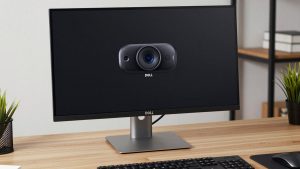
Mounting note from real desks: Logitech’s universal clip slips on curved ultrawide monitors and some Dell stands. If yours wobbles, use the 1/4-inch tripod thread with a $12 mini tripod behind the monitor. It also fixes the classic up-the-nose laptop angle.
FAQ
Is 1080p enough for home office calls?
Yes for almost everyone. Zoom, Teams and Meet compress video heavily, so lighting, lens quality and stable focus affect how you look far more than 4K. Only upgrade to 4K if you record video or have very poor light.
Do Logitech webcams work well with Macs?
Yes as basic cameras they are plug-and-play on macOS. Advanced controls like field-of-view, zoom and firmware updates need the free Logi Tune app. Brio 500 and MX Brio have the best Mac support right now; older C-series models work but get fewer updates.
Do I need Logitech software installed?
No for calls. Windows, macOS and ChromeOS will use the camera immediately. Install Logi Tune only if you want to change framing, turn off autofocus, or update firmware. IT-managed laptops sometimes block it, but the camera still works.
Why do I look dark or grainy even with a good webcam?
Usually backlighting. If a bright window is behind you, any webcam will expose for the window and darken your face. Face a window or put a cheap lamp behind your monitor. That single change beats upgrading from a $70 to a $200 camera.