Last Updated: October 18, 2026
If you live on Zoom, Teams, or Meet, the built-in camera and microphone matter more than raw CPU speed. Most laptops still ship with a just-good-enough webcam, and spec sheets hide the details that actually affect calls: sensor size, low-light processing, mic placement, and fan noise under load.
I test laptops the way you will use them: a 9 a.m. call in a dim home office, backlit by a window, with a fan heater running and a keyboard clacking. Here is what holds up, where built-ins still fail, and when you should just buy a cheaper laptop plus an external webcam.
📄 In This Review
What actually matters for camera and microphone
Resolution is the least useful number. A sharp 720p camera with good exposure beats a smeary 1080p camera with aggressive noise reduction. Look for 1080p with a larger sensor and IR for Windows Hello if you sign in with your face, but prioritize recent image processing. Apple, Lenovo, HP, and Dell all improved this sharply in the last three generations.
For microphones, count and placement matter. Dual-array or triple-array mics with beamforming and AI noise removal do a decent job isolating your voice. Single-mic budget machines sound hollow and pick up everything. The failure mode I see most: fan noise. A thin laptop that spins up during screen-share will drown out a good mic array. Business ultrabooks with efficient U-series or Apple Silicon chips stay quieter on calls than performance laptops.
Speakers matter too, but not for how you sound. Bad speakers cause echo because your mic picks up the other person. If people say they hear themselves, turn on echo cancellation in Teams/Zoom and keep volume at 60-70%.
Quick comparison: which type suits you
See also: Best Monitor for MacBook Air: Two USB-C 4K Screens and Six Adapter-Dependent Alternatives • Best Monitor for MacBook Pro: Eight Listings Sorted by Cable, Sharpness and Scaling
There is no single best laptop camera. A remote worker, a student, and a Mac-based freelancer need different trade-offs.
| Type | Typical Camera / Mic | Strengths on Calls | Weaknesses |
|---|---|---|---|
| Business ultrabook 14-inch | 1080p + IR, dual/triple mic with noise reduction, physical shutter | Stays quiet, best Windows mics, good low-light | Costs more, image still soft vs. external cam |
| MacBook Air / Pro class | 1080p FaceTime camera, 3-mic array, excellent processing | Natural skin tones, clean voice, quiet under load | No privacy shutter, framing is wide and fixed |
| Budget 15.6-inch Windows | 720p or basic 1080p, dual mic, little noise removal | Cheap, big screen for multitasking | Noisy in low light, mics pick up fans/keys |
| 2-in-1 convertible 13-14-inch | 1080p front + 5MP+ rear, dual mic | Flexible for whiteboarding, good for hybrid teaching | Front cam often average, fans louder in tablet mode |
Best for daily video calls: 14-inch business ultrabook
If you take 4-6 calls a day on Windows, this is the safest buy. Think ThinkPad T-series class, Latitude 7000 class, EliteBook 800 class, or a business laptop with 1080p webcam. You get a true 1080p camera with IR, a physical shutter, and mics tuned for Teams and Zoom certification.
In practice, you look clear in office light and usable in a dim bedroom with one lamp. Voice isolation cuts keyboard clatter without making you sound robotic. The other win is thermals: these machines can do a 45-minute Meet call without the fan screaming.
Trade-offs: you pay $300-500 more than a consumer laptop with the same chip, and colors can look a bit processed. Autofocus models can hunt if you lean in and out. Who it suits: remote employees, managers, recruiters, anyone who cannot afford to look glitchy. If you only do two calls a week, it is overkill.
Best Mac option for camera and mic: Apple Silicon Air / Pro
MacBooks do not have the highest-resolution webcams on paper, but they are the most consistent in real calls. A current MacBook with 1080p FaceTime camera uses the chip’s image processor to clean up low light, hold exposure when a window is behind you, and keep skin tones from going orange under LEDs.
The 3-mic array is the best built-in I have used for voice. It rejects room echo well and does not over-gate the start of sentences, which is a common failure on Windows noise removal. The Air stays silent on calls; the Pro stays quiet unless you are also compiling or exporting.
Trade-offs: no built-in privacy shutter, just a green light, so add a removable cover if that bothers you. The camera is fixed-focus and fairly wide, so you get more background. You will still look soft if you crop in. Who it suits: freelancers, designers, founders who present to clients and want zero fiddling. If your company lives in Windows Hello or requires enterprise manageability, stick with a business ultrabook.
When the cheaper laptop is fine
Most sub-$600 15.6-inch laptops now list 720p HD or 1080p, but it is usually a small sensor with slow auto-exposure. In daylight you are fine. At night you get watercolor noise, laggy 15 fps video, and mics that make you sound distant when you lean back.
That is acceptable if calls are short and internal: students, part-time contractors, second family laptop. Save the money and fix the two things that matter most: light and stability. Put a $20 lamp in front of you, not behind, plug in power so the CPU does not throttle, and sit 2 feet from the screen so the mic array gets a strong signal.
Do not buy a budget gaming laptop just for calls. The camera is rarely better, and the fans are much louder. That fan hum is what coworkers complain about, not pixels.
The honest fix: add an external webcam
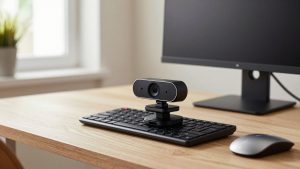
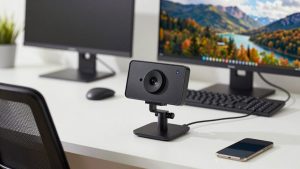
No built-in webcam beats a decent external one in bad light. Built-ins are tiny, stuck at the top bezel, and point up your nose on low tables. If you already like your laptop, spend $60-100 on an external 1080p webcam for laptop with autofocus and a proper mic, and mount it at eye level.
I recommend this route for home-office regulars, teachers, coaches, and anyone backlit by windows. You also get a wider field-of-view choice and better auto-framing. Failure mode to avoid: stacking a 4K webcam on a weak laptop over Wi-Fi. Set it to 1080p30, close background apps, and use a short USB cable into the laptop, not a dock, if video stutters.
Rule of thumb: buy the laptop for keyboard, screen, battery, and quiet fans. Buy the camera separately if video is how you earn trust.
FAQ
Is 720p enough for work calls?
Yes for internal check-ins in good light. It fails in dim rooms where the image gets noisy and laggy. If you present to clients, get 1080p with good processing or add an external webcam.
Why do I sound bad even with a good mic?
Usually distance, fan noise, or aggressive noise suppression cutting your words. Get closer, switch Windows power to Balanced, and turn off a second noise filter if both Teams and the laptop app are filtering at once.
Do I need Windows Hello IR?
Not for call quality, but it is useful for fast, secure login. Most business ultrabooks include IR plus a shutter. Consumer and budget models often skip IR.
Mac or Windows for best built-in video?
Macs are more consistent out of the box, especially for mic quality. Top-tier business Windows ultrabooks are very close and add shutters and IT features. Either beats a cheap consumer laptop in low light.
Related Reviews & Guides


Best Standing Desk for Small Bedroom Office
Top 10 Live Webcams