Last Updated: October 18, 2026
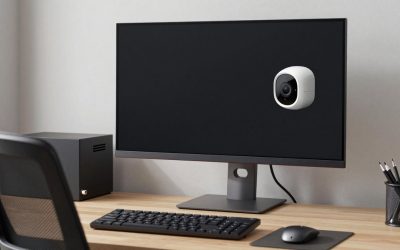
Teaching on camera exposes every weakness in a cheap webcam. Students notice when your face is dark, your whiteboard is unreadable, or your audio cuts out when you turn to write. You do not need studio gear, but you do need to match the camera to how you teach.
Most online teachers fall into one of three patterns: talking head with slides, live writing on paper or whiteboard, or demos with hands and objects. A webcam that is perfect for the first can be unusable for the other two. Buy for what you actually show, not for the highest resolution on the box.
📄 In This Review
What actually matters for teaching
Autofocus matters more for teachers than for office workers. If you sit still on Zoom calls, fixed focus is fine. If you hold up a book, lean in to show math work, or walk to a whiteboard, fixed-focus cameras will blur at the worst moment. Look for fast, quiet autofocus that does not hunt and pulse every 10 seconds.
Field of view is the second trap. A wide 90- to 95-degree camera is great for fitting a whiteboard behind you, but it makes your face small and distorts the edges. A 65- to 78-degree view looks far more natural for talking-head lectures. You cannot have both at once unless you plan to zoom digitally, which always costs sharpness.
Low-light performance decides whether you look tired and grainy in a normal home office. Small sensors fall apart in warm evening light. A larger sensor with good auto-exposure will beat a cheap 4K camera that needs bright daylight to look clean. Microphones matter too, but plan on a separate USB mic or headset if you move around — camera mics pick up keyboard noise and room echo.
Quick comparison by teaching style
See also: Best Monitor for MacBook Air: Two USB-C 4K Screens and Six Adapter-Dependent Alternatives • Best Monitor for MacBook Pro: Eight Listings Sorted by Cable, Sharpness and Scaling
No single camera covers every teaching setup well. This is where most buyers waste money — they buy 4K hoping it will read a whiteboard across the room, when they really needed a second overhead angle.
| Setup | Best for | Strength | Limitation |
|---|---|---|---|
| Entry 1080p webcam, fixed or basic autofocus | Talking head + slides, tutoring | Cheap, plug-and-play, fine on Zoom and Meet | Soft text, struggles with whiteboards and low light |
| Mid-range 2K / 4K autofocus webcam | Full-time teachers, small groups | Sharper face, better low light, digital zoom for documents | Whiteboard across room still unreadable, needs good lighting |
| Webcam + overhead document camera | Math, science, art, language writing | Crystal-clear handwriting, no refocusing issues | Two devices to manage, more desk space |
| Phone as webcam on tripod | Mobile demos, lab benches, music | Excellent sensor for the price, easy overhead angle | Overheats on long calls, battery and mounting hassle |
If you mostly lecture and share slides: keep it simple
For slide-based teaching, a basic 1080p webcam for online teaching is honestly enough. Zoom, Google Meet, and Teams compress video heavily anyway — your students will see 720p most of the time no matter what you bought.
Spend the difference on position and light. Put the camera at eye level, about an arm’s length away, and put a window or a cheap LED panel in front of you, not behind you. Backlight from a window is the number one reason teachers look like silhouettes.
Failure mode to know: cheap 1080p cameras often have slow auto-exposure. If you use a virtual background plus overhead lights, your face will blow out white when you share a bright slide. Turn off auto-exposure in the camera app if you can, and lock it once. The mid-range upgrade is worth it only if you teach 15+ hours a week and want cleaner low-light video and less grain.
If you write, draw, or demo: you need a second angle
This is where a single webcam fails. Holding paper up to a webcam means constant autofocus hunting, glare, and shaky hands. Trying to capture a wall whiteboard from your desk means mirrored, unreadable text even in 4K.
The working solution most full-time teachers use is two views: a face camera at eye level, plus an overhead or side camera for writing. A dedicated document camera for teachers on a gooseneck arm is built for this. It points straight down at a desk, holds focus on paper, and does not pick up your face.
If you do not want a second device, use a small glass whiteboard right behind your monitor instead of a wall board. Sit close, use thick chisel markers, and write large. Or share an iPad as a whiteboard in Zoom and point your main camera at your face only — students read digital ink far better than any camera pointed at a wall.
Failure mode to know: overhead webcam mounts vibrate when you type. Clamp the arm to a separate shelf or heavy stand, not to the same desk your keyboard is on. And check your software: in OBS, Zoom, and Teams you can switch cameras with one click, but you need to set the document camera to manual focus or it will refocus on your hand every time you move.
Lighting and audio matter more than 4K
Teachers upgrade to 4K hoping for sharper text, but lighting gives you a bigger gain for less money. A $30-40 LED panel at 4000-5000K, placed 2-3 feet in front of you at a 45-degree angle, will make a $50 webcam look better than a $150 webcam in a dark room. Avoid mixing warm lamps with daylight from a window — your skin tone will shift orange-blue as auto white balance struggles.
Audio is what actually holds attention over a 60-minute class. Built-in webcam mics are omnidirectional and pick up HVAC, keyboard clicks, and echo when you turn toward a board. If students complain they cannot hear you when you write, the camera is not the problem. A wired lavalier or a USB dynamic mic 6-8 inches from your mouth solves it.
Who should skip 4K? If your upload speed is under 10 Mbps, if you teach on a 5-year-old laptop, or if your platform is Meet on a school Chromebook. In those cases 4K just adds CPU load, dropped frames, and fan noise. Buy 1080p and a light instead.
Laptop and Mac compatibility notes
Most modern webcams are UVC-compliant, meaning they work on Windows, Mac, and ChromeOS without drivers. The catch is the extra software for zoom presets, background blur, and firmware updates — it is often Windows-only. Mac users should assume you will get basic plug-and-play in FaceTime, Zoom, and OBS, but no advanced controls unless the maker explicitly lists macOS support.
On M1/M2/M3 Macs and thin ultrabooks, a 4K webcam plus virtual background can push CPU usage high enough to make fans audible to students. If that happens, drop the camera to 1080p in settings. You will look sharper with smooth 1080p/30 than with stuttering 4K.
For hybrid classrooms, mount the camera separately from the laptop. A clip-on camera shakes every time students in the room bump the cart. A small tripod or wall shelf plus a 6-foot USB extension — preferably powered if you go over 10 feet — keeps the image stable. Test cable length before class day; many classrooms have the computer farther from the board than you expect.
If you need one flexible travel kit for tutoring in different rooms, a phone on a small tripod as a overhead tripod for phone teaching plus your laptop webcam covers almost everything. Use the phone for the desk view via Continuity Camera, EpocCam, or USB, and keep sessions under 90 minutes to avoid heat shutdowns.
FAQ
Is 4K worth it for online teaching?
Sometimes. It helps if you crop in digitally to show a worksheet and you have good lighting and a fast computer. For talking-head lectures on Zoom or Meet, students rarely see the difference because the platform compresses video. Better lighting improves clarity more reliably than 4K.
How do I make a whiteboard readable on camera?
Get close, write 2-3 inches tall with fresh black markers, and light the board evenly without glare. A camera 4-6 feet from the board works; 10 feet across a room almost never works. For daily math, an overhead document view or tablet whiteboard is far more readable.
Can I use my phone instead of buying a webcam?
Yes, and image quality is often better than a cheap webcam. It works well as a second overhead angle. Downsides are overheating on long calls, notifications interrupting class, and battery drain. Use Do Not Disturb, plug in power, and test for a full class length first.
Why do I look blurry when I hold something up?
Most webcams lock focus on faces. When you hold paper in front of your face, the camera hesitates between face and paper. Hold the object beside your face, not in front of it, pause 2 seconds, and use good front light. If you do this often, switch to manual focus or a document camera.
Related Reviews & Guides
13 Best Office Chairs for Big and Tall (2026)
Best Webcam Without Microphone 2026