Last Updated: October 18, 2026
If you use a MacBook Pro for work, you already have a decent built-in camera. The 1080p FaceTime camera in the M1 Pro and later models is fine for quick calls. The reason to buy an external webcam is not just sharpness, it is framing, low light, and flexibility. Laptop cameras force a low, close-up angle. An external camera lets you use a monitor, sit back, and still look natural.
Mac users have one extra wrinkle: macOS handles cameras differently than Windows. Some features like auto-framing, background blur, and Desk View are done by macOS itself, while others need the vendor’s app. That changes what is worth paying for.
📄 In This Review
What actually matters on a MacBook Pro
Do not shop by resolution alone. A good 1080p sensor will beat a cheap 4K sensor in a dim home office every time. On a MacBook Pro, prioritize these three things: sensor size and low-light performance, USB-C plug-and-play support, and microphone behavior.
For connection, your MacBook Pro only has Thunderbolt / USB-C ports. Most webcams still ship with a USB-A cable or a short detachable cable. That works, but you will need a good dock or a direct USB-C cable. Avoid running a 4K webcam through a cheap, unpowered hub with three other devices. That is the most common failure mode I see: frozen video, dropped frames, or the camera disappearing from Zoom mid-call. Plug directly into the Mac or into a powered Thunderbolt dock.
Software is the second gotcha. On macOS Sequoia and Sonoma, UVC webcams work with FaceTime, Zoom, Teams, and Meet with no driver. But advanced controls like manual focus, HDR toggle, or firmware updates often require a separate Mac app from the maker, and not all makers maintain it well. If you want set-and-forget, pick a camera that looks good with defaults. You will not want to open a janky tuning app before every meeting.
Should you just use your iPhone?
See also: Best Monitor for MacBook Air: Two USB-C 4K Screens and Six Adapter-Dependent Alternatives • Best Monitor for MacBook Pro: Eight Listings Sorted by Cable, Sharpness and Scaling
For many MacBook Pro owners, the best external webcam is the iPhone you already own. Apple’s Continuity Camera lets you use an iPhone XR or later as a wireless or wired Mac webcam, with Center Stage auto-framing, Portrait mode, and Desk View.
In good light, an iPhone looks better than any sub-$200 webcam. Skin tones are better, dynamic range is better, and Desk View is genuinely useful for demos. The trade-offs are practical: you need a mount to hold the phone on your laptop or tripod, your phone is tied up and gets warm during long calls, and wireless mode can stutter if your Wi-Fi is congested. Wired via USB gives you a much more stable connection and keeps it charged.
Who it suits: hybrid workers who take 2-3 calls a day and already have a recent iPhone. Buy a simple iPhone Continuity Camera mount for MacBook first and try it for a week before you buy a dedicated webcam. If you are on calls 6 hours a day, get a dedicated USB camera so you are not wearing out your phone battery.
Quick comparison
| Option | Image quality | Setup on Mac | Biggest downside | Best for |
|---|---|---|---|---|
| Built-in MacBook Pro camera | Good in bright light, noisy in low light | None | Bad angle when docked, fixed wide view | Travel, quick calls |
| iPhone via Continuity Camera | Excellent detail and color | MagSafe mount + Control Center, wired is best | Phone tied up, heat, mount fiddly | Occasional calls, best image for $0 |
| Budget 1080p USB webcam | Cleaner than built-in, soft in dark rooms | Plug-and-play UVC | Narrow dynamic range, cheap mics | Desk workers who want simple and reliable |
| Midrange 4K USB webcam | Sharp, better cropping and auto-frame | Plug-and-play, optional tuning app | Needs good light and direct USB-C connection | Home office with external monitor |
| Large-sensor premium webcam | Best low-light, natural blur | Usually needs powered port, tuning app | Expensive, bulkier, overkill for many | Streaming, teaching, low-light offices |
Best for most people: a simple 1080p webcam
This is where I am honest: the cheaper option is fine for most office work. If your calls are Zoom or Teams in a lit room, a basic 1080p camera with dual mics and a privacy shutter will look as good as a 4K camera after compression. Video platforms downscale to 720p or 1080p anyway.
What to look for: fixed focus or fast autofocus, 60 fps if you move around or whiteboard, and a clip that actually fits a thin external display. Test the microphone off. Almost all built-in webcam mics sound hollow and pick up keyboard clicks. Your MacBook Pro mics or a $30 USB headset will sound better. Use the webcam for video only.
Failure mode: cheap 1080p models overexpose windows behind you and turn your face dark. If you sit with your back to a window, no budget webcam will save you. Move the desk or add a $20 lamp in front of you. That upgrade matters more than spending $100 extra on a camera.
Best for a docked setup: 4K with autofocus and auto-framing
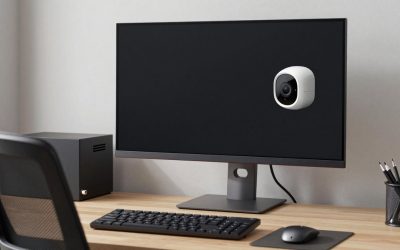
If your MacBook Pro stays closed on a stand connected to a 27-inch monitor, get a midrange 4K webcam. The extra pixels are not about streaming in 4K. They let you crop in for a head-and-shoulders framing without turning to mush, and they make digital auto-framing usable.
Shop for a 4K webcam for Mac with autofocus that explicitly lists macOS support and USB-C connection. Look for HDR or backlight correction if your office has mixed lighting. Ignore gimmicky AI gestures and beauty filters that only work in the vendor’s Windows app.
Concrete trade-off: 4K generates heat and bandwidth. Expect the camera to run warm, and expect your fan to spin if you run full 4K plus background blur plus screen share on an older Intel Mac. On Apple Silicon this is fine, but still run it at 1080p60 for meetings and save 4K for recording. You will get smoother video and less noise.
Best for dark rooms and evening calls: large-sensor camera
If you work in a basement office or take calls at night, resolution will disappoint you. You need a bigger sensor and a wider aperture, not more pixels. Premium webcams with 1-inch type sensors or DSLR-style lenses keep detail without that watercolor noise reduction look.
These suit teachers, managers, and creators who are on camera for hours and cannot control lighting. Downsides are real: higher price, larger body that dominates a laptop lid, and often a required app to enable noise reduction or shallow depth of field. Some also need more power than a bus-powered hub provides.
A cheaper alternative that often wins: keep your current webcam and add light. A basic USB webcam with light for home office setups or a standalone key light will improve any camera more than jumping from $120 to $300. If you already have good frontal light and still look grainy, then step up in sensor class.
Setup tips that matter more than the model
Mount the camera at eye level on your external monitor, not on the closed MacBook off to the side. Looking sideways at a laptop while talking to a monitor is immediately obvious. Set Zoom or Teams to 1080p, turn on macOS Studio Light on low if you need it, and leave background blur off unless you need privacy. It creates edge halo and uses extra CPU.
Check privacy too. Macs show an orange dot when the camera is active, but a physical shutter is still useful in a shared home. And unplug or disable Continuity Camera handoff if your iPhone keeps hijacking calls when you wanted the USB webcam. You can choose the camera in FaceTime under Video, and in Zoom under Settings then Video.
FAQ
Do I need drivers for an external webcam on MacBook Pro?
No, for basic video. Any UVC-compliant webcam works plug-and-play with FaceTime, Zoom, Teams, and Meet. You only need the maker’s Mac app for firmware updates, manual focus, zoom presets, or HDR toggles.
Why does my new 4K webcam look worse than my iPhone?
Usually low light or a bad USB connection. Small webcam sensors need a lot of light. Add frontal light, plug directly into the Mac instead of a cheap hub, and drop to 1080p. Compressed meeting apps throw away most 4K detail anyway.
Can I use the webcam mic or should I use something else?
Use something else for important calls. Webcam mics sit far away and echo in hard rooms. The MacBook Pro built-in mics are surprisingly good, and a wired headset or USB mic is better still. Set audio input separately from video in your meeting app.
Will an external webcam work when my MacBook Pro is closed?
Yes, in clamshell mode with power connected and an external display, keyboard, and mouse. Mount the webcam on the external monitor. Select it once in each app, macOS should remember it.
Related Reviews & Guides
6 Best Stands For Laptop 2026
LG vs Samsung Monitor: How to Choose Between the Two Brands