Last Updated: September 18, 2026
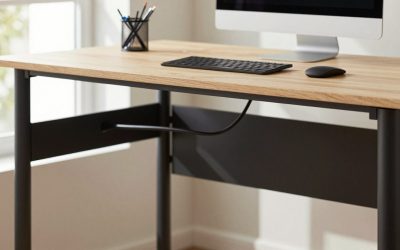
- Top Pick: Under Desk Cable Management Tray No Drill, Metal Mesh Cable Management Under Desk with Clamp Mount, 2 Hole Cable Tray with Wire Management and Cord Organizer for Home Office Standing Desk
- Best Value: Mzmaxy Cable Management, 25'' Cable Management Under Desk, Cable Tray
- Premium Choice: Univivi No Drill Under Desk Cable Management Tray, 36 inch Cable Management
📄 In This Review
The Short Answer
If you want one rule to remember, buy a cable tray that is 6 to 12 inches shorter than your desk’s total width and at least 3.5 inches deep. For most desks, that means a 15 to 17 inch small tray for a compact 40 to 48 inch desk, a 25 to 32 inch medium tray for a standard 55 to 63 inch desk, and a 32 to 36 inch large tray for an executive or L-shaped desk over 70 inches. This leaves 3 to 6 inches of clearance on each side for desk legs, clamps, and frame crossbars while still giving you enough room to hide a power strip, chargers, and excess cable slack without the tray sticking out past the desktop edge.
As of 2026, the most common retail options fall between $13.99 for a basic 15-inch no-drill mesh tray with clamp mounts and $38.99 to $39.99 for 32 to 36 inch steel trays. Unless you are hiding a full gaming setup with multiple power bricks, you do not need the largest size. One correctly sized medium tray centered under your desk will handle 90% of home office setups more cleanly than two small trays crammed end-to-end.
As an Amazon Associate we earn from qualifying purchases at no extra cost to you.


Standard Sizes
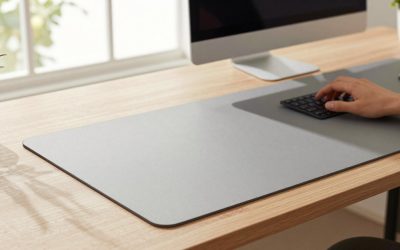
See also: Best Gaming Desk Pads for Full Desk Coverage • Best Desk Organizers Under $30: Match the Organizer to Your Clutter
Cable trays are sold by length, but depth and height determine what you can actually fit inside. Use this table to match your desk width to the right tray category. All dimensions are for the tray itself, not including clamp overhang.
| Size Category | Length (inches / cm) | Depth (inches / cm) | Height (inches / cm) | Weight Capacity | Best For |
|---|---|---|---|---|---|
| Small / Compact | 15.7 in / 40 cm to 17 in / 43 cm | 3.5 in / 9 cm to 4.7 in / 12 cm | 3.1 in / 8 cm to 3.9 in / 10 cm | 10 to 11 lbs (4.5 to 5 kg) | 40 to 48 inch desks, laptop-only setups, 1 power strip |
| Medium / Standard | 25 in / 63.5 cm to 26 in / 66 cm | 4.7 in / 12 cm to 5.1 in / 13 cm | 3.5 in / 9 cm to 4.3 in / 11 cm | 11 to 15 lbs (5 to 6.8 kg) | 55 to 63 inch desks, dual monitors, dock + chargers |
| Large / Extended | 32 in / 81 cm to 36 in / 91.5 cm | 5.1 in / 13 cm to 6.3 in / 16 cm | 4.0 in / 10 cm to 4.7 in / 12 cm | 15 to 22 lbs (6.8 to 10 kg) | 70 to 80 inch desks, L-shaped desks, gaming setups with multiple bricks |
| Extra Large / Dual-Tray Kit | 2x 17 in / 43 cm (34 in / 86 cm total) or 2x 15.7 in / 40 cm | 4.7 in / 12 cm | 3.9 in / 10 cm | 10 to 11 lbs per tray | Standing desks with split frames, desks with center crossbar obstruction |
Most mesh and solid-steel trays weigh between 1.5 and 4.2 lbs empty. Depth matters more than you think. A 3.5 inch deep tray will hold a standard 12 inch power strip turned sideways plus coiled cables, but it will not fit a large surge protector with a right-angle plug and a laptop power brick side by side. If your power strip is wider than 2.5 inches or you have a 65W to 140W laptop brick that measures 4 to 5 inches long, choose a tray at least 4.7 inches deep.
How to Measure Your Space
Measure before you order. Clamp-on and no-drill trays need clearance that screw-in trays do not, and standing desks need extra slack for height adjustment. You only need a tape measure and two minutes.
- Measure usable underside width. Measure the flat underside of your desktop between the inside edges of the legs or side panels. Do not use the full desktop width. If your desk is 60 inches wide but the legs sit 2 inches in from each end, your usable width is 56 inches. Your tray should be at least 6 inches less than this number to leave room for clamps.
- Check depth and knee clearance. Measure from the back edge of the desk to the front apron, modesty panel, or drawer. Most trays sit 1 to 2 inches back from the rear edge to keep cables from snagging. You need a flat run of at least 6 to 8 inches deep with 4.5 inches of vertical clearance for the tray plus plugs. Sit in your chair and make sure your knees are at least 3 inches below the lowest point of the tray.
- Locate obstructions. Look for crossbars, support beams, and standing desk motors. Many standing desks have a center drive shaft or control box that blocks a single long tray. If a crossbar runs front to back in the center, you will need either a tray shorter than the gap between the bar and the leg, or a two-tray setup that straddles the bar.
- Measure your gear. Lay your power strip, surge protector, and largest power brick on the floor and measure the footprint as a group. Add 2 inches for cable bends. A typical setup with one 12 inch by 2 inch power strip, one MacBook-style brick, and three excess cable coils needs a tray at least 20 inches long and 4.7 inches deep. If your group measures over 28 inches, move up to a 32 inch tray.
- Account for mount type. For clamp mounts, measure the thickness of your desktop edge. Most clamps fit 0.6 to 1.4 inches (15 to 35 mm) for standard desks and up to 2.0 inches (50 mm) for butcher-block tops. For no-drill adhesive trays, you need a smooth, non-porous surface at least as long as the tray. For screw-in trays, confirm the desktop is at least 0.5 inches thick solid wood, MDF, or plywood so screws can bite. Hollow-core desks should use clamp mounts only.
- Add height travel for standing desks. If you have a sit-stand desk, measure the distance from the floor to the tray at sitting and standing height. Leave 20 to 24 inches of cable slack from the tray to the wall outlet so cables do not pull taut when the desk rises to 44 to 48 inches.
By Room or Use Case
Small Home Office or Apartment Desk: 40 to 48 Inches
Choose a small 15.7 to 17 inch tray. A compact desk usually supports a laptop, one monitor, and a phone charger. You only need space for a 6-outlet strip and two or three cables. A small mesh tray with a 2-hole clamp mount keeps the install no-drill and leaves your limited knee space open. Center it under the rear half of the desk, not directly under your knees. If your desk has a drawer, offset the tray 4 to 6 inches to one side of the drawer slide.
Standard Home Office and Writing Desk: 55 to 63 Inches
This is the most common size and the sweet spot for a 25 to 26 inch tray. It covers a dual-monitor setup with a docking station, monitor power bricks, and a power strip without crowding the legs. A 25 inch tray that is 4.7 inches deep and 3.9 inches high will hold a 12 inch surge protector lengthwise plus two 65W bricks stacked. If you use a desktop PC tower on the floor, you can get away with a 25 inch tray instead of 32 inch because the PC power cable runs down, not through the tray. Budget $23.99 to $32.00 for this size in steel mesh with clamp mounts.
Executive, Gaming, or L-Shaped Desk: 70 to 80+ Inches
Go large at 32 to 36 inches, or use two 17 inch trays. Gaming setups and executive desks often hide a 12 to 15 inch surge protector, two to three power bricks (each 4 to 6 inches long), an Ethernet switch, and LED light strips. A single 36 inch tray that is 6 inches deep provides about 216 square inches of storage versus only 73 square inches for a 15.7 inch tray, so you can lay the power strip flat and coil excess length without stacking bricks on top of cables. For L-shaped desks, put the large tray on the main work side and add a small 15 inch tray on the return for the second monitor or printer.
Standing Desk: Electric Sit-Stand Frame
For standing desks, tray length is limited by the frame. Most dual-motor frames have a crossbar 24 to 30 inches wide in the center. A single 32 or 36 inch tray often will not fit between the legs without hitting the motor housing. The better fit is either a 25 inch tray centered between the legs or two small trays mounted on either side of the drive shaft. Choose a clamp-on model rated for at least 11 lbs so it does not shift when the desk moves, and pair it with a fabric cable sleeve or spiral wrap to bundle the vertical drop of cables. The tray holds the slack, the sleeve prevents snagging during height changes.
Conference Table or Shared Workspace
For a 96 to 120 inch conference table, do not use one jumbo tray. Use two to three medium 25 inch trays spaced evenly, each handling 3 to 4 seats. This shortens cable runs to the table edge and prevents a single overloaded tray from sagging. If the table has a hollow top, confirm clamp compatibility before buying screw-in models.
Common Sizing Mistakes
Buying the same length as the desk. A 60 inch desk with a 60 inch tray leaves no room for clamps and forces you to mount the tray over the legs. The tray will not sit flush, and the end caps will interfere with leg brackets. Always subtract 6 to 12 inches from usable width.
Ignoring depth and height. Shoppers focus on length and forget that a shallow 3 inch deep tray cannot close around a power strip with bulky right-angle plugs. If you have a surge protector with a 45-degree plug head that adds 1.5 inches, measure plug height before you buy.
Forgetting power brick size. Modern USB-C bricks are small, but gaming laptop bricks and monitor bricks are 5 to 6 inches long and 2 to 3 inches wide. Two of them side by side need a 5 inch deep tray. If you have more than two bricks, plan for a 32 inch length even if your desk is only 55 inches wide.
Overloading a single small tray. Cramming 15 lbs of gear into a tray rated for 10 lbs causes mesh to bow and adhesive mounts to fail. If your gear weighs more than 10 lbs total, which is easy with a heavy surge protector and two bricks, choose a steel tray rated for 15 lbs or more and use clamp or screw mounting, not adhesive alone.
Blocking the standing desk travel path. Mounting a tray too low or too close to the frame causes it to hit your knees or the frame when the desk lowers. Keep the bottom of the tray at least 25 inches above the floor at sitting height, and route cables through the tray’s open ends so they can slide slightly as the desk moves.
FAQ
What size cable tray fits a 60 inch desk?
For a 60 inch desk with typical leg placement, the usable width is about 55 to 56 inches. A 25 to 32 inch tray is ideal. A 25 inch tray gives you 15 inches of clearance on each side and is enough for a standard office setup with one power strip and a dock. Choose 32 inches if you have a large surge protector plus two or more power bricks, or if you want to hide a full set of monitor and charger cables without coiling them tightly. Avoid 36 inch trays on a 60 inch desk unless you have measured the space between the legs and confirmed at least 2 inches of gap on each end.
Should I get one large tray or two small trays?
One large tray looks cleaner and costs less per inch. Prices typically run $13.99 to $19.99 for small, $23.99 to $29.99 for medium, and $38.69 to $39.99 for large, so one 32 inch tray is cheaper than two 17 inch trays. Use two small trays only when you have an obstruction like a center crossbar, standing desk motor, or drawer that prevents a single long tray from mounting flush. Two trays also help if you want to separate power on one side and low-voltage cables like USB and Ethernet on the other to reduce interference.
How deep does my cable tray need to be?
Minimum 3.5 inches deep for a single slim power strip with no bricks, 4.7 inches deep for a standard setup with one strip and one brick, and 5.5 to 6.3 inches deep for gaming or dual-brick setups. Height follows the same logic. Most bricks are 1 to 1.5 inches thick, but the plug head adds another 1 to 1.5 inches. A tray that is only 3 inches tall will leave plugs sticking up above the rim, which catches on your knees and looks unfinished. If possible, choose a tray that is at least 3.9 inches tall.
Will a clamp-on tray damage my desk?
A clamp mount will not damage solid wood, MDF, or bamboo tops when installed correctly. Look for clamps with rubber or silicone pads and a tightening range that matches your top thickness. Hand-tighten until snug, then give a quarter turn more. Do not over-torque on hollow-core or particleboard desks with a thin veneer, as the clamp can dent the edge. For those desks, use a tray with a wide clamp face that spreads pressure over at least 2 inches of edge, or choose a screw-in tray if the top is solid enough to hold screws without splitting.
Ready to decide? Our #1 pick for 2026 is the Small / Compact.
Live price & availability on Amazon.
Related Reviews & Guides




How to Choose Vanity Desks: What Actually Matters

6 Best Bookshelfs Under Desk 2026