Last Updated: September 29, 2026
- V2 vs V2-Commercial: the height range is the real difference
- What 3-stage leg travel actually buys you
- Laminate vs solid wood tops: weight, thickness, and what it means for delivery
- Crossbar-free frame: stability trade-off and accessory mounting
- Which version fits your situation
- Practical numbers to check before buying
The Uplift V2 sit-stand desk splits into two frame versions with different height ranges and static weight capacities, and choosing wrong means either stooping while standing or never getting your monitors low enough to sit comfortably. Here’s how the V2 and V2-Commercial actually differ, what the crossbar-free frame means for wobble at full height, and where the top material changes your box weight and delivery logistics.
📄 In This Review
- V2 vs V2-Commercial: the height range is the real difference
- What 3-stage leg travel actually buys you
- Laminate vs solid wood tops: weight, thickness, and what it means for delivery
- Crossbar-free frame: stability trade-off and accessory mounting
- Which version fits your situation
- Practical numbers to check before buying
V2 vs V2-Commercial: the height range is the real difference
Both frames use the same dual-motor lifting mechanism and 3-stage leg design, but they’re tuned for different user heights. The standard V2 frame runs roughly 25.5″ to 51″ measured from floor to the top of the frame (before you add your desktop thickness, which adds another 1″ to 1.5″). The V2-Commercial frame extends that range to about 22.5″ to 48.7″, shifting the whole window lower.

UPLIFT DESK V3 2-Leg Black Laminate Wood Standing Desk – Adjustable Height, Advanced 1-Touch Memory Keypad, Under Desk Cable Management, Wire Grommets & Rocker Board (Black C-Frame, 60 x 30 inch)
Included for 'Uplift V2 Sit-Stand Desk: Specs, Height Range, and Frame Details Explained' because the listing specifies Adjustable Height and Advanced 1-Touch Memory Keypad, details this guide uses to compare options.
View on Amazon
UPLIFT DESK Dark Bamboo (60 x 30 inch) Standing Desk 2-Leg V3 Adjustable Stand Up C-Frame (Black), Advanced Keypad, Wire Grommets, Wire Tray, Rocker Board
Included for 'Uplift V2 Sit-Stand Desk: Specs, Height Range, and Frame Details Explained' because the listing specifies Advanced Keypad and Wire Grommets, details this guide uses to compare options.
View on AmazonThat lower shift matters more than it sounds. A standard V2 desk with a 1″ thick top bottoms out around 26.5″ once assembled, which is already tall for anyone under 5’4″ who wants a proper seated typing height (most ergonomic guides put seated desk height at 22″-28″ depending on chair and user height). If you’re shorter, or you plan to use the desk from a stool or kneeling chair, the V2-Commercial’s lower floor is the one that keeps you out of shoulder-shrug territory.
On the standing end, the difference is smaller in practice. Standing desk height for a 6’2″ user is usually around 44″-46″, well within both ranges. The V2-Commercial’s slightly lower ceiling (48.7″ vs 51″) only becomes a factor for users over 6’4″ or anyone mounting a monitor arm that adds 4″-6″ of stacked height on top of the desk surface.
| Spec | Uplift V2 | Uplift V2-Commercial |
|---|---|---|
| Height range (frame only) | ~25.5″ – 51″ | ~22.5″ – 48.7″ |
| Leg stages | 3-stage | 3-stage |
| Weight capacity | ~355 lbs (2-leg), ~465 lbs (3-leg) | ~355 lbs (2-leg), ~465 lbs (3-leg) |
| Crossbar | None (open back) | None (open back) |
| Best fit for | Average to tall users (5’6″+) | Shorter users, stools, ADA-lower needs |
What 3-stage leg travel actually buys you
See also: Best 49 Inch Monitor: Eight Super Ultrawides Compared by Bandwidth and Desk Depth • Working Table for Home: Sit-Stand and L-Shaped Setups Compared
The 3-stage legs (three nested tube sections per leg instead of two) exist for one reason: more usable travel without a taller minimum height. A 2-stage frame with the same 51″ max would typically bottom out 4″-6″ higher, which is why most 2-stage competitors can’t get below 28″-29″. If you and a standing partner or family member differ by more than 8″-10″ in preferred desk height, the 3-stage range is what makes a single desk work for both of you instead of buying two.
The trade-off is speed and, marginally, rigidity at extreme extension. Three nested sections have two more seams than a single-stage column, and while Uplift’s tolerances keep play minimal, you’ll feel slightly more give at 51″ than at 30″ if you lean on the desk edge. It’s not enough to spill a coffee, but if you’re a heavy leaner or you box or do standing pushups against the desk, keep that in mind.
Laminate vs solid wood tops: weight, thickness, and what it means for delivery
This is where a lot of buyers get surprised by the delivery experience, not the desk itself.
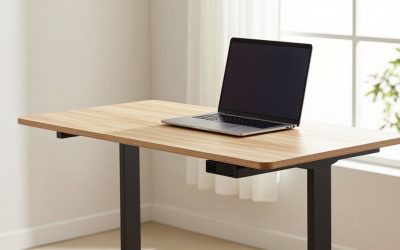
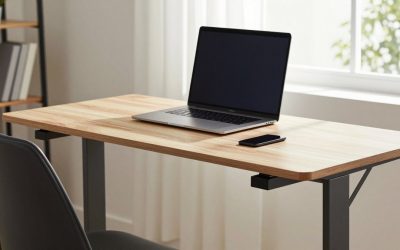
- Laminate (particleboard core): 1″ thick, roughly 35-45 lbs for a 60″x30″ top. Ships in a single flat box that fits through standard 32″ doorways without removing doors. Edge banding is the first thing to show wear, usually chipping at corners after 3-5 years of regular bumps.
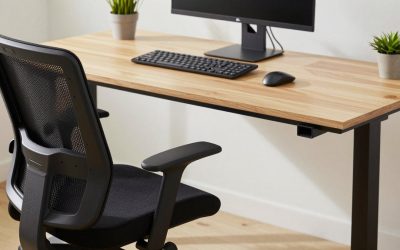
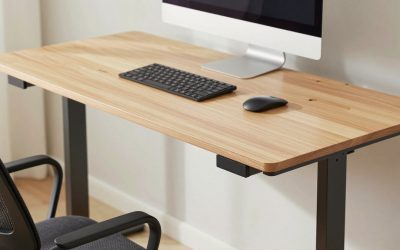
- Solid wood (bamboo or rubberwood): typically 1″-1.25″ thick, 55-70 lbs for the same footprint because there’s no hollow core. The box is heavier and bulkier, and on 72″+ widths some carriers deliver via freight rather than standard parcel, which means you may need to be home for a delivery appointment rather than a porch drop.
Total assembled desk weight (frame plus top) lands around 90-110 lbs for laminate and 110-135 lbs for solid wood on a 2-leg frame, more with the 3-leg version. That’s relevant for two things: moving the desk later (solid wood tops are genuinely a two-person lift once assembled), and floor loading if you’re on upper-story apartment flooring rated for typical residential loads — not usually an issue at these weights, but stacked with a heavy monitor arm and dual displays you can approach 150-160 lbs in one footprint.
| Top material | Thickness | Weight (60″x30″) | Wears first |
|---|---|---|---|
| Laminate | 1″ | 35–45 lbs | Edge banding at corners |
| Bamboo | 1″–1.1″ | 50–60 lbs | Surface scratches, minor warping if humidity swings |
| Solid wood (rubberwood/reclaimed) | 1.1″–1.25″ | 55–70 lbs | Finish dulling, needs occasional oil/wax |
Crossbar-free frame: stability trade-off and accessory mounting
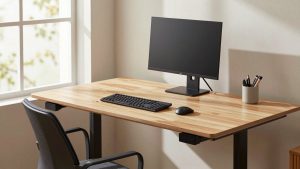
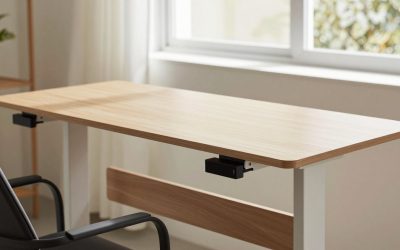
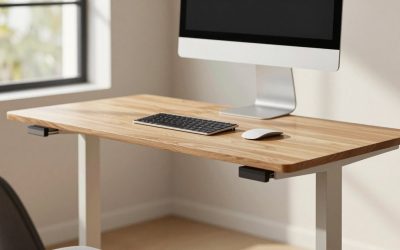
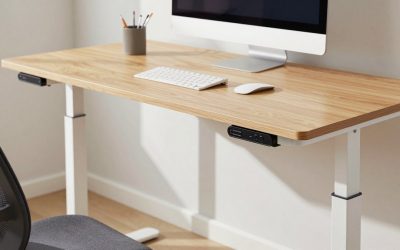
Uplift’s V2 frames skip the rear crossbar that many competing standing desks use to stiffen the frame front-to-back. The upside is real: no bar means nothing blocking a CPU mount, no bar to duck under when rolling a chair close, and unobstructed space for cable trays or power strips along the full width of the underside.
The trade-off shows up specifically at full height with a wide, shallow top. On a 72″ wide top extended to 48″+ standing height, you’ll notice more front-to-back sway if you press down on a front corner than you would with a crossbar frame at the same height. In practice this isn’t noticeable during typing or mouse use, it’s noticeable if you’re doing something like leaning your weight on the edge to stand up from a stool, or mounting heavy dual-monitor arms off-center near one leg instead of centered between both legs.
For accessory mounting specifically, the open back means C-clamp monitor arms, keyboard trays, and cable management trays that clamp to the rear edge all have unobstructed access anywhere along the desk width. Compare that to crossbar designs where you’re restricted to mounting positions outside the bar’s footprint, usually the outer thirds of the desk. If you’re running a heavy gas-spring monitor arm holding two 27″+ displays, centering it between the two legs (not cantilevered off one side) is the single biggest thing you can do to offset the stability trade-off of not having a crossbar.
Which version fits your situation
| Your situation | Better fit | Why |
|---|---|---|
| Under 5’5″, want true seated ergonomic height | V2-Commercial | Lower floor (22.5″) avoids bottoming out too high |
| 6’0″+ user, standard sitting/standing use | V2 | Standard range covers both positions comfortably |
| Shared desk, two users with different heights | Either, prioritize 3-stage range | Full travel matters more than which version |
| Heavy dual-monitor arm, want max stability | 3-leg frame, either version | Extra center leg reduces sway regardless of crossbar absence |
| Renting, will move desk again within 2-3 years | Laminate top | Lighter, cheaper to replace if damaged in a move |
| Permanent home office, want it to last 10+ years | Solid wood top | Refinishable surface, no core to delaminate over time |
Practical numbers to check before buying
Measure your doorway width if you’re on a solid wood top over 60″ wide — most ship in a box around 64″-66″ long and 8″-10″ deep, which clears a standard 32″ door swung fully open but can be tight in older homes with 28″-30″ doorways framed at an angle. Leave at least 36″ of clearance behind the desk for the chair to roll back at standing height without hitting a wall, and budget 30-45 minutes for assembly with two people if you’re attaching a solid wood top, since the extra weight makes flipping the top onto the frame noticeably harder solo.
Related Reviews & Guides


Vari Desk Standing Desk Review: Models, Prices and Which One to Choose
Best L Shaped Standing Desk for Small Rooms in 2026: Compared and Ranked