Last Updated: September 29, 2026
- Single motor vs dual motor: where the money actually goes
- 2-stage vs 3-stage columns: the real height range you get
- Lift speed: 1 in/sec vs 1.5 in/sec in real time
- Load rating minus your actual gear: the spec everyone skips
- Matching the specs to your situation
- One spec sheet number that hides a real trade-off
Four numbers on a spec sheet determine whether an electric sit-stand desk feels sturdy or wobbly, and whether it actually fits your body and your gear: motor configuration, column stage count, lift speed, and load rating minus what you plan to put on top. Get those four right and the rest (frame color, grommets, cable trays) is just preference.
📄 In This Review
- Single motor vs dual motor: where the money actually goes
- 2-stage vs 3-stage columns: the real height range you get
- Lift speed: 1 in/sec vs 1.5 in/sec in real time
- Load rating minus your actual gear: the spec everyone skips
- Matching the specs to your situation
- One spec sheet number that hides a real trade-off
Single motor vs dual motor: where the money actually goes
Single-motor desks drive one leg directly and transfer power to the other through a cross-bar. Dual-motor desks put a motor in each leg, synced electronically. The practical differences show up in three places:

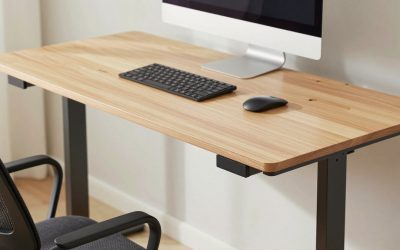
Huuger 47 X 24 Inch Electric Standing Desk with Power Outlets and USB-C Port, Height Adjustable Desk, Sit Stand Desk for Home Office, Computer & Gaming Desk with 3 Presets, Stable Steel Frame, Black
Included for 'Electric Sit-Stand Height Adjustable Desks: What the Specs Mean' because the listing specifies Height Adjustable Desk and Sit Stand Desk for Home Office, details this guide uses to compare options.
View on Amazon- Stability under load. Dual-motor frames resist racking (one side rising faster than the other) better, which matters most at 40 in and above width or with heavy monitor arms off-center.
- Lift speed and quiet operation. Dual motors typically move faster (1.3-1.6 in/sec vs 1.0-1.3 in/sec) and run quieter under strain because neither motor is doing double duty.
- Price. Single-motor desks usually run $250-$450. Dual-motor desks usually run $400-$800, more for frames with memory presets and anti-collision sensors.
A single motor is fine for a desk under 48 in wide with a light load. Past that, or with an off-center weight (a single monitor arm loaded to one side, a heavy CPU tower on a side shelf), dual motor is the safer spec.
2-stage vs 3-stage columns: the real height range you get
See also: Best 49 Inch Monitor: Eight Super Ultrawides Compared by Bandwidth and Desk Depth • Working Table for Home: Sit-Stand and L-Shaped Setups Compared
The column is the telescoping leg itself, and “stage” means how many tube segments nest inside each other.
| Column type | Typical height range | Best fit | Trade-off |
|---|---|---|---|
| 2-stage | 28.3-47.2 in | Users 5’4″-6’1″, standard desk use | Won’t go low enough for shorter seated users or high enough for very tall standers |
| 3-stage | 22.6-48.7 in | Users under 5’3″ or over 6’2″, shared desks, kids-to-adult households | Slightly more flex at full extension; usually $50-$100 more |
The 22.6 in floor on 3-stage columns matters more than people expect. A seated desk height for a 5’0″ person is often 24-25 in; a 2-stage column bottoming out at 28.3 in forces that person into a permanently-too-high seated position no chair adjustment fully fixes. If anyone using the desk is outside the 5’4″-6’1″ band, or if the desk will be shared by people of different heights, pay for the third stage.
Lift speed: 1 in/sec vs 1.5 in/sec in real time
Moving from sitting height (~29 in) to standing height (~45 in) is a 16 in trip.
| Lift speed | Time for a 16 in transition | Feel |
|---|---|---|
| 0.8-1.0 in/sec | 16-20 sec | Noticeably slow if you switch positions often |
| 1.3-1.5 in/sec | 11-12 sec | Standard for mid-range dual-motor desks |
| 1.6-1.7 in/sec | 9-10 sec | Premium tier, most noticeable if you sit/stand multiple times per hour |
If you plan to change position once or twice a day, speed differences are irrelevant, save the money elsewhere. If you’re using a sit-stand routine (standing 15-20 minutes every hour, which is what most ergonomic guidance recommends), the extra 6-8 seconds per transition adds up to real friction that discourages the habit.
Load rating minus your actual gear: the spec everyone skips
Manufacturers list load rating as a maximum, usually 150-330 lbs, but that number is for the whole system moving smoothly, not a static ceiling. Desks perform best, and last longest, loaded to 60-70% of rated capacity.
Add up what actually sits on the desktop before you buy:
- 27 in monitor with stand: 12-16 lbs (dual monitor arm setup: 20-30 lbs including the arm hardware)
- Desktop tower or mini PC: 5-20 lbs
- Laptop dock, speakers, desk lamp, monitor light bar: 8-12 lbs combined
- Desktop organizers, plants, a second display: another 5-15 lbs
A dual-monitor setup with a tower can easily hit 60-70 lbs before you’ve put down a notebook. On a desk rated for 150 lbs, that’s under half capacity and the frame will feel solid. On a budget single-motor desk rated for 100-110 lbs, that same load is pushing 65% capacity, and you’ll notice more wobble at full height and slower, strained-sounding lift cycles. Rule of thumb: take your realistic gear total, double it, and buy a desk rated at or above that number.
Matching the specs to your situation
| Situation | Recommended spec combination |
|---|---|
| Solo user, 5’4″-6’1″, light laptop setup | Single motor, 2-stage column, 1.0-1.3 in/sec, 100-150 lb rating |
| Shared desk, mixed heights, or user under 5’3″/over 6’2″ | Dual motor, 3-stage column (22.6-48.7 in), any speed, 150+ lb rating |
| Dual monitors + tower + accessories | Dual motor, 2 or 3-stage per height need, 1.3+ in/sec, 200+ lb rating |
| Frequent sit-stand routine (multiple transitions/hour) | Dual motor, 1.5+ in/sec, memory presets to skip manual adjustment |
| Small apartment, desk doubles as dining/craft surface | 2-stage column (lighter, cheaper), single motor, focus on desktop size over speed |
One spec sheet number that hides a real trade-off
Anti-collision sensors (standard on most mid-range and premium frames now) stop the desk if it meets resistance while moving, which protects both the motor and anything underneath. Budget frames without this feature aren’t unsafe, but they rely entirely on you watching for obstructions, which matters if the desk sits near a low shelf, a windowsill, or where kids or pets might be underneath during a lift cycle. If that’s your setup, it’s worth the $30-$50 jump to a frame that includes it rather than treating it as a nice-to-have.
Related Reviews & Guides


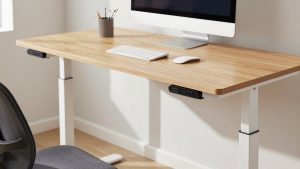
Vernal Standing Desk Review: Specs, Assembly and Everyday Performance
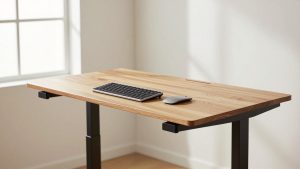
Adjustable Standing Desks With Keyboard Trays: How They Change Your Typing Height