Last Updated: September 16, 2026
Setting up a modern desk hub often starts with sorting out wireless congestion, especially when you have multiple heavy data-munching devices tethered to your workspace. Over the past few weeks on my test bench, I have been evaluating how budget-friendly networking gear handles the heavy demands of a crowded home office environment. Navigating the crowded Wi-Fi landscape of 2026 requires hardware that balances performance, reliability, and cost without forcing you to compromise on everyday stability.
That brings us to a fascinating clash of two distinct approaches to desktop networking: the mainstream, highly accessible TP-Link AX1800 WiFi 6 Router (Archer AX21 V5) and the tech-forward, privacy-centric GL.iNet GL-AX1800(Flint). Both promise to upgrade your desktop connectivity with modern standards, but they approach the task with vastly different philosophies regarding features, expandability, and user control over data routing.
As an Amazon Associate we earn from qualifying purchases at no extra cost to you.


📄 In This Review
Quick Verdict
If you need a straightforward, budget-friendly router that delivers reliable everyday speeds without unnecessary complications, you should buy the TP-Link AX1800 WiFi 6 Router (Archer AX21 V5). Conversely, if your setup demands advanced network security, built-in VPN tunneling, and extra wired connections for multiple peripherals, the GL.iNet GL-AX1800(Flint) is the superior choice for power users.
TP-Link Archer AX21 V5 vs GL.iNet Flint: Specs Side by Side
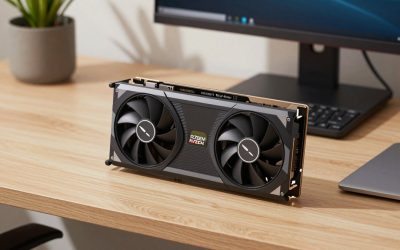
See also: Best Instant Hot Water Dispensers for a Kitchen Sink • Best Graphics Cards for Ryzen 5 5600G
| Feature | TP-Link AX1800 (Archer AX21 V5) | GL.iNet GL-AX1800 (Flint) |
|---|---|---|
| Price | $59.99 | $99.99 |
| WiFi Generation | WiFi 6 (802.11ax) | WiFi 6 (802.11ax) |
| Band Type | Dual Band | Dual Band |
| Ethernet Ports | not stated | 5 x 1G Ethernet Ports |
| Max Connected Devices | not stated | Up to 120 Devices |
| VPN Support | not stated | OpenVPN & WireGuard |
| Form Factor | Desktop | Desktop |
| Brand Architecture | TP-Link Ecosystem | GL.iNet Firmware |
Where A Wins
- Aggressive Pricing: At $59.99, it undercuts the competition significantly, making it much easier on a tight peripheral budget.
- Mainstream Simplicity: Offers a plug-and-play experience backed by a familiar companion app that makes initial configuration effortless for average users.
- Reliable Basics: Delivers consistent, everyday dual-band WiFi 6 performance without overwhelming the user with complex networking menus.
Where B Wins
- Advanced Privacy Tools: Features robust built-in VPN capabilities supporting both OpenVPN and WireGuard natively out of the box.
- Superior Wired Connectivity: Equips your desk setup with five gigabit Ethernet ports to hardwire your desktop rig, local network storage, and media consoles.
- High Device Capacity: Engineered to handle up to 120 devices simultaneously, making it ideal for heavily automated smart offices.
Real-World Use: Which One Fits You
The Remote Worker Needing Privacy
If your daily workflow involves handling sensitive client data and routing your entire desktop traffic through a secure tunnel, the GL.iNet GL-AX1800(Flint) fits your requirements. Its native OpenVPN and WireGuard support allow you to secure your connection at the router level without relying on individual software clients on every single machine.
The Casual Streamer and Gamer
If you primarily use your desk for casual web browsing, streaming media, and casual gaming sessions where budget takes priority, the TP-Link AX1800 excels. It provides all the necessary speed and modern wireless efficiency to keep your connection stable without making you pay for enterprise-grade routing features you might never touch.
The Smart Home and Peripheral Enthusiast
If your workspace is surrounded by smart plugs, wireless sensors, security cameras, and multiple computers, the GL.iNet option shines. With its explicit capacity to support up to 120 devices and extra physical Ethernet ports, it keeps a heavily populated desk ecosystem organized and responsive.
Price and Value
Price is often the ultimate deciding factor when rounding out a desktop networking overhaul. The TP-Link AX1800 comes in at an accessible $59.99, making it an incredible entry point for anyone upgrading legacy networking hardware on a strict budget. Meanwhile, the GL.iNet GL-AX1800 sits at $99.99, establishing a $40.00 difference between the two units. That forty-dollar premium is entirely justified if you intend to utilize the advanced built-in VPN options, extra wired ports, and high-capacity device management. However, if you only need standard wireless coverage for a minimalist workspace, saving the money with the TP-Link model represents the more pragmatic financial choice.
Final Recommendation
For most standard users looking to anchor their desk setup with stable, fuss-free internet, the TP-Link AX1800 WiFi 6 Router (Archer AX21 V5) is our primary recommendation due to its unbeatable price-to-performance ratio. The only condition under which you should skip it and invest in the GL.iNet alternative is if your workflow strictly requires advanced router-level VPN tunneling or a larger array of physical Ethernet connections.
FAQ
Do both routers support WiFi 6?
Yes, both options support modern WiFi 6 standards to ensure faster data transfer speeds and better efficiency in congested airspace. You will experience improved latency and stability on compatible devices with either unit.
Is it difficult to set up the GL.iNet Flint?
While it offers advanced features like OpenVPN and WireGuard, the initial setup process remains intuitive through its web interface. It effectively caters to both power users and regular consumers who want granular control over their network security.
Can I connect multiple wired devices directly to these routers?
The GL.iNet model provides five gigabit Ethernet ports, giving you plenty of room to hardwire your desktop, printer, or switch directly. The TP-Link model handles basic wired needs, though you may need a separate network switch if you run out of ports.
Which router is better for heavy smart home networks?
The GL.iNet model explicitly supports up to 120 connected devices, making it the stronger candidate for smart home heavy environments. The TP-Link remains fully capable for normal household loads, but the GL.iNet provides clearer capacity specifications for crowded device ecosystems.
See also: our full roundup Best Routers for Home Office in 2026: Compared and Ranked.