Last Updated: September 29, 2026
Working from a bedroom has two problems, and only one of them is space. The obvious one is fitting a desk, a chair and your equipment into a room already occupied by a bed and wardrobe. The less obvious one is that the bedroom is supposed to be where your brain switches off. When the laptop is two metres from the pillow, work tends to leak into the evening and sleep suffers. A good small-bedroom office solves both: it fits physically, and it can disappear mentally when the workday ends.
📄 In This Review
Quick answer: Our top pick in 2026 is the Compact desk — our #1 rated choice. See the full ranked comparison, alternatives and buying advice below.
Pick the right spot
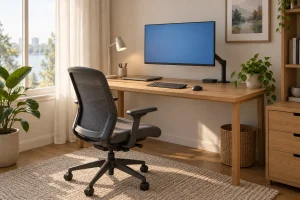
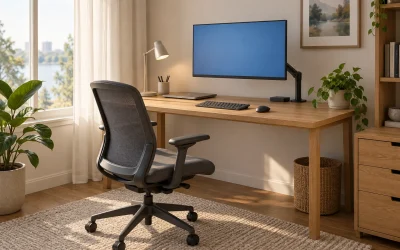
Place the desk where you do not see it from the bed if possible. Common good positions include the wall beside the bed’s foot, a corner behind the door, or an alcove. Avoid placing the desk directly facing the bed; seeing an unfinished task as you fall asleep is exactly what you are trying to avoid. Near a window is ideal for daylight, but keep the screen perpendicular to the window to limit glare.
| Desk type | Footprint | Pros | Cons |
|---|---|---|---|
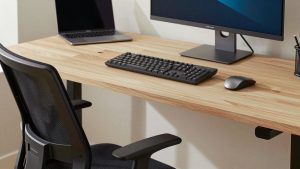
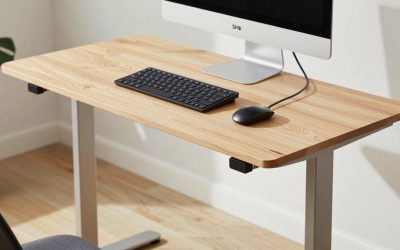
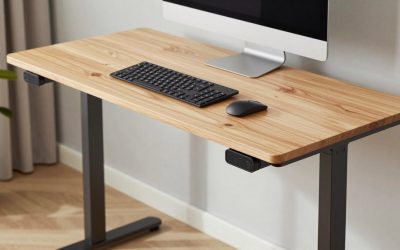
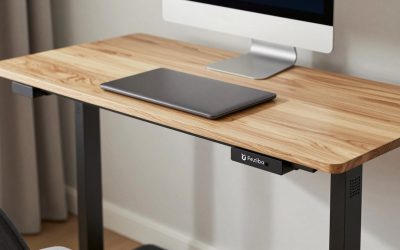
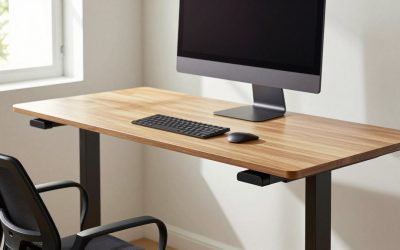
| Compact desk | About 80–100 × 50 cm | Fits most walls, cheap | Room for a laptop and maybe one small monitor |
| Wall-mounted fold-down desk | Near zero when closed | Disappears after work | Limited weight and no monitor on the surface |
| Floating shelf desk | About 90–120 × 40–50 cm | No legs, looks light | Needs solid wall fixing |
| Corner desk | About 100 × 100 cm | Uses dead corner space | Harder to hide |
| Secretary or cabinet desk | About 80–100 × 45–55 cm closed | Closes like furniture | Often too shallow for monitors |
Make it disappear at the end of the day
See also: Best Roku Streaming Deals Reviewed • Olipop Flavors Ranked: Best Tastes from Worst to Best
Closing furniture
Fold-down wall desks and secretary desks with doors hide work physically. Closing them is a small ritual that tells your brain the workday is over. They suit laptop-first workers best because monitors do not fold away easily.
Covers and screens
If you need an open desk with a monitor, a fabric cover over the screen or a folding room divider in front of the desk achieves a similar effect. A curtain on a ceiling track can hide a desk alcove completely for a modest cost.
Lighting cues
Use a cool-white desk lamp during work and turn it off at the end of the day, switching to warm bedside lighting. The change in light helps signal the transition from work to rest.
Space-saving equipment
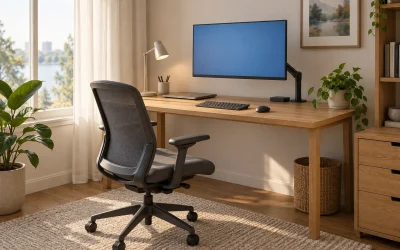
A monitor arm clamped to a small desk lifts the screen off the surface and allows the monitor to be pushed back against the wall. A laptop stand with a compact wireless keyboard and mouse uses little space. Wall shelves above the desk hold papers and supplies vertically. A slim rolling drawer unit slides under the desk and can double as a bedside table on the other side of the room.
Choose a chair that belongs in a bedroom
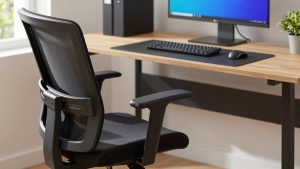
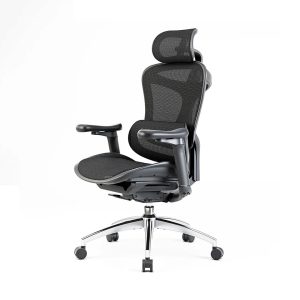
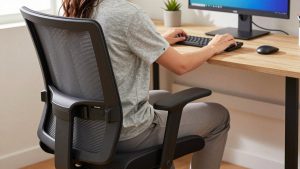
Large high-backed office chairs dominate a small room. A mid-back ergonomic chair with adjustable seat height and lumbar support, in a neutral colour, fits better visually. Armless or flip-up armrest designs slide fully under the desk.
Sound and privacy on calls
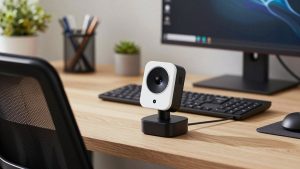
Bedrooms are often surprisingly good for calls because beds, curtains and soft furnishings absorb echo. The challenge is the background: position the camera so the bed is not in view, or use a neat wall or bookshelf behind you. If you share the bedroom with a partner, headsets are essential for early or late calls.
Protect your sleep
Keep chargers, cables and the power strip under the desk, not by the bed. Turn off notification sounds after hours. Avoid working from bed itself, even for “just one email”, because it weakens the association between bed and sleep. Ventilate the room: a closed small bedroom with a laptop and a person working all day becomes stuffy, and fresh air helps both work and sleep.
FAQ
What is the minimum desk size for a bedroom office?
A desk of about 80 × 50 cm fits a laptop, a small lamp and a notebook. If you want an external monitor as well, aim for at least 100 × 60 cm or use a monitor arm.
Is it bad to work in the bedroom?
Not necessarily, but it helps to create clear boundaries. Hiding the workspace after hours and keeping work off the bed make a real difference for many people.
Bottom line
A small-bedroom office should fit the room and disappear after work: pick a spot out of sight of the bed, choose a compact, closing or wall-mounted desk, lift screens on an arm, use cool light for work and warm light after, and keep work entirely off the bed.
Ready to decide? Our #1 pick for 2026 is the Compact desk.
Live price & availability on Amazon.