Last Updated: September 26, 2026
Most standing desk marketing focuses on how high a desk goes, but shorter users have the opposite problem: many desks do not go low enough. If the lowest setting is too high, a shorter person has to raise their chair, lose contact with the floor and work with shoulders hunched. That undermines the ergonomics a standing desk is supposed to provide. This guide explains how low you need to go, which frame types reach those heights and how to set up the rest of your workstation.
📄 In This Review
How low does your desk need to go?
Your ideal seated desk height is about your seated elbow height minus 1 inch, measured with feet flat and thighs roughly level. Typical figures:

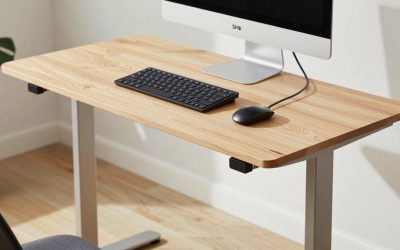
YIHAYO Low Height Adjustable Desk, Lifts 18.1-28.3 Inches, Electric Standing Desk for Short People, 48 x 24 Inches Computer Table with Splice Board for Home Office, White
Included for 'Best Standing Desk for Short Users' because the listing specifies Lifts 18.1-28.3 Inches and Electric Standing Desk for Short People, details this guide uses to compare options.
View on Amazon
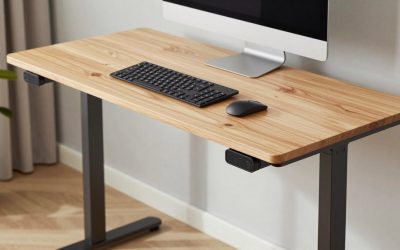
YIHAYO Low Height Adjustable Desk, Lifts 18.1-28.3 Inches, Electric Standing Desk for Short People, 48 x 24 Inches Computer Table with Splice Board for Home Office, Black
Included for 'Best Standing Desk for Short Users' because the listing specifies Lifts 18.1-28.3 Inches and Electric Standing Desk for Short People, details this guide uses to compare options.
View on Amazon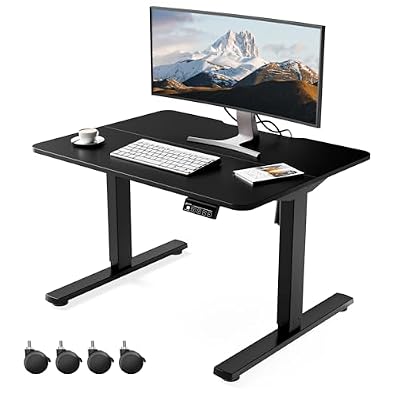
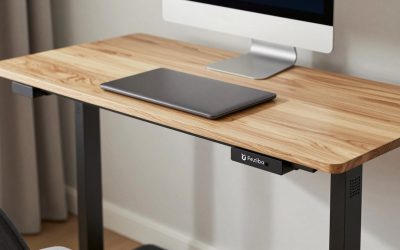
Low Height Adjustable Desk Lifts 18.9"-29.5", Small Standing Desk for Home
Included for 'Best Standing Desk for Short Users' because the listing specifies Small Standing Desk for Home, details this guide uses to compare options.
View on Amazon
YOLEZO 35" Electric Standing Desk, Small Sit Stand up Desk, Light Walnut
Included for 'Best Standing Desk for Short Users' because the listing specifies Small Sit Stand up Desk and Light Walnut, details this guide uses to compare options.
View on Amazon| User height | Approx. seated desk height | Approx. standing desk height | Frame needed |
|---|---|---|---|
| 4’10” | About 21.5 to 22.5 in | About 36 to 37 in | Low-reach three-stage |
| 5’0″ | About 22.5 to 23.5 in | About 37 to 38 in | Three-stage |
| 5’2″ | About 23.5 to 24.5 in | About 38.5 to 39.5 in | Three-stage |
| 5’4″ | About 24.5 to 25.5 in | About 40 to 41 in | Three-stage or low two-stage |
| 5’6″ | About 25.5 to 26.5 in | About 41 to 42 in | Many two-stage frames |
Many two-stage frames bottom out around 27 to 29 inches before the top is added, which is simply too high for users under about 5’4″.
What to look for
See also: Best Roku Streaming Deals Reviewed • Olipop Flavors Ranked: Best Tastes from Worst to Best
Low minimum height with top
Three-stage frames commonly reach 22 to 25 inches at the frame. Add your top thickness and confirm the result is at or below your seated target. This is the single most important specification for shorter users.
Shallower top
Shorter arms mean a 24 to 28 inch deep top may be more comfortable than 30 inches, keeping monitors at an appropriate distance without pushing them too far away.
Thin top
Every fraction of an inch counts. A top of about 0.75 inch rather than 1.25 inch can make the difference between comfortable and not quite low enough.
Keyboard tray option
An under-desk keyboard tray lowers the keyboard 1 to 3 inches below the surface. It can rescue a desk that is slightly too high, though a desk that goes low enough on its own is simpler.
Chair and footrest
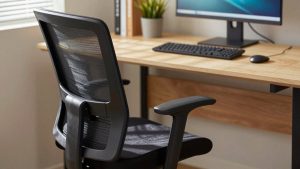
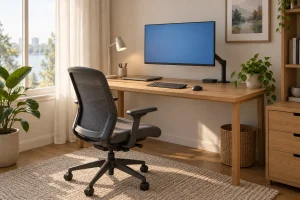
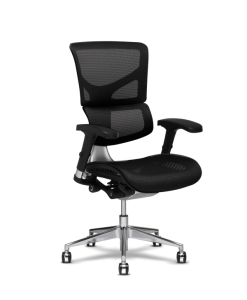
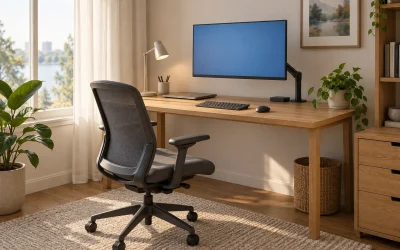
Shorter users often struggle with chairs as much as desks. Look for a seat that lowers to about 15 to 16 inches and a seat depth of 15 to 17 inches so your back reaches the backrest while knees clear the seat edge. If your desk cannot go low enough and you must raise the chair, add a footrest so your feet are supported and your thighs stay level. A footrest is a workaround, though; getting the desk low enough is better.
Standing ergonomics for shorter users
At standing height, most desks reach easily down to 37 to 41 inches, so standing is rarely the problem. Focus on monitor height: the top edge should sit at or just below eye level, which for a 5’0″ user may be only 12 to 15 inches above the desk surface. Many monitor stands sit too high even at their lowest setting; an arm that lowers the screen close to the desk helps.
Common mistakes
- Buying a two-stage desk based on its maximum height without checking the minimum.
- Ignoring top thickness, which adds 0.75 to 1.25 inches to the minimum.
- Raising the chair so high that feet dangle, then skipping a footrest.
- Leaving the monitor on a stand that places it above eye level.
- Using a deep top that forces you to lean forward to reach the keyboard.
FAQ
What is the lowest standing desk height available?
Many three-stage frames reach about 22 to 25 inches without the top, and some low-reach models go lower. Always add top thickness when comparing to your seated elbow height.
Can I use a keyboard tray instead of a lower desk?
Yes, a keyboard tray can lower your typing surface by 1 to 3 inches, which can compensate for a desk that is slightly too high. It adds cost and reduces knee clearance, so a desk that reaches your height directly is preferable.
Bottom line
Shorter users should choose standing desks by their minimum height, not their maximum. Three-stage frames that reach 22 to 25 inches, combined with a thin top, a properly sized chair and a low monitor position, provide correct ergonomics without footrest workarounds. Measure your seated elbow height first and treat it as the non-negotiable number.