Last Updated: September 18, 2026
- Top Pick: MAHDPRO Desk Grommet 2 Inch (50 mm) Pack of 5-Black ABS Plastic Cable Hole Cover to Arrange Wires & Cords Through Computer Table/Countertops
- Best Value: Litoexpe 2 Pcs Black Desk Cord Grommet 1-1/2 Inch
- Premium Choice: Under Desk Cable Management Tray No Drill, Metal Mesh Cable Management Under Desk with Clamp Mount, 2 Hole Cable Tray with Wire Management and Cord Organizer for Home Office Standing Desk
Choosing between a desk grommet vs under desk cable tray is less about which product is “better” and more about where you want the clutter to go. A grommet moves cords through the desktop, keeping the surface neat and creating a short, direct path to a monitor, lamp, charger, or docking station. A cable tray holds the power strip and excess cable underneath, leaving the desktop largely untouched and making changes easier.
The right choice depends on your desk’s construction, how permanent your setup is, and whether you prioritize a clean work surface or easy installation. A standing desk, rental apartment, gaming setup, and family office can each call for a different answer. The comparison below focuses on practical home use, including installation, comfort, appearance, cost, and long-term flexibility.
As an Amazon Associate we earn from qualifying purchases at no extra cost to you.


📄 In This Review
Quick Verdict
Choose a desk grommet if you want the cleanest desktop appearance, have a solid wood or composite top, and are comfortable drilling a hole. It is especially effective when one or two cables need to pass neatly from the desktop to equipment below. A grommet typically costs about $5 to $20 and takes little maintenance once installed.
Choose an under desk cable tray if you want to hide a power strip, organize several cables, or avoid modifying the desk. Most trays cost about $14 to $45 for home-office models, with no-drill clamp versions available. They are usually the better option for renters, standing desks, and workstations that change frequently.
For many homes, the best solution is a combination: use a grommet for the few cables that must reach the desktop and a tray underneath for the power strip and cable slack.
Side by Side
See also: Best Gaming Desk Pads for Full Desk Coverage • Best Desk Organizers Under $30: Match the Organizer to Your Clutter
| Factor | Desk Grommet | Under Desk Cable Tray |
|---|---|---|
| Comfort | Leaves more legroom and reduces contact with dangling cords | Keeps cords off the floor but may reduce knee clearance if mounted too low |
| Durability | Plastic models are durable when properly fitted; metal options resist cracking | Metal mesh or steel trays generally handle heavier power strips and adapters |
| Price range | About $5-$20, plus tools if drilling is required | About $14-$45; clamp and no-drill models cost more than basic brackets |
| Maintenance | Very low; remove the cover occasionally to dust around the opening | Requires occasional cable rearrangement and dusting underneath the desk |
| Space needed | Uses a desktop opening typically about 1.5-2 inches wide | Usually needs about 3-6 inches of underside depth and clearance for cables |
| Look | Minimal and nearly flush with the desktop | Hidden from above but visible from some seated or standing angles |
| Resale and flexibility | Permanent hole can limit resale appeal or future desk layouts | Removable models preserve the desk and adapt to new arrangements |
| Best for | Permanent workstations with monitors, lamps, and chargers | Multiple devices, power strips, standing desks, rentals, and changing setups |
Where Desk Grommet Wins
A grommet’s main advantage is that it creates a controlled passage through the desktop. Instead of routing a monitor cable over the rear edge or down the side, you can position the opening directly behind the equipment. That shorter route reduces visible cable length and makes the desktop look more intentional.
Grommets also preserve valuable space underneath. A small desk may not have room for a deep tray without interfering with your knees. Since the grommet occupies only the desktop opening, the underside remains available for your legs, a filing cabinet, or a compact computer tower.
Installation is straightforward if you already have the right opening. Common home-office sizes include 1.5 inches and 2 inches. The Litoexpe 2 Pcs Black Desk Cord Grommet 1-1/2 Inch, priced at $5.99, suits smaller cable bundles and desks with a matching cutout. The MAHDPRO Desk Grommet 2 Inch, a five-pack priced at $6.99, is useful when you want openings at multiple positions or need a larger passage for several cables.
Before drilling, check the desktop thickness, the location of support rails, and the diameter of the cover’s outer rim. A 2-inch grommet usually needs a hole saw sized to the manufacturer’s specification; the stated grommet diameter is not always the exact saw size. Do not drill through a desk with embedded electronics, a glass top, or a structural metal frame unless the manufacturer specifically allows it.
Grommets are also a good visual choice for a minimalist office. A black ABS plastic cover tends to blend into dark laminate and painted tops, while a color-matched option can nearly disappear. The limitation is capacity: a small opening may not comfortably fit thick HDMI, Ethernet, USB, and power connectors at the same time. Measure the connectors, not just the cables.
Where Under Desk Cable Tray Wins
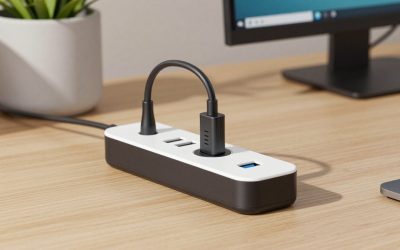
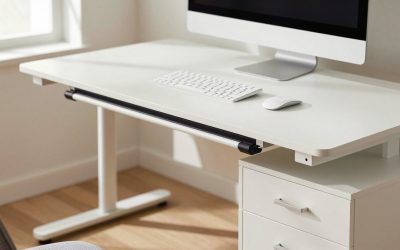
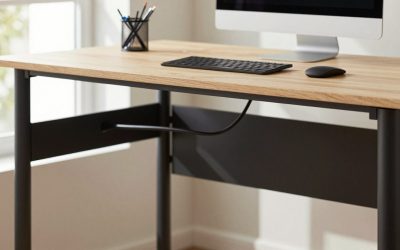
A cable tray is more versatile when the real problem is the power strip and its excess cords. Most trays support the strip underneath the desk, then give you a place to coil or route cables between devices. This keeps bulky adapters off the floor and makes vacuuming easier.
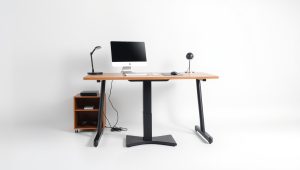
Trays are particularly useful with standing desks. A desk that rises and lowers needs enough slack for its full travel range, and a tray keeps that slack gathered instead of dragging across the floor. Leave a gentle loop rather than pulling cables tight, and confirm that the tray does not collide with the desk frame when the surface moves.
No-drill installation is another major advantage. The Under Desk Cable Management Tray No Drill uses a clamp-mount approach and is listed at $13.99. Clamp models are convenient for renters and for desks that you may replace soon, although they need a sufficiently thick, sturdy edge. Adhesive trays can work for light cables but may detach under the weight of a power strip or in a warm room.
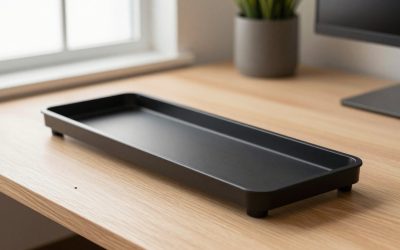
For a wider workstation, the Mzmaxy Cable Management 25” Cable Management Under Desk, priced at $23.99, offers a longer span than compact trays. A long tray can support multiple chargers and a power strip, but measure the distance between desk legs and check for drawers, crossbars, or a center support.
Metal mesh trays are often a practical middle ground. They allow airflow around power adapters, tolerate moderate weight, and make it easier to thread cables through the sides. Still, do not overload a tray or place a hot transformer against other heat-sensitive items. Keep the power strip’s switch accessible and avoid bundling cables so tightly that they become difficult to inspect.
Cost Over 5 Years
The cheapest initial option is usually a basic grommet. A single opening can cost approximately $5-$10, while a larger pack may cost $7-$20. If you already own a drill and hole saw, installation adds no direct cost. If not, a suitable hole saw may add roughly $10-$25, making a one-time grommet project closer to $15-$45.
An under desk tray generally costs $14-$45. A no-drill clamp tray may sit near the lower end, while a longer, heavier tray costs more. Over five years, either option can be inexpensive: assume one grommet replacement or desk change at $10-$20, or one tray replacement at $20-$45. That produces an estimated five-year hardware cost of about $5-$45 for a grommet and $14-$90 for a tray, excluding tools and the desk itself.
Those totals can change if your setup evolves. A grommet may require another hole when you add equipment, while a tray can usually be rearranged. Conversely, a tray may need replacement if its clamps loosen, adhesive fails, or a new desk has no compatible mounting area. The lowest long-term cost is usually the option that fits your likely setup changes, not simply the one with the lowest sticker price.
Which One for Your Home
Small apartment
Choose a no-drill cable tray when floor space and flexibility matter. It can hold a power strip beneath a compact desk without requiring permanent modification. If the desk is yours and you have a fixed monitor arrangement, add one small grommet later for a cleaner desktop cable path.
Family with kids or pets
Start with an under desk tray that lifts power strips and loose cords off the floor. Reducing dangling cables can make the area less tempting to pull or chew and makes cleaning simpler. Secure the remaining vertical cables with clips, and keep the tray’s weight within its stated capacity.
Rental
A clamp-mounted or other no-drill tray is the safest choice. It can be removed when you move and does not leave a large hole in the landlord’s furniture. Avoid relying on adhesive alone for heavy adapters, especially on textured or dusty surfaces.
Long-term home
A permanent grommet is attractive when the desk will remain in the same room for years. Use one or two strategically placed openings and pair them with an underside tray if you have multiple devices. This combination delivers a clean surface without forcing every cable through one crowded hole.
FAQ
Is a desk grommet better than a cable tray?
Neither is universally better. A grommet is better for a clean, permanent desktop and short cable paths. A tray is better for hiding power strips, organizing many cables, and avoiding drilling. Your desk design and willingness to make a permanent change should decide.
Can a desk grommet hold a power strip?
Usually, no. Most grommets are designed for cables and connectors, not for supporting a power strip. Mount the power strip in an under desk tray and pass its cord through the grommet if you want the cleanest arrangement.
Do under desk cable trays work with standing desks?
Yes, provided the tray is securely mounted and the cables have enough slack for the desk’s complete height range. Raise the desk fully before finalizing cable length, and keep cords away from moving legs, lifting columns, and pinch points.
What size desk grommet should I buy?
Measure the largest connector that must pass through the opening and compare it with the manufacturer’s usable opening. A 1-1/2-inch model works for smaller cable groups, while a 2-inch model provides more room for several cords. Also verify the required hole-saw size and desktop thickness before installation.
Ready to decide? Our #1 pick for 2026 is the Comfort.
Live price & availability on Amazon.
Related Reviews & Guides


Best Brass and Crystal Executive Desk Clock Sets in 2026: Compared and Ranked

6 Best Under The Desk Treadmill 2026