Last Updated: October 18, 2026
Telehealth video is different from a normal work call. A doctor or therapist needs to see skin tone, facial expression, and small movements clearly, and you need to hear each other without repeating yourself. A choppy, dark, or out-of-focus image slows everything down and makes it harder to communicate.
You do not need a streamer setup for this. Most people do best with a sharp, reliable 1080p or 4K webcam with good autofocus, decent low-light handling, and a physical privacy shutter. What matters more than resolution is stable focus, natural color, and a microphone that does not pick up your whole room.
📄 In This Review
What actually matters for telehealth
Autofocus that stays locked. Cheap fixed-focus webcams are fine at one exact distance, but if you lean in to show a rash, sore throat, or eye irritation, they go soft. For any clinical use, get continuous autofocus. The failure mode here is hunting – some autofocus lenses pulse in and out under warm indoor bulbs. Look for reviews that specifically mention stable focus at 2-3 feet.
Color accuracy over sharpness. A 4K sensor does not help if it makes skin look orange or washed out. Telehealth platforms compress video heavily, so exaggerated sharpening and oversaturation get worse, not better. A webcam with balanced auto white balance and an option to turn off beauty filters or auto-enhancement is more useful than extra pixels.
Low-light performance. Most appointments happen in home offices and bedrooms with one overhead light. Small sensors get noisy fast. A larger sensor with a wider aperture, usually listed as f/2.0 or wider, will look cleaner than a higher-resolution camera with a tiny sensor. If your room is dark, a $25 LED panel will improve image quality more than a $150 camera upgrade.
Audio and privacy. Dual noise-canceling microphones help if you have HVAC noise, kids, or a clinic front desk in the background. For privacy, a physical shutter or lens cap is non-negotiable if the camera lives in a bedroom or exam room. Software on/off lights are easy to miss.
Quick comparison
See also: Best Monitor for MacBook Air: Two USB-C 4K Screens and Six Adapter-Dependent Alternatives • Best Monitor for MacBook Pro: Eight Listings Sorted by Cable, Sharpness and Scaling
These are categories, not one perfect model. Pick based on which side of the call you are on most often.
| Type | Best for | Strengths | Trade-offs |
|---|---|---|---|
| Proven 1080p workhorse, 60+ fps | Patients, therapists, follow-ups | Reliable focus, works on old laptops and Macs, low CPU load | Less detail for close-ups; struggles in very dim rooms |
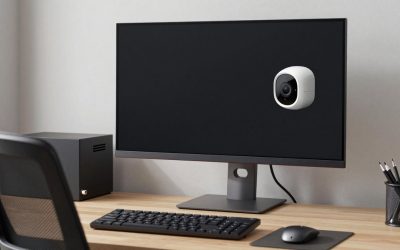
| 4K fixed desk camera with large sensor | Providers doing visual exams | Sharper close-ups, better crop for showing skin, documents, range of motion | Needs good USB bandwidth and light; 4K often downscaled by Zoom/Doxy.me anyway |
| Auto-tracking PTZ camera | Physical therapy, pediatrics, demoing movement | Follows you around the room, hands-free framing | Motor noise, occasional over-correction; overkill for sit-down talk visits |
| Built-in laptop camera + light + headset | Occasional visits, travel | Zero setup, private, portable | Narrow dynamic range, grainy in low light, harsh upward angle |
If you are the clinician
Get the 4K desk camera. Not because patients will see full 4K – they usually will not, because most telehealth platforms cap at 720p or 1080p – but because the better lens and sensor give you cleaner 1080p after downscaling, and you can digitally zoom or crop without it falling apart.
Mount it at eye level, about arm’s length away, centered on your face. The common failure is clipping: laptop cameras shoot up your nose while top-mounted 4K cameras on tall monitors cut off your mouth. Use a small tripod or monitor mount to fix height once and leave it. Turn off auto-framing if you share your screen a lot; some cameras re-zoom when you lean back to type notes, which is distracting for patients.
If you do dermatology, wound checks, or post-op checks, test your exact workflow before clinic hours. Try holding a printed color reference or your own hand 18 inches from the lens under your normal office light. If reds blow out or autofocus hunts, lock exposure and white balance in the camera app. And remember: video is not a substitute for in-person exam for diagnosis – when detail is borderline, ask for in-person follow-up or high-resolution photos through your patient portal rather than pushing the webcam beyond what it can do.
A practical starting point is a widely supported Logitech Brio-style 4K webcam with autofocus and Windows Hello support, because clinic IT departments and Macs tend to recognize it without drivers. The cheaper 1080p option is honestly fine if you mostly do talk-based therapy, psychiatry, or follow-ups where you are not examining tissue.
If you are the patient
You do not need 4K. A proven 1080p webcam with dual mics is easier on older laptops, less likely to stutter on slow Wi-Fi, and perfectly clear for talking. What will make the biggest difference is placement and light: face a window or put a lamp behind your camera, not behind you. Backlight is the number one reason providers say “I can’t see you.”
For showing a specific issue, do not rely on digital zoom. Lean in slowly to about 2 feet, hold still for 2-3 seconds to let autofocus lock, then hold still. Fast waving or moving the laptop around guarantees blur. If you need to show a knee, throat, or skin area, have someone else hold the phone or use a 1080p autofocus webcam with privacy shutter on a short tripod so you have both hands free.
Wired is more reliable than Wi-Fi for the visit itself. If you have to use Wi-Fi, sit closer to the router and close backup, photo sync, and other video apps. On Macs especially, only one app can claim the camera at a time – quit FaceTime, Photo Booth, and Teams before you open your telehealth link.
If you need to move on camera
Physical therapy, occupational therapy, speech therapy with kids, and gait checks are a different problem. A fixed desk cam forces you to keep running back to frame yourself. That is where an auto-tracking camera helps.
These cameras use face or body tracking to pan and tilt to follow you. When it works, it is excellent for demonstrating exercises across a room. When it does not, it drifts, loses you against a busy background, or makes audible motor whirring that the mic picks up. They also need more light than makers claim.
Only buy one if you will actually stand up and move most visits. For a sit-down talk visit, tracking adds failure points with no benefit. If you do buy, get one with gesture control or a remote to pause tracking, and mount it 4-6 feet back. A auto tracking PTZ webcam for meetings is worth testing at home first: walk side to side, sit down quickly, have another person enter the frame, and see if it stays calm.
Lighting, audio, and HIPAA-adjacent practicalities
A webcam cannot fix a bad room. A $30 daylight-balanced LED panel at 45 degrees, a closed door, and a headset mic will beat any camera upgrade. If you take calls in a shared clinic, use push-to-mute and a camera with a clear LED plus physical shutter so patients can see when you are off-camera.
No webcam itself is HIPAA-compliant – compliance depends on your telehealth platform, network, and how you store recordings, not the camera hardware. Evidence on whether 4K versus 1080p changes clinical outcomes over video is limited. Use video as one input, follow your organization’s telehealth guidelines, and when in doubt, escalate to in-person care or consult your compliance officer.
For Mac users: check that the camera app supports macOS for firmware updates and exposure lock. Some Windows-first features like background blur or AI framing only work through the vendor’s Windows app. Browser-based telehealth tools usually work fine, but give Chrome or Safari camera permission before the appointment and test with a friend.
FAQ
Is 4K worth it for telehealth?
Sometimes for providers, rarely for patients. Platforms compress heavily, so patients often receive 720p anyway. Providers benefit from the better sensor and ability to crop, but for talk therapy or check-ins, a good 1080p camera is indistinguishable and more reliable on slow connections.
Can I just use my laptop’s built-in camera?
Yes for occasional visits. It is fine if you have good front light and use headphones. Upgrade to an external webcam if you look grainy, sound echoey, or need to show close-up detail. External cameras also fix the unflattering low angle of most laptops.
What microphone setup is best?
For most home offices, the webcam’s dual noise-canceling mics are enough if the room is quiet and you sit within 3-4 feet. If you have echo, HVAC hum, or take calls in a busy clinic, a wired headset or USB lav mic will be clearer and less fatiguing for the other side.
How do I avoid blur when showing something close up?
Move slowly, hold still for a few seconds at about 2 feet, and make sure there is light on the area, not behind it. Lock autofocus if your camera app allows it. If it still looks soft, take a well-lit still photo and send it through your portal instead of struggling on live video.
Related Reviews & Guides
Best Webcam Camera for Mac
Ergonomic Chair Herman Miller Aeron: Top Picks Compared in 2026