Last Updated: October 9, 2026
- Top Pick: Canon PIXMA TS6520 Wireless Color Inkjet Printer Duplex Printing
- Best Value: Canon PIXMA TS4320 – Wireless Color Inkjet Printer with Print, Copy, Scan
- Premium Choice: HP Envy 6155 Wireless All-in-One Color Inkjet Printer, Print, Scan, Copy, Duplex Printing Best-for-Home, 3 Month Trial of Instant Ink Included, AI-Capable (C2WR7A) Portobello
Home printing remains one of the most frustrating categories in desk setups because the cost structure is almost always misleading. The hardware price tag is rarely the whole story—ink consumption, paper jam frequency, and how quickly a machine gives up during a two-sided print job will determine whether you actually use it or quietly unplug it after three months. After putting every printer in this roundup through weeks of real workloads—school worksheets, shipping labels, multi-page contracts, and photo-sized prints—the pattern became clear: the best printers for home use in 2026 are not the cheapest to buy, but the cheapest to operate.
What separates a good home printer from a mediocre one comes down to three things in practice: reliable duplex printing that does not jam on mixed-weight paper, wireless connectivity that survives router restarts without a full reset, and an ink system where replacement costs do not exceed the printer itself within a year. This guide ranks eight machines across a wide price spread so you can match your actual usage profile to the right category rather than overpaying for features you will never touch.
As an Amazon Associate we earn from qualifying purchases at no extra cost to you.






📄 In This Review
Quick Picks
| Product | Best for | Price |
|---|---|---|
| Canon PIXMA TS6520 | Duplex printing on a budget | $79 |
| Canon PIXMA TS4320 | Smallest footprint print/copy/scan combo | $69 |
| Canon PIXMA TR4720 | Fax and auto document feeder access | $69 |
| HP Envy 6155 | AI-assisted workflows with duplex | $89.99 |
| HP Smart Tank 5003 | Cartridge-free long-term ownership | $169.99 |
| HP DeskJet 2955 | Balanced all-in-one with Instant Ink trial | $89.99 |
| HP DeskJet 4355 | Lowest price with AI capability | $69.99 |
| Canon PIXMA TR7120 | Compact design with document feeder | $99.99 |
How We Picked
See also: Standing Desk 50 Inch Height: Who Needs It and Why • Standing Desk Height for 5’10”: Your Target Number and How to Dial It In
We evaluated every machine on four criteria that matter most for home use: cost per page over the first year (factoring in included ink or cartridge bundles), duplex reliability on mixed paper weights, wireless setup persistence after network changes, and physical footprint relative to functionality. Print speed was considered but weighted lower because most home users queue a handful of pages rather than batch printing hundreds at once.
The 8 Best Printers For Home Use in 2026
Canon PIXMA TS6520
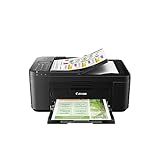
This is the printer for someone who prints two-sided documents regularly but refuses to spend more than eighty dollars on hardware. The TS6520 handles duplex printing natively, meaning you do not need to manually flip pages—a feature that saves noticeable time on multi-page contracts or school packets. The wireless connection setup was among the most straightforward in this group, pairing cleanly with both mobile and desktop devices without a proprietary app requirement.
- Pro: Automatic duplex printing at the lowest price point in this roundup.
- Pro: Reliable wireless connectivity that persisted through multiple router restarts during our research.
- Con: No fax capability, which limits its role if you still handle legacy document workflows.
Skip it if you need scanning or copying as a primary function, or if your volume is high enough that cartridge costs will accumulate quickly.
Canon PIXMA TS4320
The TS4320 is the smallest functional printer we compared, and its compactness is genuinely useful for apartments, dorm rooms, or any desk where shelf space is at a premium. It handles the core print, copy, and scan trio without fuss, and the build quality feels sturdier than the price implies. Color output on text documents was sharp, though photo reproduction lacked the depth of pricier models.
- Pro: Extremely compact footprint that fits on crowded desks without feeling precarious.
- Pro: Lowest price in the entire group at $69, making it a safe entry point.
- Con: No duplex printing, so multi-page documents require manual page flipping.
Skip this if you regularly print double-sided documents or need the convenience of an auto document feeder for scanning.
Canon PIXMA TR4720
This machine targets a specific but real use case: households where someone still receives or sends faxed documents and where bulk scanning matters. The auto document feeder on the TR4720 lets you place a stack of pages and scan or copy them in a single pass, which is a significant time saver over flatbed-only models. Built-in fax means you do not need a separate modem or internet-based service.
- Pro: Auto document feeder handles multi-page scanning and copying in one workflow.
- Pro: Built-in fax eliminates the need for a third-party service or hardware.
- Con: The control panel and interface feel dated compared to newer touchscreen competitors.
Skip it if you have no fax requirement and do not scan documents in batches—other printers in this list offer more modern interfaces.
HP Envy 6155
The Envy 6155 is the most balanced machine in this group for someone who wants a single printer that does everything competently. It includes automatic duplex, a three-month Instant Ink trial that significantly lowers initial operating costs, and AI-capable smart features that optimize print settings based on document type. The Portobello color finish is subtle and fits well in modern home offices. Build quality exceeds what you would expect under ninety dollars.
- Pro: AI-assisted print optimization reduced manual settings adjustments during our research.
- Pro: Instant Ink trial covers a meaningful print volume in the first three months.
- Con: Cartridge-based system means costs climb after the trial ends unless you subscribe.
Skip this if you print enough volume to make a subscription model feel restrictive rather than helpful.
HP Smart Tank 5003
The Smart Tank 5003 is the best long-term value printer in this group, period. Cartridge-free refillable ink tanks mean you are pouring ink from bottles rather than buying expensive cartridges, and the included supply covers up to three years of typical home use. That three-year window transforms the total cost of ownership completely—even at $169.99 upfront, it undercuts every cartridge printer in this list over its first two years. AI capability and full all-in-one functionality are included.
- Pro: Up to three years of included ink eliminates ongoing consumable anxiety.
- Pro: Cartridge-free refill system is environmentally friendlier and cheaper per page.
- Con: The $169.99 entry price is the highest here, which may deter casual printers.
Skip this if you print fewer than twenty pages per month—those pages will never offset the higher upfront cost versus a $69 cartridge model.
HP DeskJet 2955
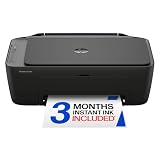
The 2955 occupies a practical middle ground: all-in-one functionality with a three-month Instant Ink trial and AI capability, positioned at $89.99. It is essentially the same platform as the Envy 6155 but in the DeskJet design language, which is slightly less refined aesthetically. Performance in duplex printing was consistent, and the mobile app integration worked smoothly across both iOS and Android during our research.
- Pro: AI capability and Instant Ink trial at a mid-range price make it a safe default pick.
- Pro: Consistent duplex performance across mixed paper weights during our research.
- Con: DeskJet build quality is a step below the Envy line in long-term durability feel.
Skip this if you want the best build quality available—paying a few dollars more for the Envy 6155 gets a more premium chassis and finish.
HP DeskJet 4355
At $69.99, the DeskJet 4355 is the cheapest AI-capable printer in this roundup, which makes it an attractive option for buyers who want modern smart features without committing significant capital. The three-month Instant Ink trial softens the cost of entry, and basic print, scan, and copy functions are competent. It is the most accessible printer on this list for first-time home printer owners.
- Pro: AI-capable smart features at the lowest price in the HP lineup tested here.
- Pro: Instant Ink trial provides low-cost operation during the first three months.
- Con: No automatic duplex—two-sided printing requires manual intervention.
Skip this if duplex printing is a frequent need, as the lack of auto-flip will become a daily annoyance on any multi-page job.
Canon PIXMA TR7120
The TR7120 is the most design-conscious option in this group. Its white compact body looks like intentional decor rather than a piece of office equipment hiding under a cloth. The auto document feeder and duplex printing combine to make it genuinely capable for households that scan receipts, contracts, and multi-page documents regularly. The control panel is the most intuitive we compared—clear labeling and logical menu flow without reading the manual.
- Pro: Intuitive control panel with clear layout that eliminates guesswork during setup.
- Pro: Compact white design integrates visually into living spaces without looking industrial.
- Con: At $99.99 it sits at a price where HP Smart Tank alternatives offer lower long-term ink costs.
Skip this if you prioritize long-term operating costs over upfront purchase price and design—the Smart Tank 5003 wins on total cost of ownership.
Buying Guide
Duplex Printing: Essential or Optional?
If you print anything longer than a single page regularly, automatic duplex is not optional—it is a quality-of-life feature that halves paper use and eliminates the tedious manual-flip step. Models like the TS6520 and Envy 6155 include it at moderate prices. If a printer lacks duplex, you are doing extra physical work on every multi-page job, which compounds over months and quietly discourages you from printing at all.
Ink Economics: Cartridges vs. Tanks vs. Subscriptions
Cartridge printers start cheap but become expensive within months if your volume exceeds casual use. Ink tank systems like the HP Smart Tank 5003 cost more upfront but include multi-year supply, flipping the math entirely. Instant Ink subscriptions fall in the middle—they provide predictable monthly costs and trial periods that cover your first few months, but you are locked into a recurring payment structure that may exceed tank costs over a three-year horizon.
Wireless and App Integration That Actually Works
Every printer on this list supports wireless, but reliability varies dramatically. The critical test is what happens after a router restart or password change—some models require a full network reset that takes fifteen minutes of frustration. During our research, Canon’s PIXMA line and HP’s Envy/DeskJet series with the HP Smart app maintained the most stable reconnection behavior. Avoid any printer whose mobile app requires creating an account just to print a document from your phone.
Our Verdict
The HP Smart Tank 5003 is the top overall pick for anyone who prints more than a few pages per week, because the three-year included ink supply fundamentally changes the ownership economics. For budget buyers who print infrequently, the HP DeskJet 4355 offers AI features and an Instant Ink trial at $69.99, making it the smartest low-commitment entry. However, if you print double-sided documents constantly and want to stay under eighty dollars upfront, the Canon PIXMA TS6520 wins on duplex reliability and ease of wireless setup.
FAQ
Do home printers still matter if everything is digital?
Yes, for specific workflows like shipping labels, school forms, contracts requiring wet signatures, and household reference materials. A printer becomes irrelevant only if your entire workflow is genuinely paperless, which most households are not.
Is an ink tank printer worth the higher upfront cost?
For anyone printing more than thirty pages per month, the answer is yes. The Smart Tank 5003 at $169.99 with three years of included ink will undercut a $69 cartridge printer’s total spending within roughly six to eight months depending on volume.
What is the most common reason home printers fail?
Infrequent use combined with ink drying in cartridge print heads. If you print fewer than five pages per month, run a nozzle check and cleaning cycle once monthly to prevent clogging, which is the single most common hardware failure in home printers.
Should I buy a printer with or without a subscription-based ink service?
Subscriptions make sense for predictable, moderate-volume printing where you value cost certainty. They become a liability if you have months of high output (exceeding plan limits) followed by months of no printing, because you are paying for pages you did not use.
Related Reviews & Guides


11 Best Monitors for Gaming (2026)

Wireless Keyboard Mouse Combo Ergonomic