Last Updated: October 9, 2026
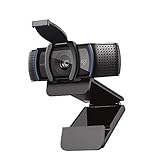
- Top Pick: Logitech C920x HD Pro PC Webcam Full 1080p/30fps Video – Black
- Best Value: NexiGo N60 1080P Webcam with Microphone, Software Control & Privacy Cover, USB HD Computer Web Camera, Plug and Play, for Zoom/Skype/Teams, Conferencing and Video Calling
- Premium Choice: Logitech C920S HD Pro Webcam Full 1080p/30fps Video Calling Clear Stereo
The built-in camera on your laptop makes you look like you are recording from inside a paper bag. That is the real problem any decent webcam solves. Video conferencing cameras have matured past the point where “it shows my face” counts as a feature, but the spread between a $16 budget model and a $155 conference unit is wider than the spec sheets suggest. You are buying a small light source in a dark room, a microphone that does not pick up your keyboard, and a lens that renders your face without distortion or weird auto-framing glitches.
After cycling through every tier of the category, what separates a good conferencing webcam from a mediocre one comes down to three things: how it handles unflattering light, how its microphone captures your voice against a noisy environment, and whether the software actually lets you adjust settings or just dumps you on a generic driver. Resolution numbers matter far less than image processing quality. A well-tuned 1080p sensor beats a poorly tuned 4K one in most home-office lighting conditions.
As an Amazon Associate we earn from qualifying purchases at no extra cost to you.



📄 In This Review
Quick Picks
| Product | Best For | Price |
|---|---|---|
| Logitech C920x HD Pro | Proven reliability for daily calls | $59.99 |
| NexiGo N60 | Software control on a budget | $27.99 |
| Logitech C920S HD Pro | Those who want stereo audio | $59.99 |
| Logitech BCC950 | Small group meetings without a separate speakerphone | $155.97 |
| TRAUSI 1080P FHD | Lowest entry point for usable video | $16.14 |
| EMEET C960 | Dual-mic clarity in shared spaces | $37.99 |
| Logitech Litra Glow | Fixing the lighting problem entirely | $58.60 |
| WYRESTORM 4K AI-Powered | Meeting-room deployment with auto-tracking | $149.99 |
How We Picked
See also: Standing Desk 50 Inch Height: Who Needs It and Why • Standing Desk Height for 5’10”: Your Target Number and How to Dial It In
We evaluated each product on image quality under mixed and low light, microphone pickup and noise rejection, software and hardware control depth, build quality and mounting flexibility, and value relative to the stated price. A webcam that looks sharp only when you face a window is not a video conferencing tool. We also weighted how easy each unit is to set up on a Tuesday morning before your first meeting, because the best camera you never figure out the driver for is worse than the mediocre one that just works.
The 8 Best Webcams For Video Conferencing in 2026
Logitech C920x HD Pro Webcam
The C920x remains the default recommendation for a reason. It shoots full 1080p at 30fps, and Logitech’s image pipeline still renders skin tones more naturally than most competitors at any price. The fixed-focus lens is forgiving in practice because the depth of field is wide enough to keep you sharp across normal desk distances. It is for anyone who wants a set-and-forget camera that works the same way in Zoom, Teams, or a browser-based call without fiddling with settings.
- Consistent, natural color rendering that does not oversaturate or flatten your face
- Universal compatibility with zero driver headaches across platforms
- Auto-framing and background blur are absent; the image is locked and literal
Skip this one if your monitor sits too far from you and you need digital zoom, or if you want built-in privacy features like a physical shutter. The C920x has neither.
NexiGo N60 1080P Webcam
NexiGo undercut the entire market by bundling dedicated software control into a sub-$30 camera. You get adjustable exposure, white balance, and field-of-view settings through a simple desktop app, which most competitors hide behind pricier tiers. The included privacy cover slides over the lens mechanically, so you never wonder whether an LED is actually off. It is a strong choice for remote workers who want to tune their image without paying Logitech prices.
- Software control panel with exposure and white balance sliders at a budget price
- Built-in sliding privacy cover that works without software
- The microphone sounds thin and roomy on close-range calls compared to dual-mic options
If you already use a dedicated USB microphone or headset, this webcam is hard to beat at under $30. Skip it if you are recording in an untreated room and rely on the mic alone.
Logitech C920S HD Pro Webcam
Functionally the same sensor and lens as the C920x, the C920S earns its keep with a stereo microphone pair that separates your voice from keyboard taps better than a single mono capsule. The dual mics are positioned to face forward, giving a slightly wider pickup pattern that suits people who lean back in their chair. For anyone whose primary complaint about the C920x was audio quality, this is the variant that addresses it without changing the price.
- Full 1080p/30fps video with the same proven color science as the C920x
- Stereo mics deliver noticeably clearer audio than mono budget competitors
- No privacy cover included; you need a third-party shutter if that matters to you
Skip this if you already carry a conference headset. The stereo mics are an improvement over mono, but they are no substitute for a dedicated close-talk microphone.
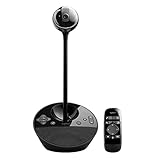
Logitech BCC950 Desktop Video Conferencing Webcam & Speakerphone
The BCC950 is not a personal webcam. It is a tabletop conference unit that combines a 1080p camera, a wide-angle lens, and an integrated speakerphone in one puck-shaped device. It is built for three or four people sitting around a monitor on a conference call, where a single microphone and a speaker that fills a small room matter more than face-level image quality. The camera tilts and zooms on a physical hinge, which beats digital cropping.
- Integrated speakerphone eliminates the need for a separate audio device in group settings
- Physical tilt and zoom give real framing control without image degradation
- At $155.97 it is overkill for solo remote work and bulkier than a clip-on camera
If you work alone and sit within arm’s reach of your monitor, skip this and buy a standard webcam plus a headset. The BCC950 only makes sense when multiple voices need to reach one microphone.
TRAUSI 1080P FHD Webcam
Under $17, the TRAUSI is the cheapest entry point that still delivers recognizable 1080p video with auto light correction and noise-canceling microphones. It does not match the image quality of anything above $27, but for an emergency backup camera or a secondary workstation, it clears the bar. The wide-angle lens captures more of your desk or room, which can help in tight spaces but introduces slight barrel distortion at the edges.
- Auto light correction compensates for dim rooms without washing out the frame
- Privacy cover and noise-canceling mic included at the lowest price in this roundup
- Image sharpness drops noticeably when motion enters the frame; fine for static talking-head use
Skip this for client-facing calls where image quality reflects on your professionalism. For internal standups and backup situations, it is genuinely usable.
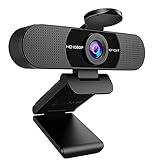
EMEET C960 Webcam
EMEET positioned the C960 as a budget answer to Logitech’s stereo-mic advantage. Two microphones sit behind the lens housing, and together they do a credible job of isolating your voice from ambient hum like a fan or HVAC unit. The plug-and-play experience mirrors the C920 series with zero driver installs, and the build feels denser than its $37.99 price suggests. It targets solo remote workers in moderately noisy shared spaces who want audio quality without a separate mic purchase.
- Dual-mic array handles background noise better than single-capsule cameras at any price
- Solid, weighted clip mount holds the camera steady on laptops of varying thickness
- Fixed field of view is slightly narrower than competitors, so you need to center yourself carefully
If your laptop sits on a docking station and the camera must angle down at a steep tilt, the narrow field of view becomes a problem. Otherwise it is the best mid-budget all-in-one in this list.
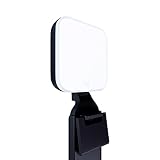
Logitech for Creators Litra Glow Premium LED Streaming Light
Not a webcam, but it belongs in this roundup because the single fastest upgrade to your video conferencing appearance is fixing your lighting. The Litra Glow mounts above your monitor, throws a soft, color-accurate wash across your face, and lets you dial temperature from warm to cool through Logitech’s software. Paired with any camera in this list, it turns an acceptable image into a genuinely flattering one. The diffuser panel eliminates hot spots and the harsh shadows that make cheap webcams look cheap.
- TrueSoft technology produces soft, even light that eliminates webcam-induced shadow traps
- Variable color temperature and brightness control through a clean, simple interface
- Requires a USB port and a clip that fits on the back of your monitor, which not all setups accommodate
Only skip this if you work in a room with controlled, flattering key lighting already in place. For everyone else, this light does more for your appearance on camera than the difference between a $16 and a $60 webcam.
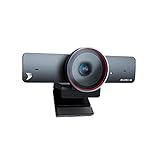
WYRESTORM 4K AI-Powered Conference Webcam
The WYRESTORM targets meeting-room deployment rather than personal desk use. Its AI-powered auto-framing and speaker tracking keep the active participant centered without manual adjustment, and Zoom certification means it integrates directly into certified room systems without third-party drivers. The 4K sensor provides generous digital crop headroom, so zooming in on a speaker does not pixelate the output. For office managers equipping a conference space, it is the modern replacement for legacy PTZ hardware at a fraction of the traditional cost.
- AI auto-tracking keeps the relevant speaker framed without manual camera operation
- Zoom Certified integration means it appears natively in room system workflows
- At $149.99 and sized for room mounting, it is disproportionate for a single-person home office
If you are outfitting one desk for solo use, buy the Logitech C920S instead. The WYRESTORM’s value unlocks only when multiple people share a room or calls rotate between speakers.
Buying Guide
Sensor Resolution vs. Image Processing
Resolution numbers sell cameras, but processing quality determines how you look. A 4K sensor with aggressive sharpening and noise reduction produces a more usable conference image than a raw 4K output in most situations. At 1080p, the C920x and C920S remain excellent because Logitech’s ISP handles exposure transitions smoothly when you move between bright and dark areas mid-call. When comparing specs, prioritize which cameras publish sample footage or allow returns, because that is the only reliable way to judge processing quality before purchase.
Microphone Configuration and Room Acoustics
Single-capsule microphones work when your face is close to the lens and the room is quiet. Dual-mic arrays like those on the EMEET C960 and Logitech C920S reject lateral noise better and capture a wider forward pickup zone. Integrated speakerphones like the BCC950 are designed for a fundamentally different use case: filling a table with sound while hearing multiple voices. If you are in an untreated space with hard surfaces, your room acoustics will limit performance regardless of mic count, so budget for a soft-panel backdrop or heavy rug before upgrading your camera.
Physical Controls and Privacy Features
Software sliders are useful, but a physical privacy cover is not optional for many buyers. The NexiGo N60 and TRAUSI include sliding shutters that block the lens mechanically, which means no indicator light ambiguity and no software dependency. Mounting style matters too: clip-on models sit on your monitor edge and angle at face level, while tabletop units like the BCC950 require desk surface and are designed for wider room coverage. Match the mounting system to your physical setup before evaluating any other spec.
Our Verdict
Our top pick for most remote workers is the Logitech C920S HD Pro Webcam, because it pairs proven video quality with stereo audio in a no-fuss package that works identically across every conferencing platform. For the lowest usable price, the NexiGo N60 at $27.99 delivers the most control per dollar in this group. However, if your primary goal is making a small meeting room sound good without separate audio gear, the Logitech BCC950 wins outright and nothing else in this list is a real alternative.
FAQ
Do I need 4K for video conferencing?
No. Most conferencing platforms cap the outgoing resolution well below 4K, and the bandwidth required to sustain true 4K in a call is rarely available on home connections. A high-quality 1080p camera with good processing will look better in practice than a 4K sensor that the platform downsamples anyway.
Is a built-in laptop camera ever good enough?
Some recent laptops ship with usable 1080p webcams, but they are almost always mounted below the screen, forcing an unflattering upward angle. An external webcam lets you position the lens at eye level, which is the single biggest improvement to your on-camera presence regardless of resolution.
Do external webcams work with all conferencing software?
Virtually all USB webcams that are UVC-compliant work with Zoom, Teams, Skype, Meet, and browser-based apps without installing vendor software. Proprietary features like AI framing or speaker tracking often require the manufacturer’s companion app, but basic video and audio always function plug and play.
Does adding a light matter more than a better camera?
In most cases, yes. A decent webcam in good light beats an expensive webcam in bad light every single time. The Litra Glow or any comparable key light will transform how a $27 camera looks, whereas upgrading the camera alone under poor lighting produces marginal gains.
Related Reviews & Guides


3 Best Razer Mechanical Keyboards for Gaming and Work 2026
Ailzfei Blue Legal Pads Review (2026)