Last Updated: September 18, 2026
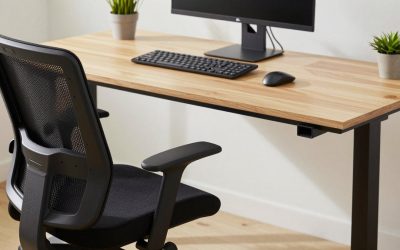
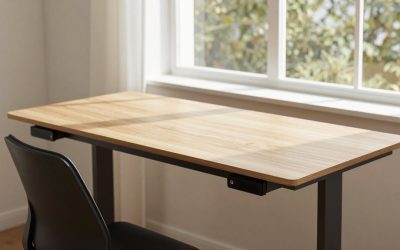
If you are wondering, “what size standing desk do I need,” start with your equipment, not the room’s empty floor area. For most home offices, a desk between 48 and 55 inches wide and 24 to 30 inches deep provides the best balance of workspace and flexibility. A smaller 40- to 48-inch desk can work for a laptop setup, while a 60-inch or wider desk is better for multiple monitors, speakers, paperwork, or gaming gear.
Desk size also affects stability, cable management, and whether you can position your monitor at a comfortable distance. The right choice should leave enough room for your chair, allow the desktop to rise without hitting shelves or windows, and support your equipment without crowding.
As an Amazon Associate we earn from qualifying purchases at no extra cost to you.


📄 In This Review
The Short Answer
Choose a standing desk based on these typical setups:
- Laptop only: 40 to 48 inches wide by 20 to 24 inches deep.
- One monitor and a laptop: 48 to 55 inches wide by 24 to 30 inches deep.
- Two monitors: 55 to 60 inches wide by 24 to 30 inches deep.
- Gaming, creative work, or dual computers: 60 to 72 inches wide by 30 inches deep.
- Small room or shared space: 40 to 48 inches wide by 20 to 24 inches deep.
A 24-inch desk depth is the practical minimum for most monitor users. It gives you some room to place a keyboard in front of the monitor while keeping the screen roughly 20 to 30 inches from your eyes. Choose 30 inches deep if you use a large monitor, a monitor arm, studio speakers, or frequently spread out documents.
Standard Sizes
See also: Best Standing Desks for Students: Picks for Dorms, Small Rooms and Yearly Moves • Fellowes Lotus Sit Stand Workstation: Features and Honest Review
Standing desks are commonly sold by desktop width and depth. The measurements below show useful size categories and their approximate metric equivalents. Actual products may vary by a fraction of an inch.
| Desk category | Dimensions in inches | Approximate dimensions in centimeters | Best for |
|---|---|---|---|
| Compact | 40 × 20 inches | 102 × 51 cm | Laptop, writing, or occasional use |
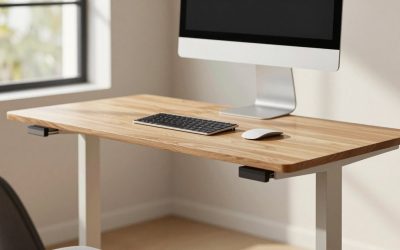
| Small standard | 48 × 24 inches | 122 × 61 cm | One monitor, laptop, and basic accessories |
| Medium standard | 55 × 24 inches | 140 × 61 cm | Two monitors or a larger home-office setup |
| Large | 60 × 30 inches | 152 × 76 cm | Dual monitors, paperwork, or gaming equipment |
| Extra large | 72 × 30 inches | 183 × 76 cm | Multiple screens, creative work, or shared workstations |
The 48 × 24-inch format is particularly common because it fits many bedrooms, apartments, and home offices without feeling undersized. Examples in this category include the FEZIBO 48 × 24-inch desk, listed around $112.99, and the ErGear 48 × 24-inch model, listed around $99.99. A 47 × 24-inch Huuger desk, listed around $94.98, offers nearly the same usable surface in a slightly narrower footprint.
If you want more lateral room, a 55-inch desk such as the Veken model provides space for a wider monitor arrangement and accessories. That model is listed around $109.99. Prices change, but these examples show that a basic electric standing desk commonly falls in the approximate $95 to $115 range.
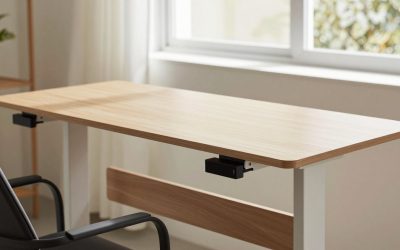
Remember that desktop dimensions do not describe the entire footprint. The legs, feet, cable tray, and control box may extend beyond the top. Check the product drawing for the frame’s minimum and maximum width before buying.
How to Measure Your Space
- Measure the available wall width. Use a tape measure at the floor and at desktop height. Base your purchase on the narrower measurement, especially if there are baseboards, trim, radiators, or window ledges.
- Mark the desk footprint. Use painter’s tape to outline the proposed width and depth on the floor. This makes a 48-inch desk feel very different from a 60-inch model before you order it.
- Allow room for the chair. Leave approximately 36 inches behind the desk for a chair to move comfortably. A compact setup may function with about 30 inches, but it will feel tight.
- Check the standing clearance. Leave enough open floor space behind you to step away from the desk. If the desk is against a wall, make sure the desktop, monitor, and arms will not strike shelves or wall-mounted objects.
- Measure upward. Measure from the floor to the bottom of windows, shelves, cabinets, and artwork. A raised monitor or lamp can need several additional inches above the desktop.
- Locate the outlet. Most electric desks need a nearby grounded outlet. Do not rely on an extension cord stretched across a walkway. Measure the distance from the outlet to the desk’s control box and consider where the power cable will move as the desk rises.
- Account for moving parts. Check whether the frame, feet, or cable tray changes position as the desk adjusts. Keep cords loose enough to accommodate the full height range without pulling on a monitor or computer.
For an ergonomic setup, the desk should adjust so your elbows are close to a 90-degree angle while your shoulders remain relaxed. A desk that is the right width but cannot reach a comfortable seated or standing height is not the right size for you.
By Room or Use Case
Small bedroom or apartment
Choose a 40 × 20-inch or 48 × 24-inch desk. A 48-inch width usually gives you substantially more usable space without overwhelming a small room. Keep the depth at 24 inches or less if the desk shares a walkway. A compact desk is best for a laptop or one monitor; use a monitor arm to free space on the desktop.
Home office
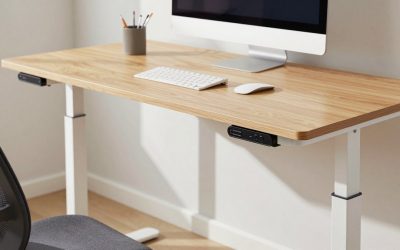
A 48 × 24-inch desk is adequate for many remote-work setups. Move up to 55 × 24 inches if you use two screens, a dock, notebook, and desk lamp. If you print documents or keep reference materials nearby, a 60 × 30-inch top will be more comfortable and less cluttered.
Gaming setup
For one monitor and a keyboard, 48 × 24 inches can work. A 55- to 60-inch desk is preferable for a larger monitor, speakers, microphone, controller, and desktop computer. Choose 30 inches of depth if you use a deep monitor stand or want a greater viewing distance. Confirm the desk’s stated weight capacity before placing a heavy PC tower on the desktop.
Dual-monitor or creative work
Start with 55 × 24 inches, then consider 60 × 30 inches for the most flexible arrangement. Designers, photographers, and writers often need space for a tablet, notebook, reference papers, or external drives. A wider top also lets you position two monitors symmetrically without pushing either screen too close to the edge.
Shared workstation
If two people will use the desk at different times, prioritize height range and preset controls over extra width. A 48- to 60-inch desk can serve multiple users, but check the minimum and maximum height against each person’s elbow position. Three programmable presets can make handoffs quicker, provided the model includes them.
Common Sizing Mistakes
- Buying by width alone: A 60-inch desk that is only 20 inches deep may offer less practical workspace than a 48 × 24-inch model.
- Ignoring monitor depth: Large stands and monitor arms need space behind or beneath the screen. Measure the stand’s footprint, not just the screen size.
- Forgetting the chair zone: A desk may fit against the wall but leave no room to sit, stand, or roll backward.
- Overlooking the frame: A desktop may fit between two walls while the legs or feet do not. Check the complete assembled dimensions.
- Overloading a small top: Avoid stacking a desktop computer, multiple monitors, speakers, and accessories on a compact surface without checking the manufacturer’s weight rating.
- Assuming every outlet is high-wattage: If a desk includes outlets or USB-C ports, verify the listed amperage and wattage before connecting a computer, heater, or other high-draw device. Built-in USB ports are generally intended for charging small electronics, not powering large appliances.
FAQ
Is a 48-inch standing desk big enough?
Yes, for a laptop, one monitor, or a compact work setup. A 48 × 24-inch desk is large enough for a keyboard, mouse, monitor, and notebook if you keep accessories organized. Choose 55 inches or more for two monitors or frequent paperwork.
Is 24 inches deep enough for a standing desk?
For most users, yes. A 24-inch depth works well with a laptop or standard monitor and helps preserve walking space in a small room. Choose 30 inches if you use a large display, deep stand, monitor arm, speakers, or documents.
What size standing desk is best for two monitors?
A 55 × 24-inch desk is a practical starting point. Choose 60 × 30 inches if the monitors are large, you use two separate stands, or you need room for speakers and paperwork. Monitor arms can make a smaller desktop more usable.
How much space should be behind a standing desk?
Allow about 36 inches behind the desk for comfortable chair movement and access. Around 30 inches may work in a tight room, but it leaves less room to sit, stand, and move safely. Also check overhead clearance so raised equipment does not hit shelves, windows, or cabinets.
Ready to decide? Our #1 pick for 2026 is the Compact.
Live price & availability on Amazon.
Related Reviews & Guides


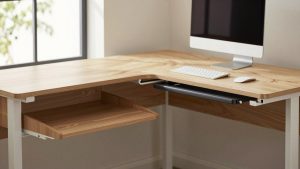
L-Shaped Adjustable Desks With Storage: Corner Fit, Drawers, and Weight Limits

Quick Picks: Best Standing Desk Converters at a Glance