Last Updated: September 29, 2026
Comparing standing desks is harder than it looks because the spec sheets use the same vocabulary for very different products. Two desks may both claim dual motors and a 25 inch height range, yet one feels planted at standing height and the other shimmers every time you type. This guide explains how to compare standing desks fairly, which specifications predict real-world experience, and how to weigh them against your own body and setup.
📄 In This Review
Quick answer: Our top pick in 2026 is the Height range — our #1 rated choice. See the full ranked comparison, alternatives and buying advice below.
The comparison framework
Every standing desk comparison should cover six areas: height range, stability, lift system, capacity, top, and warranty and support. Price only makes sense once those are aligned. A cheap desk that does not fit your height is not a bargain; an expensive desk whose extra cost buys only looks may not be worth it for you.
Six factors and what to look for
See also: Best Roku Streaming Deals Reviewed • Olipop Flavors Ranked: Best Tastes from Worst to Best
| Factor | Budget tier | Mid tier | Premium tier | What to compare |
|---|---|---|---|---|
| Height range | About 28 to 47 in | About 25 to 50 in | About 23 to 50 in or more | Your seated and standing elbow heights |
| Stability | Noticeable sway at full height | Moderate sway | Minimal sway, stiffer columns | Column size, crossbar, feet length |
| Lift system | Single motor | Dual motor | Dual motor, heavier gearboxes | Speed, noise, smoothness |
| Capacity | About 100 to 175 lb | About 250 to 355 lb | 350 lb and up | Your real load with headroom |
| Top | Thin particle board | 1 in laminate, bamboo options | Hardwood, premium finishes | Thickness, one-piece, finish |
| Warranty | 1 to 5 years | 5 to 15 years | 10 years and up | Split between frame, motors, electronics |
How to compare each factor
Height range
Measure your seated elbow height (from the floor, sitting in your chair with feet flat) and standing elbow height in your usual shoes. The desk’s minimum plus top thickness must be at or below your seated elbow height minus about an inch, and its maximum plus top must reach your standing elbow height minus an inch. Compare desks only after confirming both.
Stability
Spec sheets rarely quantify wobble. Proxies include leg configuration (three-stage legs have more joints but often larger bottom sections), column cross-section, foot length, crossbar presence and frame weight. Heavier frames of 70 lb or more tend to feel steadier than light frames of 40 to 50 lb.
Lift system
Dual motors lift more evenly and handle uneven loads better. Speed of about 1.3 to 1.5 inches per second makes transitions quick; noise below about 50 dB keeps them unobtrusive.
Capacity
Add up monitors, arms, computer, speakers and the top itself if the rating includes it. Aim for your total to be two-thirds or less of the rated capacity.
Top
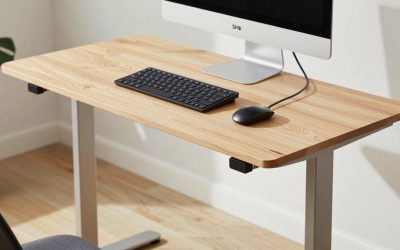
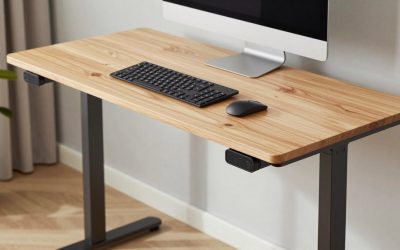
A 1 inch thick, one-piece top resists flex and holds clamps securely. Depth of 30 inches suits most dual-monitor setups; go deeper for ultrawides.
Warranty and support
Long frame warranties are common; motor and electronics coverage is what really matters for long-term cost. Check parts availability and response times.
Common comparison mistakes
- Comparing frame-only height ranges without adding top thickness.
- Assuming dual motors guarantee stability; column design matters as much.
- Ignoring the minimum height if you are shorter than average.
- Choosing an oversized top that increases sway.
- Comparing list prices instead of typical sale prices.
Turning a comparison into a decision
Start by eliminating desks whose height range does not fit you. Then filter by capacity against your gear. Among the remaining options, weigh stability and warranty most heavily, since they drive daily satisfaction and long-term cost. Only then consider tops, colours and accessories. Our individual head-to-head comparisons apply this framework to specific models so you can see how it works in practice.
FAQ
What is the most important standing desk specification?
Height range relative to your body. A desk that cannot reach your correct seated and standing heights will never be comfortable, whatever its other features.
Are more expensive standing desks always more stable?
Usually, but not always. Price also buys design, materials and brand support. Compare column design, frame weight and crossbars rather than price alone.
Bottom line
Fair standing desk comparisons start with your measurements, then look at stability, lift system, capacity, top and warranty before price. Use this six-factor framework to cut through identical-sounding marketing and choose the desk that fits your body and setup rather than the one with the longest feature list.
Ready to decide? Our #1 pick for 2026 is the Height range.
Live price & availability on Amazon.
Related Reviews & Guides


Best home office gadgets 2026
Best Ergonomic Office Chair Under 200 Dollars