Last Updated: September 18, 2026
📄 In This Review
Quick answer: Our top pick in 2026 is the Hook-and-loop cable ties — our #1 rated choice. See the full ranked comparison, alternatives and buying advice below.
The Short Answer
Yes—a desk cable tray is worth it if you have several loose cables or a power strip sitting on the floor and your desk can accept the tray’s mounting method. For roughly $14 to $30, a tray can make a home office look cleaner, keep cords off the floor, and make it easier to unplug or replace equipment. It is not a universal fix, though: a tray will not hide every cable, eliminate desk clutter, or solve an outlet that is too far away.
What You Actually Get
See also: Best Gaming Desk Pads for Full Desk Coverage • Best Desk Organizers Under $30: Match the Organizer to Your Clutter
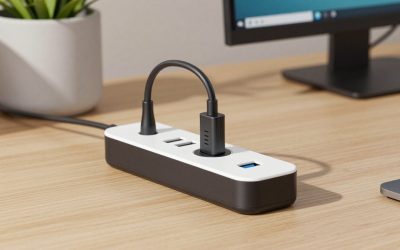
A desk cable tray is a shallow basket, channel, or shelf that attaches beneath your desktop. It holds items such as a power strip, laptop charger bricks, monitor cables, USB hubs, and extra cord length. Most models are made from metal mesh or formed steel, although plastic versions are also available.
As an Amazon Associate we earn from qualifying purchases at no extra cost to you.


The main choice is between a screw-mounted tray and a no-drill clamp-mounted tray. Screw-mounted models generally sit more securely, but they require access to the underside of the desk and several holes in the desktop. Clamp-mounted models attach to the front or side edge, making them more suitable for renters, standing desks, and desktops you do not want to drill. The trade-off is that the clamps need adequate edge clearance and may be visible.
Two representative options show the usual price range. A no-drill metal mesh tray with clamp mounting, two cable-management holes, and a cord organizer costs about $13.99. A longer Mzmaxy cable-management tray measuring 25 inches costs about $23.99. The second option may be more useful if you need to support a longer power strip or spread cables across a wider desk, but length alone does not guarantee better organization.
Before buying, measure three things: the usable space beneath the desk, the thickness of the desktop edge, and the length of your power strip. Also check where the desk’s frame, drawers, crossbars, and height-adjustment components are located. A tray that fits the desk on paper can still interfere with a drawer or collide with a standing desk’s moving parts.
Think of the tray as a storage shelf for cables, not a complete cable-routing system. You will still need adhesive clips, hook-and-loop ties, or cable sleeves to guide cords from the tray to your monitor, computer, and accessories. Leave enough slack for a standing desk to move through its full height range without pulling on plugs.
Pros
- It removes a common source of visual clutter. A power strip and several charging bricks can turn an otherwise tidy desk into a tangle. Moving those items beneath the desktop creates a cleaner work surface without replacing your furniture.
- It keeps cables off the floor. Cords are less likely to collect dust, catch on a footrest, become tangled with a vacuum, or get pulled when someone walks past the desk.
- It is inexpensive compared with furniture upgrades. At about $14 to $30 for many basic trays, the purchase costs far less than a new desk with built-in cable management.
- It improves access to the power strip. A tray can keep the strip within reach beneath the front edge of the desk instead of hiding it behind a cabinet. That makes it easier to disconnect a monitor, lamp, or charger.
- It works well with a standing desk. A properly secured tray can move with the desktop, preventing cords from dragging across the floor as the desk rises. The key is routing and slack, not simply installing the tray.
- It protects charging bricks from accidental kicks. Laptop and monitor adapters are less exposed when they are held beneath the desk rather than placed beside a chair or on the floor.
- No-drill models are renter-friendly. Clamp mounting allows installation and removal without leaving screw holes. It can also be helpful when you are testing a desk setup before committing to a permanent arrangement.
Cons
- It does not hide the cables that travel to your devices. You may still see wires descending from the tray to a monitor, keyboard, lamp, speakers, or desktop computer. Clips and sleeves are usually necessary for a polished result.
- Mounting can be awkward. A screw-mounted tray requires working underneath the desk. A clamp-mounted model needs enough edge space, and its clamps may conflict with a desk’s rear lip, drawer, or frame.
- Some trays reduce legroom. A tray mounted too far forward can contact your knees, especially on a shallow desk. Check the tray’s depth and the position of your chair before tightening it.
- Not every power strip fits comfortably. Measure the strip, its plugs, and the bend radius of its cords. A crowded tray makes cables harder to identify and can defeat the purpose of the purchase.
- Weight distribution matters. A tray holding one power strip and a few adapters is a modest load. Several heavy transformers, a UPS, or a large desktop power supply may exceed what a clamp or thin desktop can handle. Do not treat a basic cable tray as a shelf for unrelated equipment.
- It can complicate standing-desk movement. Cables must have enough length to accommodate the desk’s entire travel range. A tray does not prevent a monitor cable from being stretched, bent sharply, or pulled from an outlet.
- It adds one more thing to clean. Dust and pet hair can settle in mesh trays. A solid tray is easier to wipe, while a mesh tray may offer better ventilation around adapters.
Who Should Buy It
Buy a desk cable tray if your power strip is on the floor, your charging bricks are scattered around your feet, or you regularly unplug equipment from an awkward location. It is particularly useful for desks with a monitor, laptop dock, speakers, task lamp, and several USB-powered devices. A tray also makes sense for a shared workstation where cables need to be contained but remain accessible.
Choose a no-drill clamp model if you rent, frequently rearrange your office, or own a standing desk that you do not want to drill. Choose a longer tray—such as a 25-inch model—when your power strip and adapters need to spread out rather than stack in one small area. Before ordering, verify the desktop thickness range supported by the clamps and make sure the tray will not block drawers or moving hardware.
Who Should Skip It
Skip a tray if you have only one or two cables and they are already controlled by a couple of adhesive clips. In that situation, a $14 to $24 purchase may add more hardware than value. You may also want to skip it if your desk has a very shallow underside, a thick decorative apron, a fragile glass top, or no clear edge for a clamp.
A tray is also a poor choice if your main problem is too little power access. It cannot create an outlet, safely increase a circuit’s capacity, or replace a surge protector when one is needed. Avoid putting a UPS, space heater, or other high-power appliance in a lightweight cable tray unless the manufacturer specifically rates it for that use. Cable management should never involve overloading an outlet or power strip.
Cheaper Alternatives
| Option | Cost | Trade-off |
|---|---|---|
| Hook-and-loop cable ties | $5–$12 | Excellent for bundling excess cord, but they do not lift a power strip off the floor or create a storage shelf. |
| Adhesive cable clips | $6–$15 | Good for routing one cable at a time along the desk, but adhesive may fail on dusty, textured, or unfinished surfaces. |
| Under-desk cable box | $15–$30 | Hides a power strip more completely, but takes up more space and usually provides less convenient access to individual plugs. |
| DIY wire basket | $8–$20 | Can provide similar storage for less money, but may require drilling, zip ties, or modifications and may not have smooth cable-routing edges. |
| Power strip mounted with removable strips | $8–$20 | Saves space and is simple to install, but the mounting strips may not hold well under a heavy strip or on a dusty desktop. |
FAQ
Does a cable tray make a desk look completely cable-free?
No. It hides or gathers the cables beneath the desktop, but cords still need to travel to the monitor, laptop, speakers, and wall outlet. For the cleanest result, pair the tray with hook-and-loop ties and adhesive clips. Route cables vertically where possible and avoid tightly bending power cords at the tray’s edge.
Is a clamp-on cable tray better than a screw-in tray?
Neither is automatically better. A clamp-on tray is easier to remove and does not require drilling, while a screw-in tray is usually more permanent and avoids visible clamps. For a standing desk, inspect the frame and moving parts before choosing either style. The best option is the one that fits securely without interfering with drawers, legs, or height adjustment.
Can I put a power strip in a desk cable tray?
Usually, yes, provided the tray is large enough and the power strip is not overloaded. Check the tray’s dimensions, place the strip where its switch and outlets remain reachable, and keep adapters from pressing against sharp edges. Do not use the tray as a reason to connect too many high-wattage appliances to one circuit.
Is a $14 cable tray worth buying in 2026?
For many home offices, yes. A $13.99 no-drill tray can solve the basic problem of loose cords and a floor-level power strip at a relatively low cost. Spend more—around $24 to $30—when you need a longer tray, more room for adapters, or a sturdier construction. If your setup only has a single laptop charger, adhesive clips and cable ties will probably deliver better value.
Ready to decide? Our #1 pick for 2026 is the Hook-and-loop cable ties.
Live price & availability on Amazon.
Related Reviews & Guides





6 Best Office Treadmills Under Desk 2026
6 Best Converting Standing Desks 2026