Last Updated: September 18, 2026
📄 In This Review
Quick answer: Our top pick in 2026 is the Repurposed shoebox or shipping box — our #1 rated choice. See the full ranked comparison, alternatives and buying advice below.
The Short Answer
Yes—if your daily clutter comes from loose papers, pens, mail, and small office supplies you use regularly. A desk organizer is worthwhile when it gives each item a specific home and fits your available surface. If your real problem is too much stuff, not poor storage, an organizer can simply turn clutter into a more neatly arranged pile.
What You Actually Get
See also: Best Gaming Desk Pads for Full Desk Coverage • Best Desk Organizers Under $30: Match the Organizer to Your Clutter
A desk organizer is a small storage system designed to keep frequently used items within reach. Depending on the style, it may include vertical file slots, letter trays, pen cups, drawers, compartments for clips and sticky notes, or a combination of these features. The most useful models make use of vertical space, leaving more of your desktop available for a keyboard, notebook, lamp, or monitor stand.
As an Amazon Associate we earn from qualifying purchases at no extra cost to you.

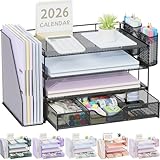
There are three common formats. A paper organizer holds incoming mail, documents, folders, and forms. A stationery caddy stores pens, pencils, scissors, tape, highlighters, and similar tools. A combination unit does both, often adding a shallow drawer for small items. Combination organizers are usually the best value for a home office because they address more than one type of clutter without requiring several separate containers.
For example, the WALI four-tier desktop paper organizer includes four letter trays, a drawer, and two pen holders. Its listed price is $16.99, putting it in the budget range for a multi-function unit. The gianotter metal mesh organizer with a file holder is listed at $17.99 and takes a more open, industrial approach. These products illustrate the main choice buyers face: enclosed or tiered storage for papers versus visible mesh compartments for quick access.
What you do not get is a filing cabinet, archival storage, or a solution for large stacks of paperwork. Desktop organizers are intended for active documents and everyday tools. Their capacity is limited by the footprint of your desk and the strength of the frame. If you need to store dozens of folders or long-term records, a drawer unit or cabinet is more appropriate.
Pros
- They reduce visible clutter quickly. Moving loose pens, receipts, mail, and notes into defined compartments can make a desk look more orderly in a few minutes.
- They improve access to daily supplies. A pen cup or open mesh compartment lets you grab a writing tool without opening a drawer or searching through a box.
- They use vertical space. Tiered trays and upright file holders can store papers above the desktop rather than spreading them across it.
- They create a simple sorting system. You can label trays “in,” “to file,” and “out,” or reserve separate sections for bills, work papers, and personal mail.
- They are relatively inexpensive. Many basic desktop organizers cost about $10 to $30. The two combination products mentioned here fall below $20, which is a modest cost compared with a larger storage unit.
- They work in small spaces. A desktop model can help in a bedroom office, dorm room, kitchen command center, or shared workspace where floor storage is not practical.
- They can support better habits. When returning an item takes one second, you are more likely to put it away. The organizer cannot create discipline, but it can remove friction.
- They offer style choices. Wire mesh, plastic, bamboo, acrylic, and painted metal can fit different rooms. A coordinated organizer can look intentional rather than purely utilitarian.
Cons
- They occupy valuable desk space. A large organizer can consume the area it was meant to improve. Check the product’s width, depth, and height against your desk before buying.
- They can become clutter containers. An empty-looking tray may encourage you to keep papers you no longer need. Without a weekly reset, the organizer may only make disorganization more structured.
- Capacity is limited. A few trays can hold active documents, but they are not suitable for a large backlog. Overfilled compartments become difficult to browse and may sag or tip.
- Open designs collect dust. Mesh and exposed trays are convenient, but they show dust and allow small items to spread into neighboring sections. Enclosed drawers are tidier but slower to access.
- Cheap construction can feel light. Budget organizers may shift when you pull out a tray or remove a heavy stack of paper. Stability matters more than appearance, especially on a narrow desk.
- They may not fit every paper size. Letter-size storage is useful for standard American office documents, but larger envelopes, notebooks, folders, and legal-size pages may not fit comfortably.
- They can add visual noise. Several compartments filled with brightly colored supplies may make a small workspace look busier, not calmer.
- They are not always portable. A loaded multi-tier organizer can be awkward to move when cleaning or rearranging the room. A few small bins may be more flexible.
Who Should Buy It
Buy a desk organizer if you regularly use paper documents and small supplies at the same workstation. It is especially useful for remote workers, students, bill-paying stations, teachers, and anyone who keeps mail or forms temporarily on the desk. A multi-level unit makes sense when your desktop is shallow but you have some vertical clearance.
It is also a good purchase if you can name the categories you need. For example, a four-tier unit might hold incoming mail, documents requiring action, papers to file, and outgoing items. A drawer can contain binder clips, erasers, USB drives, and stamps, while the pen holders handle everyday writing tools. This kind of assignment prevents every compartment from becoming a miscellaneous bin.
Choose a mesh style if you prefer visibility and quick access. Choose a tiered tray-and-drawer style if papers are your main problem and you want a more defined sorting system. Before ordering, measure the intended space and leave room to remove papers from the front or side. Price-wise, a realistic budget is about $15 to $25 for a basic organizer and $25 to $50 for larger, heavier, or more decorative models.
Who Should Skip It
Skip a desk organizer if your desk is already too small to spare even a modest footprint. In that case, an under-desk drawer, wall-mounted file holder, or digital document system may solve the problem more effectively.
You should also skip it if you rarely use physical supplies. If most of your work happens on a laptop and your only desk items are a charger, notebook, and one pen, a single drawer or small cup is probably enough. Buying a large organizer for occasional clutter can create an unnecessary object to maintain.
Finally, do not buy one as a substitute for decluttering. If you have old receipts, duplicate supplies, expired forms, and papers you have been meaning to review, sort those first. Storage works best for items you have decided to keep—not for decisions you are avoiding.
Cheaper Alternatives
| Option | Cost | Trade-off |
|---|---|---|
| Repurposed shoebox or shipping box | $0 to $5 | Very cheap and customizable, but less durable and less attractive; paper can be difficult to access. |
| Three small plastic bins | $3 to $12 total | Good for separating supplies, but usually no vertical paper storage and little visual consistency. |
| Wall-mounted file pocket | $8 to $20 | Frees desk space, but requires wall mounting and may be inconvenient if you need papers directly beside you. |
| One pen cup plus a document tray | $8 to $18 total | Provides the essentials at a low price, but offers less sorting than a multi-tier organizer. |
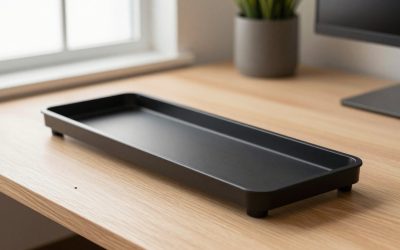
| Repurposed kitchen utensil tray | $5 to $15 | Excellent for shallow drawers and small supplies, but not useful for upright files or visible paper categories. |
FAQ
Are desk organizers really worth the money?
They are worth it when they solve a specific storage problem you encounter every day. Spending $15 to $25 on a unit that keeps active papers and supplies accessible is reasonable. They are not worth it if you buy one without measuring, lack a clear sorting plan, or expect it to manage more paperwork than it can hold.
What should go in a desk organizer?
Keep frequently used items there: pens, pencils, scissors, sticky notes, clips, stamps, mail, bills, current projects, and documents awaiting action. Avoid filling it with archived records, rarely used craft supplies, or random objects that do not belong to a defined category.
Is mesh or plastic better?
Neither is universally better. Mesh is breathable, visible, and often has a lightweight office look. Plastic is easier to wipe clean and may provide smoother drawers or more enclosed storage. For paper-heavy use, focus on tray depth, stability, and the ability to remove documents easily rather than choosing by material alone.
How often should I clean out a desk organizer?
Do a quick reset once a week and a more thorough sort once a month. Remove completed paperwork, recycle duplicates, return supplies to their proper places, and limit each paper section to active documents. If a tray is consistently overflowing, the problem is either too much paper or an organizer that is too small for your workflow.
Ready to decide? Our #1 pick for 2026 is the Repurposed shoebox or shipping box.
Live price & availability on Amazon.
Related Reviews & Guides



6 Best Coolest Standing Desks 2026

6 Best Ergonomic Standing Desk Converters 2026