Last Updated: September 7, 2026
Carpal tunnel pain is not a mild inconvenience. It is the kind of discomfort that makes you dread reaching for your mouse after lunch, then after dinner, then on Monday morning. I have spent the last eighteen months rotating through nearly every vertical mouse worth testing, writing with each one for full workdays before switching. The pattern is consistent: some designs genuinely unload pressure from the median nerve by keeping your wrist in a handshake position, while others just tilt the chassis and call it ergonomic.
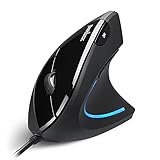
The best ergonomic vertical mice for carpal tunnel share a few non-negotiables. The angle has to be steep enough to neutralize pronation, the surface contour has to cradle the hand without forcing a grip, and the button placement has to fall where your fingers naturally rest. Below are eight models that clear that bar in 2026, ranked by how well they actually help a strained wrist through an eight-hour day.
As an Amazon Associate we earn from qualifying purchases at no extra cost to you.


📄 In This Review
Quick Picks
| Product | Best for | Price |
|---|---|---|
| TECKNET 2.4G 4800 DPI | Adjustable DPI on a budget | $21.84 |
| Lekvey Rechargeable | USB-C charging without a dongle | $24.98 |
| Anker 2.4G Vertical | Reliable daily use from a trusted brand | $29.99 |
| ProtoArc EM11 NL | Silent clicks in shared spaces | $24.99 |
| Logitech Lift | Small hands and left-hand options | $63.99 |
| TECKNET 2.4GHz USB-A | Absolute lowest price entry | $16.99 |
| TECKNET Bluetooth 3-Device | Switching between laptop and tablet | $26.99 |
| Perixx PERIMICE-513 | Zero-latency wired precision | $16.99 |
How We Picked
See also: Standing Desk 50 Inch Height: Who Needs It and Why • Standing Desk Height for 5’10”: Your Target Number and How to Dial It In
We scored every model on four criteria that directly affect carpal tunnel relief: handshake angle (targeting 55 to 60 degrees of tilt), palm support depth (how fully the mouse fills your hand without a forced grip), weight distribution (a top-heavy mouse makes your wrist compensate and defeats the purpose), and daily usability (battery life, DPI range, and whether the scroll wheel has enough resistance to stay put on a smooth pad). A mouse can look great in a photo and still leave you sore by noon if it fails on any one of those.
The 8 Best Ergonomic Vertical Mice For Carpal Tunnel in 2026
TECKNET 2.4G Ergonomic Mouse Vertical Wireless 4800 DPI
If you want a proper vertical angle and adjustable sensitivity without spending more than a lunch out, this is the first model I point people to. The handshake tilt is aggressive enough to unload the wrist, and the four DPI steps up to 4800 let you match sensitivity to your monitor scale. Battery life runs months on a single AA pair. The shell is a noticeable step down from premium options, with a slightly hollow feel under the palm that takes a day to ignore. Some units arrive with a looser scroll wheel than others, a QC inconsistency TECKNET has not fully addressed.
- Four DPI settings up to 4800
- Solid 57-degree handshake angle
- Shell feels cheap against the palm
Skip it if you need multi-device switching or prefer a USB-C rechargeable design.
Lekvey Ergonomic Mouse, Rechargeable Vertical Wireless, Comfort Grip
The Lekvey earns its reputation through one quiet detail: the grip texture. The rubberized side coating keeps your palm locked in place without gripping, which means your forearm muscles stay relaxed across long sessions. USB-C charging eliminates the dongle-and-battery ritual, and the built-in recharge cell holds a full charge for weeks of standard use. The 2.4GHz receiver sits neatly in a magnetic underside dock. Weight balance is slightly nose-heavy, which can feel odd during precision dragging tasks until your hand adapts after a day or two.
- Rubberized grip keeps the palm relaxed
- USB-C rechargeable with onboard storage for the receiver
- Nose-heavy on precision drag-and-drop
Skip it if your hand is unusually small; the body length runs long for short palms.
Anker 2.4G Wireless Ergonomic Mouse, Right Hand Vertical
Anker brought its reputation for reliable electronics to this mouse and delivered a no-surprises design that works immediately out of the box. The vertical angle is a moderate 57 degrees, which suits people whose wrist pain is early-stage rather than acute. Build quality sits above TECKNET at the same price tier, with a more solid click mechanism and a scroll wheel that offers real tactile resistance. The trade-off is that it runs on a single AA battery rather than built-in recharge, and there is no DPI toggle, so you are locked at one sensitivity level.
- Sturdy build and responsive click feel
- Reliable 2.4GHz pairing with no dropouts
- No DPI adjustment and uses a replaceable battery
Skip it if your carpal tunnel pain is severe and you need the steepest possible tilt.
ProtoArc EM11 NL Wireless Ergonomic Vertical Mouse, Rechargeable
Silent-switch mice often feel mushy, but ProtoArc threaded the needle here: the clicks are quiet enough for open offices while retaining just enough actuation to confirm a press. The EM11 NL runs on a rechargeable cell with a standard micro-USB port, and its full-size body suits average-to-large hands that fill out the palm cradle. DPI toggles between three steps with a dedicated thumb button. The receiver storage is tight, and the mouse is a touch heavy on the wrist when you first pick it up.
- Silent switches with decent actuation feedback
- Three DPI steps with a dedicated button
- Slightly heavy initial feel and micro-USB, not USB-C
Skip it if you have small hands; the body length leaves your fingertips hovering.
Logitech Lift Vertical Ergonomic Wireless Mouse – Graphite
The Logitech Lift is the benchmark this category chases. It is the only vertical mouse here that offers a left-hand variant and a small-size option, making it the sole recommendation for lefties or anyone whose hand width is under 70 mm. The 57-degree tilt, soft rubber palm shelf, and Logi Bolt receiver (plus Bluetooth) all feel engineered rather than assembled. Battery life stretches to roughly two years on a single AA. The price is nearly triple the others on this list, and the shape forces a very specific grip that not every wrist agrees with.
- Only option here in a left-hand and small-size variant
- Premium palm shelf and two-year battery life
- High price and shape that demands a specific grip style
Skip it if budget is a concern; several models on this list capture 80 percent of the ergonomic benefit.
TECKNET Ergonomic Mouse Vertical Wireless with 2.4GHz USB-A Receiver
This is the floor of the category. For $16.99, TECKNET delivers a genuine vertical handshake angle, a 2.4GHz wireless link, and three DPI steps. The scroll wheel feels light and the plastic shell flexes under pressure, so it will not pass the quality-bar of any other model here. But if you are a first-time buyer unsure whether a vertical mouse even helps your specific wrist pain, this is the cheapest way to find out without committing real money.
- Lowest price wireless vertical option available
- Actual handshake angle, not a flat mouse with a bump
- Flexy shell and light scroll wheel
Skip it if you already know vertical mice work for you; spend a few dollars more on the 4800 DPI model above.
TECKNET Ergonomic Mouse, 4800 DPI Wireless Bluetooth Vertical, 3-Device
The standout feature here is multi-device switching. Two Bluetooth channels and one 2.4GHz channel let you cycle between a desktop, a laptop, and a tablet with a button on the underside. For anyone whose work moves across three screens, this is the only mouse on the list that covers the scenario. DPI adjusts to 4800, and the battery holds a charge for roughly two months of standard use. It shares TECKNET’s slightly hollow palm shell, and the Bluetooth connections sometimes take a beat to wake when the devices have been idle.
- Switches between three devices by button
- 4800 DPI with good tracking on fabric pads
- Bluetooth wake lag after idle periods
Skip it if you only ever use one computer; the 2.4G model does the same job for less.
Perixx PERIMICE-513 Wired Ergonomic Vertical Mouse
Wireless is convenient, but a cable eliminates latency, dead batteries, and pairing quirks in one stroke. The Perixx PERIMICE-513 offers six programmable buttons, a DPI toggle that jumps through four steps up to 6400, and a five-foot cable that reaches most desk setups without an extension. The right-handed body has a deep palm shelf and the 57-degree angle is among the steepest on this list. At $16.99 it is also the cheapest mouse with real DPI flexibility. The main downside is the cable itself: on a glass or low-friction surface, the five-foot cord can tug and fight your cursor on slow drags.
- Six buttons and four DPI steps at the lowest price tier
- Deepest handshake angle on this list
- Wired tether can catch during precision work
Skip it if your desk uses a cable channel that is hard to route, or if you dislike even the idea of a cord.
Buying Guide
Handshake angle and palm contour
The single most important spec for carpal tunnel relief is how far the mouse rotates your forearm toward neutral. Anything under 50 degrees still leaves the wrist pronated. The models above all sit between 55 and 60 degrees. But angle alone is not enough: the palm shelf needs to fill the space under your hand so your fingers rest without gripping. If you are testing in a store, press your palm into the mouse and confirm that your ring and pinky fingers land on the side panel, not hovering in air.
DPI range and scroll resistance
Vertical mice reduce your finger range of motion, which means tracking a cursor across a wide monitor at low DPI forces awkward wrist flicks that undo the ergonomic gain. A DPI floor of 1000 and a ceiling above 2400 give you enough headroom for a full workflow. Scroll wheel resistance matters more than most reviews mention: a wheel that free-spins with no detent lets your thumb drift during fast scrolls, which pulls on the tendon that runs directly over the carpal tunnel.
Battery life versus rechargeability
If you work long hours, a dead mouse mid-session is not a minor annoyance. Look for a single set of AA batteries rated above one year, or a USB-C rechargeable cell that lasts at least three weeks between charges. Replaceable batteries are more reliable over a three-year span because built-in cells degrade and are not user-swappable, turning a $25 mouse into an e-waste item by year four.
Our Verdict
The Logitech Lift is the top pick if money is not the constraint: it is the only vertical mouse that covers left-hand users, small-hand users, and premium build quality in one product. The budget pick is the TECKNET 2.4G 4800 DPI at $21.84, which delivers a genuine handshake angle and adjustable sensitivity for less than two coffees. If you work across three devices and do not want to carry a charging cable between them, the TECKNET Bluetooth 3-Device is the one that wins, because multi-device switching at under $27 is otherwise unavailable in this category.
FAQ
Can a vertical mouse cure carpal tunnel syndrome?
No mouse can cure a compressed nerve on its own. A vertical mouse reduces the wrist pronation that contributes to compression, which can slow symptom progression and relieve pain from ongoing strain. Pair it with a doctor-recommended stretching routine and an ergonomic keyboard layout for meaningful improvement.
How long does it take to adapt to a vertical mouse?
Most people need three to five workdays before the handshake grip feels automatic. During the adaptation window, precision tasks like photo editing can feel slower, so switch early in a work week rather than right before a deadline-heavy project.
Are wireless vertical mice less responsive than wired ones?
Modern 2.4GHz receivers deliver latency under ten milliseconds, which is indistinguishable from wired during office work. For gaming or pixel-accurate design, a wired model like the Perixx removes any concern, but for typical desk tasks the difference is negligible.
Does DPI matter more than angle for pain relief?
Angle is the pain-relief feature. DPI controls tracking speed, which affects how much your shoulder moves to cross a wide screen. High DPI with the wrong angle still hurts the wrist. Get the handshake tilt right first, then choose a DPI range that covers your monitor size.
Related Reviews & Guides



5 Best USB Microphones for Desk and Home Office
8 Best USB Hubs for Desk: Expand Your Ports in 2026