Last Updated: September 29, 2026
- Live Edge vs. Standard Standing Desk Top: What Actually Changes
- Wood Species: The Biggest Durability Decision
- Finish Durability: What Protects the Wood
- Weight and Stability on Electric Frames
- Will It Fit Your Room and Workflow?
- Decision Matrix: Which Live Edge Setup Fits Your Situation
- Assembly, Moving, and What Wears First
- Final Checklist Before You Buy
A live edge wood standing desk is the right choice if you want a solid-wood work surface with natural edge character on an electric sit-stand frame, but you should only buy one after checking wood species hardness, finish type, top weight versus frame capacity, and how irregular edges affect usable space compared to a standard laminate top.
📄 In This Review
- Live Edge vs. Standard Standing Desk Top: What Actually Changes
- Wood Species: The Biggest Durability Decision
- Finish Durability: What Protects the Wood
- Weight and Stability on Electric Frames
- Will It Fit Your Room and Workflow?
- Decision Matrix: Which Live Edge Setup Fits Your Situation
- Assembly, Moving, and What Wears First
- Final Checklist Before You Buy
Live Edge vs. Standard Standing Desk Top: What Actually Changes
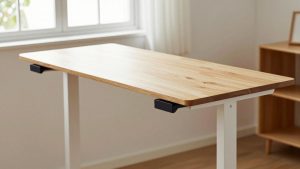
Both use the same electric bases, but the top is a completely different product. A standard laminate desk uses a particleboard or MDF core wrapped in laminate or veneer. It is engineered to be flat, light, and uniform. A live edge top is cut from a single slab or two book-matched slabs of solid hardwood, keeping one or both natural outer edges.

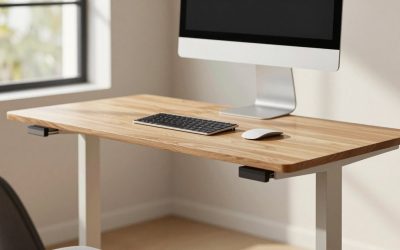
Walnut Solid Wood Standing Desk with Natural Live Edge, W60 x D27
Included for 'Live Edge Wood Standing Desk Buying Guide: What to Know Before You Buy' because the listing specifies W60 x D27, details this guide uses to compare options.
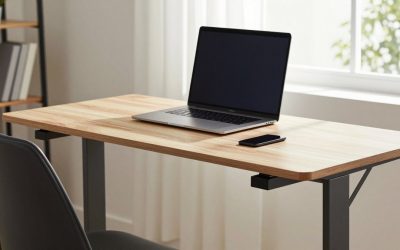
View on AmazonWalnut Solid Wood Standing Desk with Natural Live Edge, W48 x D27
Included for 'Live Edge Wood Standing Desk Buying Guide: What to Know Before You Buy' because the listing specifies W48 x D27, details this guide uses to compare options.
View on Amazon| Feature | Laminate / Engineered Top | Live Edge Solid Wood Top |
|---|---|---|
| Typical Weight (60″ x 30″ top) | 45 – 65 lbs | 80 – 140 lbs depending on species and thickness |
| Thickness | 0.75″ – 1″ | 1.25″ – 2″ |
| Surface Hardness | Scratch-resistant, heat-resistant | Varies by species; dents and scratches show more on soft finishes |
| Edge Profile | Straight, predictable; full rectangular usable area | Irregular; loses 2″ – 6″ of depth at narrowest points |
| Movement with Humidity | Minimal | Expands/contracts; needs sealed finish and slotted mounting |
| Frame Requirement | Works on most single-motor frames | Requires dual-motor frame rated for 250+ lbs |
| Price Range (top only) | Usually $150 – $400 | Usually $600 – $1,800 for kiln-dried hardwood slab |
The practical impact is stability and space planning. An irregular edge looks organic but means your keyboard, monitor arm clamp, and desk mat will not sit flush against a straight edge. If you clamp accessories, you need at least 4 to 5 inches of straight, flat underside near where you plan to clamp.
Wood Species: The Biggest Durability Decision
See also: Best 49 Inch Monitor: Eight Super Ultrawides Compared by Bandwidth and Desk Depth • Working Table for Home: Sit-Stand and L-Shaped Setups Compared
Not all live edge slabs are equally suitable for daily desk use. Hardness, weight, and stability matter more than grain color.
Hardwoods Best for Daily Standing Desk Use
- Walnut (American Black Walnut): Janka 1,010 lbf. The most popular live edge choice for a reason. Moderately hard, stable, rich brown color that hides wear well. 1.5″ thick slab at 60″ x 30″ weighs roughly 85 – 95 lbs.
- White Oak: Janka 1,360 lbf. Harder and heavier than walnut. Very dent-resistant, tight grain resists water spotting. Weighs 95 – 115 lbs at the same size. Excellent for high-use desks.
- Hard Maple: Janka 1,450 lbf. Hardest of the common options. Pale, clean look that pairs well with white frames. Shows dents the least, but can yellow slightly over time with oil finishes.
Species to Buy With Caution
- Acacia / Monkey Pod / Parota: Softer (Janka 900 – 1,150 lbf), often lighter weight and more affordable (usually $400 – $800 for the top), but more prone to denting and often sold with epoxy-filled voids that can feel plastic to the touch.
- Softwoods like Pine or Cedar: Janka 380 – 900 lbf. Too soft for a work desk. A dropped mug or writing without a mat will leave dents. Best avoided unless you want a rustic, heavily distressed look and accept the wear.
Ask the seller if the slab is kiln-dried to 6-8% moisture content and whether it has been flattened on both sides. Air-dried slabs without kiln treatment are more likely to warp, crack, or develop mold after being moved into a heated, air-conditioned home office.
Finish Durability: What Protects the Wood
A raw or poorly sealed slab will stain from coffee rings in weeks and crack in winter. The finish determines 90% of long-term maintenance.
- Conversion Varnish / 2K Polyurethane (Matte): Most durable for a desk. Creates a hard, clear film that resists scratches, water, and UV yellowing. Feels smooth, not plasticky, when applied in a thin matte coat. This is what most premium makers like Herman Miller or custom slab makers use for office furniture.
- Hardwax Oil (e.g., Rubio Monocoat, Osmo): Popular for a natural, soft-touch feel. Repels water well at first but is less scratch-resistant than polyurethane. Requires re-oiling every 12 to 24 months in the high-wear area in front of your keyboard. Better for low-use or executive desks where patina is welcome.
- Epoxy River / Full Flood Epoxy: Extremely hard and waterproof, but shows micro-scratches and dust more readily than wood, and repairs are difficult. Adds significant weight (an epoxy river can add 10 – 20 lbs).
Avoid tops described only as “oiled” without a specific product name, or tops finished on one side only. Uneven finishing causes cupping when humidity changes. A properly sealed top is finished on all six sides, including the bottom.
Weight and Stability on Electric Frames
This is where live edge buyers make the most expensive mistake. Solid wood is heavy, and electric frames have strict lifting capacities that include everything on the desk.
A dual-motor frame from brands like UPLIFT Desk, FlexiSpot, or Vari is typically rated for 235 to 355 lbs of total lifting capacity. That rating includes the top itself plus monitors, PCs, and accessories. A 110 lb white oak slab plus two monitors (20 lbs), a desktop PC (25 lbs), and accessories can easily put you at 160 – 175 lbs before you lean on the desk. A low-cost single-motor frame rated for 150 – 180 lbs will strain, lift slowly, or fail to lift at all.
Stability rules for live edge tops:
- Use a dual-motor, three-stage frame if your top is over 80 lbs. Three-stage legs provide a wider height range (typically 22.5″ to 48.5″) and less wobble at standing height than two-stage legs.
- Check clearance: A 1.75″ thick slab plus the frame’s top support brackets will sit 2.5″ to 3″ higher than a laminate top at its lowest setting. If you are under 5’6″, ensure the frame lowers to at least 24″ or plan to use a footrest.
- Cross-bracing matters. Frames with a full crossbar or C-frame feet handle off-center weight better. Live edge slabs are rarely perfectly balanced front-to-back, and the heavy side can amplify wobble at 42″ height and above.
- Do not screw a solid wood slab directly to the frame with fixed holes. Wood expands across its width with seasonal humidity. Use figure-8 fasteners, Z-clips, or threaded inserts with slotted holes so the top can move 1/16″ to 1/8″ without cracking.
Will It Fit Your Room and Workflow?
Measure before you order. Live edge dimensions are listed as maximum length x maximum width, but the narrowest usable depth may be 3 to 4 inches less.
- Small room fit: In a 10×12 ft room, a 60-inch live edge desk with a 30-inch average depth needs at least 36 inches of clearance behind for the chair and 42 to 48 inches in front if you stand and push the chair back. Leave 3 inches from the wall for the natural edge irregularities so the top does not scrape paint when the frame vibrates.
- Doorway and stairs: A solid slab ships in a reinforced box weighing 90 to 150 lbs and measuring 65″ x 35″ x 6″. It will not bend around tight 28-inch apartment doorways or narrow stairwells. Confirm delivery is curbside or threshold and that you have help to carry it.
- Standing ergonomics: Ideal seated desk height is 28″ to 30″, standing is 38″ to 46″ depending on your height. With a 1.5″ thick top, set your frame’s memory presets 1.5″ lower than you would for a laminate top to keep elbows at 90 degrees.
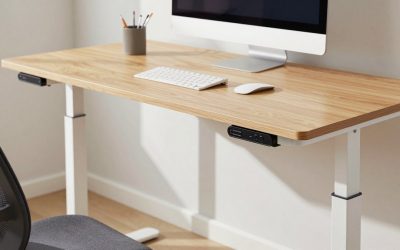
- White and wood standing desk setups: If you want that bright Scandinavian look, pair a lighter slab like maple or white oak with a white powder-coated frame. White frames show the wood grain contrast better and make the room feel larger, but choose a top with a matte 2K poly finish — glossy finishes on light wood create glare under overhead lights when you stand. A white frame with a walnut live edge top is the higher-contrast alternative; it anchors the room but needs more natural light to avoid looking heavy in a small apartment.
Decision Matrix: Which Live Edge Setup Fits Your Situation
| Your Situation | Recommended Top + Frame Combo | Why |
|---|---|---|
| Small apartment / renter, need to move in 1-2 years | 60″ x 26″ walnut or acacia slab (under 90 lbs) + dual-motor frame with quick-release top brackets | Lighter slab is manageable in elevators; removable top preserves security deposit — no wall mounting needed |
| Kids and pets, high spill/dent risk | White oak or hard maple with matte 2K polyurethane + frame rated 300+ lbs | Hardest, most water-resistant combo; polyurethane wipes clean and resists claw scratches better than oil |
| Back pain, alternating sit-stand every 30-45 minutes | Any 1.5″ hardwood + three-stage dual-motor frame with 4 memory presets and anti-collision | Frequent adjustment needs reliable motor and low wobble at tall heights; presets prevent awkward stooping |
| Design-first home office, video calls | Book-matched walnut slab with single live edge facing you, straight edge against wall + white frame | Straight back edge seals against wall for cable management; live edge in front is visible on camera |
| Tight budget, want the look for less | Engineered wood core with live edge veneer or edge + dual-motor frame | Cuts weight to ~60 lbs and cost to usually $500 – $900 total, while keeping the silhouette; not solid wood but far more stable |
Assembly, Moving, and What Wears First
Expect a two-person assembly of 60 to 90 minutes. The frame assembles like any electric desk, but lifting the slab onto the frame is the hard part — do not try it alone. Pre-drilling is essential: solid wood will split if you drive screws without pilot holes, and you will void many warranties.
What actually wears out first is not the wood, but the finish in the 12″ x 28″ zone where your wrists and mouse rest. On oil finishes, that area will become lighter and less water-resistant within a year. On polyurethane, edge nicks near the live edge where chairs bump it are the first damage point. Use felt pads on chair arms and avoid dragging the chair’s armrests against the natural edge.
Seasonal care: Keep indoor humidity between 35% and 55%. In dry winters, a solid wood top can develop a hairline crack along the grain if humidity drops below 30%. A small room humidifier and avoiding placement directly over a heating vent will prevent most cracking. Dust with a dry cloth; use coasters and a desk mat for writing — ballpoint pen pressure embosses soft finishes permanently.
Final Checklist Before You Buy
- Confirm kiln-dried solid hardwood, finished on all sides, with specified finish type.
- Verify top weight and ensure your dual-motor frame has at least 80 lbs of capacity above that weight for equipment.
- Ask for exact dimensions: maximum length, maximum width, minimum width, thickness, and whether edges are live on one or both sides.
- Check mounting method — slotted brackets or figure-8 clips — not fixed wood screws through the frame.
- Plan delivery: who carries a 100+ lb slab upstairs, and where you will store the crate.
A live edge wood standing desk costs more and needs more planning than a laminate model, but when matched to the right hardwood, durable finish, and properly rated dual-motor frame, it provides a stable, long-lasting standing desk that improves with age rather than peeling or sagging.
Related Reviews & Guides
How to Fix a Wobbling Standing Desk (2026): Step-by-Step

Electric Standing Desk Frame