Last Updated: September 7, 2026
- Watch: How to Declutter Your Desk for Maximum Focus 2026 — Video Review
- Start With a Full Reset, Not a Tidy-Up
- Give Every Task a Single Home on Paper
- Build a Weekly Rhythm Instead of Daily Firefighting
- Tame Cables, Chargers, and Small Accessories
- Extend the System Beyond the Desk
- Tips for Staying Clutter-Free
- Frequently Asked Questions
- Conclusion
- Related Articles
- Related Guides
- Top Pick: Clear Mind Concepts Daily Planner Desk Pad, Undated To Do List, 100 Sheets | Large 8.3 x 11.3 in tear-off planner with 100 thick 120gsm no-bleed sheets, priorities, notes and daily planning
- Best Value: Weekly Productivity Dashboard – 8.5" x 11" Dashboard Desk Notepad Has 6 Focus Areas to List Tasks for Goals, Projects, Clients, Academic or Meal-Organize Your Daily Work Efficiently, 54 Weeks, Light Pink
- Premium Choice: Clear Mind Concepts Focus Work Planner – Weekly Productivity Desk Organizer, 52 Undated Tear-Off Sheets, Mon-Fri Layout, 11.7” x 8.3” – Track Priorities, Tasks, Notes & Goals for Office & Remote Work
A cluttered desk is a tax on your attention. Every stray cable, stack of papers, and random sticky note competes for the same limited pool of working memory you need for actual deep work. Research on visual clutter consistently shows that a chaotic field of view increases cognitive load and slows task-switching, even when you don’t consciously notice the mess.
The good news is that decluttering your desk in 2026 doesn’t require a minimalist overhaul or expensive furniture. It’s mostly a matter of removing decision points: fewer loose papers, fewer “I’ll deal with it later” piles, and a system that tells you exactly where each item and task belongs. Below is a practical, step-by-step guide along with a few tools that make the habit stick.
As an Amazon Associate we earn from qualifying purchases at no extra cost to you.


⚡ Save on Your Next PC — Amazon Prime
Prime members get fast free shipping on the systems above, plus early access to Prime Day & Black Friday PC deals. New members get a 30-day free trial.
📄 In This Review
- Watch: How to Declutter Your Desk for Maximum Focus 2026 — Video Review
- Start With a Full Reset, Not a Tidy-Up
- Give Every Task a Single Home on Paper
- Build a Weekly Rhythm Instead of Daily Firefighting
- Tame Cables, Chargers, and Small Accessories
- Extend the System Beyond the Desk
- Tips for Staying Clutter-Free
- Frequently Asked Questions
- Conclusion
- Related Articles
- Related Guides
Watch: How to Declutter Your Desk for Maximum Focus 2026 — Video Review
Start With a Full Reset, Not a Tidy-Up
See also: Best Air Purifier For Bedroom Allergies • Desk Top Air Purifier
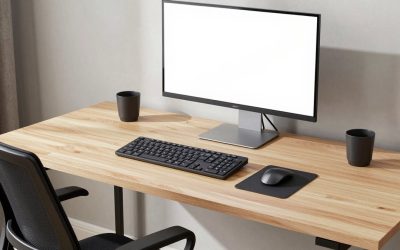
A quick tidy just rearranges clutter. A full reset forces you to decide whether each item deserves desk space at all. Clear everything off the surface, including your monitor stand and cable organizer, and only put back what you touch daily.
- Sort items into four piles: keep on desk, store in a drawer, relocate elsewhere, or discard/donate.
- Limit “keep on desk” to items used at least once per day; everything else goes in a drawer.
- Wipe down the surface before returning anything, so you’re placing items on a clean slate.
- Photograph the empty desk. It’s a surprisingly effective motivator to keep it that way.
Give Every Task a Single Home on Paper
Most desk clutter isn’t objects, it’s unresolved decisions: sticky notes, torn envelope corners, and half-finished lists scattered across three notebooks. Consolidating tasks into one dedicated surface eliminates the paper drift that piles up over a week.
- Use a single tear-off desk pad, like the Clear Mind Concepts Daily Planner Desk Pad (100 sheets, 8.3 x 11.3 in), instead of loose sticky notes.
- Assign one physical zone on the desk exclusively for “active” tasks, and clear it daily.
- If you juggle multiple projects, a dashboard-style layout such as the Weekly Productivity Dashboard with six focus areas keeps clients, goals, and personal tasks visually separated instead of blended into one messy list.
- Recycle or shred completed sheets at the end of each day rather than letting them stack.
Build a Weekly Rhythm Instead of Daily Firefighting
Daily to-do lists are useful, but without a weekly view, tasks get rewritten five times and small papers multiply. A weekly planning layout reduces that duplication and gives you one clear document to glance at instead of a pile of dated notes.
- Plan your week in one sitting, ideally Sunday evening or first thing Monday, using a Mon-Fri layout like the Clear Mind Concepts Focus Work Planner (52 tear-off sheets).
- Cap each day at 3-5 priority tasks; anything beyond that belongs on a “later” list, not your desk.
- For those who find standard planners overwhelming, a minimalist, ADHD-friendly option such as the Undated Weekly Organizer & To Do List Notepad (A4, 52 sheets) strips the layout down to essentials only.
- Review and toss last week’s sheet before starting a new one, don’t let sheets accumulate in a drawer “just in case.”
Tame Cables, Chargers, and Small Accessories
Cables are the single biggest source of visual noise on most desks, even after the paper is handled. A few small habits eliminate 90% of tangled-cable clutter without buying new furniture.
- Route all cables through a single under-desk tray or clip system so nothing crosses the visible surface.
- Use one labeled small tray or drawer divider for chargers, USB drives, and adapters instead of a junk drawer.
- Velcro-tie excess cable length rather than letting slack pool on the desktop.
- Keep only the charger and cable you use daily within reach; store backups elsewhere.
Extend the System Beyond the Desk
A desk rarely stays clean in isolation if the rest of your workspace, or home, is chaotic. Clutter has a way of migrating back onto the nearest clear surface within days.
- Work through a structured resource like the Ultimate Home Declutter & Organization Planner, which breaks decluttering into room-by-room checklists and daily/weekly schedules.
- Read a broader perspective such as Tidying Up Your Life if your desk clutter is really a symptom of an overloaded schedule rather than too many objects.
- Set a five-minute end-of-day reset habit: clear the desk, file loose papers, and queue tomorrow’s top task.
Tips for Staying Clutter-Free
- Apply the “one in, one out” rule: if a new item comes onto your desk, something else has to leave.
- Keep a small recycling bin within arm’s reach so discarding paper takes zero extra steps.
- Batch admin tasks like mail and receipts into a single weekly 15-minute session instead of letting them pile daily.
- Do a 60-second “surface check” before closing your laptop each evening.
Frequently Asked Questions
How often should I fully declutter my desk?
A full reset once per quarter is usually enough if you maintain a daily end-of-day tidy. If you skip daily maintenance, plan on a full reset monthly instead.
Are digital planners better than paper desk pads?
Digital tools work well for scheduling, but a physical desk pad or notepad reduces phone/laptop glance-checks that often turn into distraction loops. Many people do best combining a paper weekly planner for focus tasks with a digital calendar for appointments.
What’s the single biggest source of desk clutter?
Loose paper, sticky notes, and unfiled mail account for most of it. Consolidating everything onto one dedicated planner or notepad, and discarding it on a set schedule, solves the majority of the problem.
Is a minimalist desk actually more productive, or just nicer looking?
Both. Studies on visual clutter show it increases cognitive load during task-switching, so a clearer desk measurably reduces the mental friction of getting started and staying focused.
Conclusion
Decluttering your desk in 2026 isn’t a one-time weekend project, it’s a system: a single reset to clear the backlog, one planner to consolidate tasks, and a few daily habits to keep clutter from creeping back. Start with the full reset, pick one planner format that matches how your brain organizes tasks, and commit to the 60-second nightly check. Within two or three weeks, a clear desk stops being an event and becomes your default state.
Related Reviews & Guides

Ergonomic Mouse vs. Trackball Mouse: Which Offers Better Control? 2026
How to Choose a Desk Pad for Your Gaming or Office Setup 2026