Last Updated: September 7, 2026
Transitioning to an ergonomic split keyboard is one of the most impactful upgrades you can make if you spend hours every day writing, coding, or managing data. Standard flat keyboards force your wrists into unnatural pronation and ulnar deviation, quietly accumulating fatigue, tension, and repetitive strain over years of professional desk work.
Navigating the modern market can be overwhelming, particularly with the rapid evolution of desktop ergonomics in 2026. This decision guide cuts through the marketing noise to focus strictly on the structural specifications that matter—ranging from physical adjustability and column layouts to firmware capabilities—ensuring you invest in a setup that actively protects your hands.
As an Amazon Associate we earn from qualifying purchases at no extra cost to you.

📄 In This Review
Understanding Tent, Tilt, and Splay
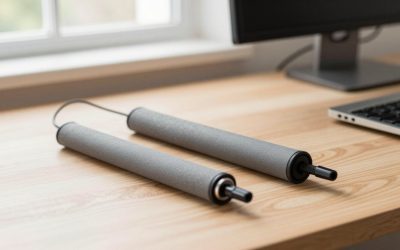
When evaluating split keyboards, physical adjustability is paramount. Tenting refers to raising the inner edge of each keyboard half so your hands rest in a natural handshake position rather than lying completely flat on the desk. This eliminates forearm pronation. Tilt involves angling the keyboard vertically or horizontally, while splay spreads the halves apart to match your natural shoulder width. Look for boards offering adjustable tenting mechanisms, as static tents rarely fit every body type.
Columnar vs. Staggered Layouts
See also: Standing Desk 50 Inch Height: Who Needs It and Why • Standing Desk Height for 5’10”: Your Target Number and How to Dial It In
Traditional keyboards use a row stagger inherited from vintage mechanical typewriters, which forces your fingers to reach diagonally across rows. Ergonomic split boards typically feature columnar stagger—where keys are arranged in straight vertical lines that match the varying lengths of your fingers. While this layout requires a brief adjustment period to rebuild muscle memory, it dramatically reduces lateral finger movement and long-term joint fatigue during marathon typing sessions.
The Ergonomic Value of Thumb Clusters
Your thumbs are your strongest and most dexterous digits, yet standard keyboards relegate them to hitting a single oversized spacebar. Premium split keyboards utilize thumb clusters to distribute the workload, assigning frequently used modifier keys like Enter, Backspace, Space, and Escape to your thumbs. When choosing a board, pay close attention to thumb cluster placement; if the keys are positioned too far forward or backward, you will strain your thumbs instead of resting them naturally.
Hotswap Sockets vs. Soldered Switches
Switch preference is entirely subjective, dictated by your desired actuation force, travel distance, and acoustic profile. Opting for a keyboard with hotswap sockets allows you to physically pop out and replace mechanical switches without soldering. This feature is invaluable for all-day typists because it lets you experiment with different tactile or linear switch weights over time, ensuring your fingers never grow fatigued from resistance that is either too heavy or too light.
Wired vs. Wireless Connectivity
Deciding between a wired split connection and a wireless setup depends heavily on your workspace layout. Wireless split keyboards reduce desk clutter and make it effortless to reposition the halves precisely where your shoulders demand. However, you must consider battery life and how the two halves communicate. Many modern wireless options use a low-latency radio frequency link between the left and right halves while connecting to your computer via Bluetooth, offering a clean aesthetic without sacrificing reliability.
Common Buying Mistakes to Avoid
One of the most frequent mistakes buyers make is prioritizing flashy RGB lighting or extreme compactness over proper adjustability. Another pitfall is purchasing a non-programmable split keyboard; true ergonomic comfort often requires custom key remapping to place frequently used shortcuts directly under your fingertips. Always verify that the board supports robust, open-source firmware so you can customize layers and macros to match your exact professional workflow.
When It Makes Sense to Spend More
Entry-level split keyboards offer a taste of ergonomic relief, but premium tier models justify their higher cost through superior build quality, milled aluminum cases, infinitely adjustable tenting kits, and highly refined tenting legs. If you type for eight to ten hours a day, investing in a robust, premium ecosystem with high-end materials and comprehensive community support pays dividends in durability, comfort, and long-term wrist health.
Related Guides
To see how top-tier models compare in real-world testing, check out our comprehensive Best Ergonomic Split Keyboards for Typing All Day in 2026: Compared and Ranked guide.
FAQ
How long does it take to get used to a split keyboard?
Most typists experience a temporary drop in typing speed for the first one to two weeks. With consistent daily practice, your muscle memory will adapt to the column layout and split design, usually returning to full speed within a month.
Do I need a wrist rest with a split keyboard?
Wrist rests can help support your palms during pauses in typing, but you should never rest your wrists heavily on them while actively typing. Hovering your hands slightly or using palm rests strictly for resting moments prevents unnecessary pressure on the carpal tunnel.
Are split keyboards difficult to travel with?
While split keyboards consist of two separate halves and sometimes require extra cables, many models are designed with portability in mind. Compact layouts and dedicated travel cases make it easy to pack them into a backpack for hybrid work environments.
Can I use a split keyboard with a laptop stand?
Yes, split keyboards pair exceptionally well with laptop stands and external monitors. Because the two halves are physically separated, you can position them seamlessly around your laptop base or place them directly on your desk for an optimal ergonomic posture.
Related Reviews & Guides





6 Best Smart Desk Lamp Wireless Chargings

Task Lighting LED Desk Clamp Review